2026 World Cup: what Morocco can learn from France v Paraguay
France have qualified for the quarter-finals of the 2026 World Cup, but their hard-fought 1–0 victory over Paraguay exposed several weaknesses. Ahead of their clash with Les Bleus in Boston, Morocco can draw valuable lessons from this performance, which was characterised by a lack of fluidity in attack and a heavy reliance on individual brilliance.
Didier Deschamps’ side secured their place in the next round thanks to a penalty converted by Kylian Mbappé, at the end of a largely tight-knit encounter in which clear-cut chances were few and far between.
France struggle against a compact defence
Paraguay caused Les Bleus considerable problems by defending with a deep-lying and highly disciplined block. For over an hour, France struggled to speed up the play and create space.
The statistics illustrate these difficulties: Les Bleus did not register their first shot on target until the 55th minute. Ousmane Dembélé, Bradley Barcola and Michael Olise were effectively contained by Paraguay’s defensive organisation.
After the match, Didier Deschamps himself acknowledged how difficult the game had been.
“It was a difficult match,” said the French manager, noting that this fixture had allowed his team to test themselves against a particularly tough opponent.
Lessons learnt ahead of Morocco v France
For the Atlas Lions, this match provides valuable lessons ahead of the quarter-final. Paraguay demonstrated that by closing down space and applying disciplined pressure, it was possible to disrupt France’s attacking play.
The heat, approaching 38 °C in Philadelphia, also affected the pace of the match, but it does not, on its own, explain the difficulties faced by Les Bleus.
Morocco can believe in their chances
Solid defensively and effective on the counter-attack since the start of the tournament, the Atlas Lions possess qualities that could cause problems for France.
Following their convincing 3–0 victory over Canada, Mohamed Ouahbi’s men go into this quarter-final full of confidence. Whilst France remain clear favourites, Morocco’s momentum and collective organisation give them every reason to believe they can progress and continue their remarkable run at the 2026 World Cup.
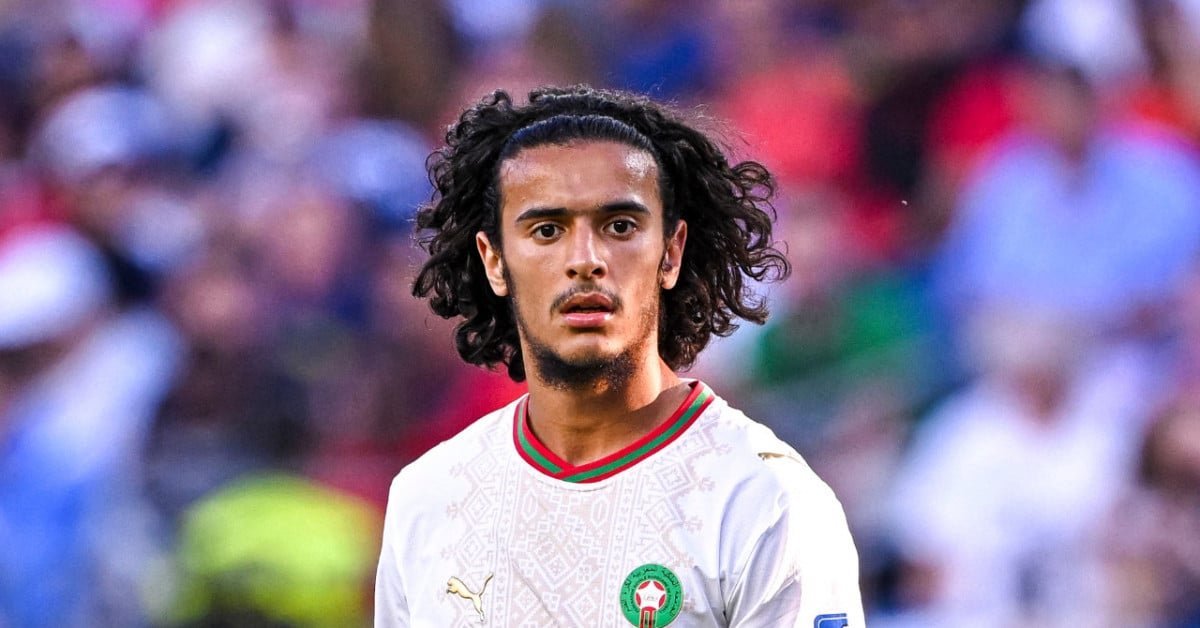
2026 World Cup: Ayyoub Bouaddi faces France once again whilst representing Morocco
Ahead of the 2026 World Cup quarter-final between Morocco and France, Ayyoub Bouaddi’s career is once again in the spotlight. Having come through the French football system and played for every age group of Les Bleus, the LOSC midfielder ultimately chose to represent the Atlas Lions – a decision that has enabled him to compete in the World Cup with Morocco today.
Born in the Paris region, Ayyoub Bouaddi played for France for many years, from the U16s right up to the Under-21s. At just 18, however, he decided to represent Morocco at the highest level, joining Mohamed Ouahbi’s squad ahead of the 2026 World Cup.
This decision quickly proved to be a wise one. A first-team regular for the Atlas Lions, Bouaddi has been part of Morocco’s remarkable run, having qualified for the quarter-finals where they will face… France.
Guy Stéphan reflects on Bouaddi’s decision
At a press conference, Didier Deschamps’ assistant acknowledged that the French coaching staff had been following the young midfielder’s progress for some time.
“Of course we know him. He’s a product of the French youth system through and through,” said Guy Stéphan.
The French coach refused, however, to describe him as a player “lost” to France, believing that Bouaddi had simply chosen to represent Morocco.
“We’re not going to blame him,” he added.
France did not want to stand in the way of his choice
Guy Stéphan also explained Didier Deschamps’ philosophy regarding dual-nationality players.
According to him, the France manager never wanted to call up Ayyoub Bouaddi just for a few minutes in order to subsequently prevent him from representing another national team.
“Didier doesn’t want to stand in a player’s way,” explained the French manager’s assistant.
The French national team’s coaching staff also point out that competition is particularly fierce in midfield, with players such as Adrien Rabiot, Aurélien Tchouaméni, Warren Zaïre-Emery, Manu Koné and N’Golo Kanté.
Morocco put their faith in Bouaddi
In contrast, Morocco were quick to give the young LOSC talent his chance. Impressed by the Atlas Lions’ sporting project, Bouaddi chose to represent the Kingdom – a decision he has always described as natural and a choice he stands by.
A few months later, he is set to play in a World Cup quarter-final against the country where he was trained, with the ambition of continuing Morocco’s historic run in the 2026 World Cup.
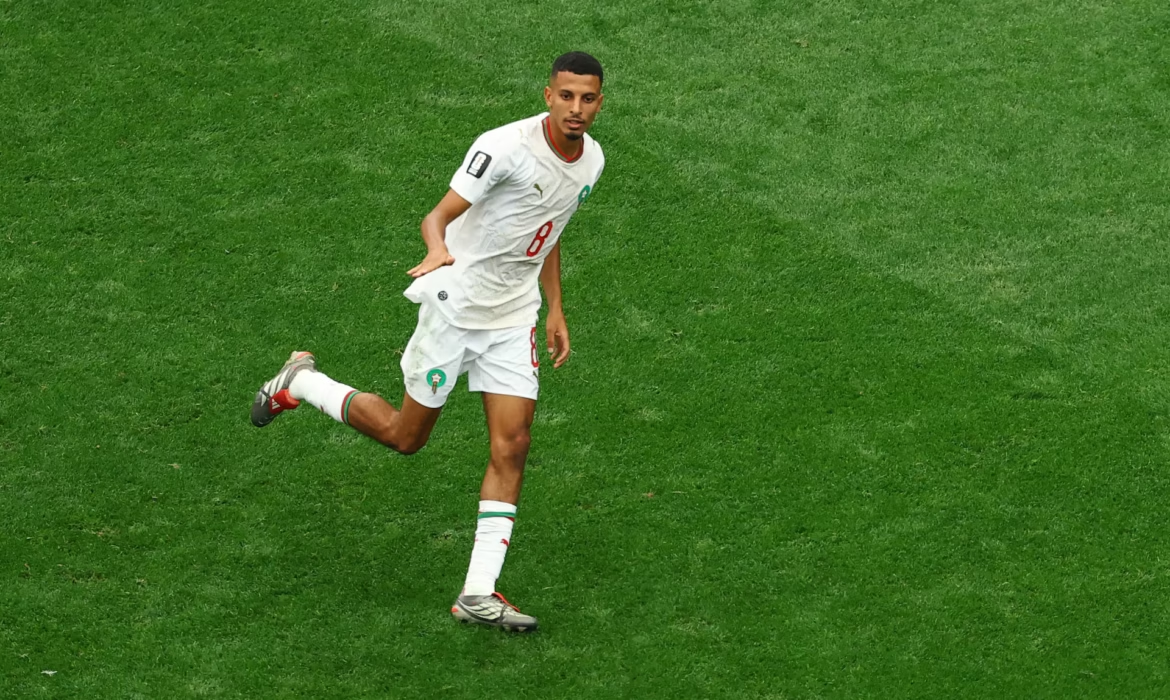
2026 World Cup: Morocco welcomes back a in-form Azzedine Ounahi
Azzedine Ounahi has once again led Morocco to the top. Scoring a brace against Canada in the round of 16 at the 2026 World Cup, the Atlas Lions midfielder has confirmed his pivotal role in the Moroccan team’s campaign. Although less prominent at club level in recent seasons, he regains his full influence when wearing the national team’s shirt.
Against Canada, Ounahi was one of the key architects of Morocco’s 3–0 victory. The midfielder scored the first two goals of the match, putting the Atlas Lions on course for a historic qualification for the quarter-finals.
The first goal came following a well-worked free-kick routine, before he finished off a perfectly executed counter-attack led by Chemsdine Talbi to complete a decisive brace.
Ounahi returns to his best form with Morocco
Having first come to the public’s attention at the 2022 World Cup in Qatar, Azzedine Ounahi subsequently joined Olympique de Marseille before going out on loan to Panathinaikos, then continuing his career at Girona.
Whilst his club career has at times been inconsistent, his performances for the Atlas Lions have remained consistent. Under Mohamed Ouahbi, the Moroccan midfielder has been given a more attacking role, allowing him to fully showcase his technical skills and his ability to break through opposition defences.
“Magic Johnson”, a nickname that sums up his talent
When asked about Ounahi’s profile, former Moroccan international Nordin Jbari did not hesitate to compare him to a sporting legend.
“I call him Magic Johnson,” he said, praising his vision, creativity and ability to deliver unexpected passes.
A comparison that illustrates the Moroccan midfielder’s influence on the Atlas Lions’ attacking play.
A major asset ahead of the clash with France
Despite the emergence of a new generation, epitomised in particular by Ayyoub Bouaddi, Azzedine Ounahi remains one of Morocco’s technical leaders.
His mobility, footballing intelligence and ability to break through defences continue to make the difference in big matches. His brace against Canada comes at the perfect time ahead of the quarter-final against France, where the Atlas Lions will once again be counting on their playmaker to continue their exceptional journey at the 2026 World Cup.
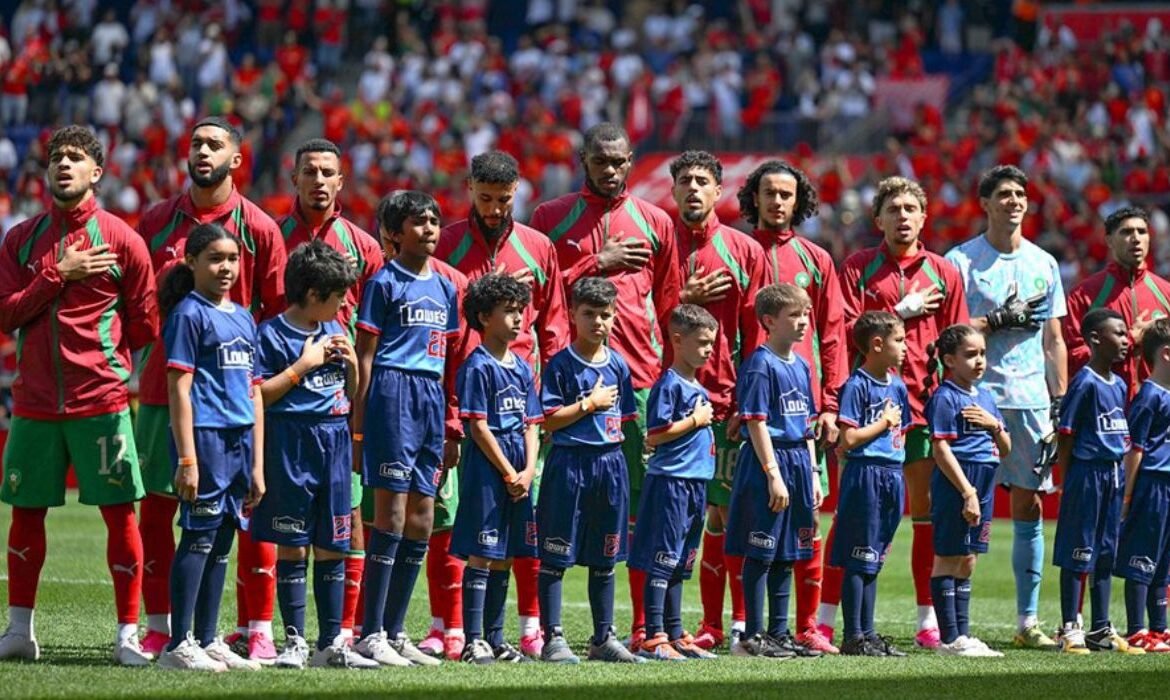
2026 World Cup: Morocco takes on Les Bleus’ defensive wall
Morocco is set to face one of the biggest challenges of its 2026 World Cup campaign. Facing France in the quarter-finals, the Atlas Lions will attempt to break down Les Bleus’ impressive defensive solidity in order to continue their historic run and secure a place in the semi-finals.
Having brilliantly knocked out Canada (3–0), Mohamed Ouahbi’s men go into this match full of confidence. Their teamwork, technical prowess and attacking efficiency are strong assets against a French side renowned for its defensive discipline.
Brahim Diaz, Morocco’s key asset
Since the start of the 2026 World Cup, Brahim Diaz has established himself as one of the key architects of Morocco’s campaign. The Atlas Lions’ playmaker has already provided four assists and continues to showcase his creativity between the lines.
Around him, the Moroccan forwards are making numerous runs and quick surges forward – a tactic that could cause problems for the French defence.
Les Bleus face their toughest test of the World Cup
France rely on an experienced defence featuring, notably, William Saliba, Dayot Upamecano, Jules Koundé and Lucas Digne. Didier Deschamps’ men have conceded just two goals since the start of the tournament and have kept three clean sheets.
But the Atlas Lions are a very different proposition from the opponents they have faced so far. Their ability to speed up transitions and exploit even the slightest gap could put the French defence under severe pressure.
William Saliba, moreover, expects a particularly tough challenge, emphasising the need for Les Bleus to remain focused in the face of Morocco’s attacking qualities.
Morocco dreams of another feat
Driven by an ambitious generation, the Atlas Lions go into this quarter-final with the firm intention of writing a new chapter in the history of Moroccan football.
Having reached the semi-finals in 2022 and then the quarter-finals in this 2026 edition, the Moroccans now want to take things to the next level. Against France, their ambition is clear: to break down one of the tournament’s best defences and continue a run that has the whole country on the edge of their seats.
2026 World Cup: CAF praises Morocco following its historic achievement
Morocco continues to make history in African football. Following the Atlas Lions’ qualification for the quarter-finals of the 2026 World Cup thanks to their convincing 3–0 victory over Canada, the Confederation of African Football (CAF) has hailed this unprecedented achievement by the Moroccan national team.
The continental body emphasises that the Kingdom has become the first African nation in history to reach the quarter-finals of two consecutive World Cups, thereby confirming its status as a leading force on the continent.
An unprecedented feat for African football
On its official website, CAF states that this latest qualification confirms Morocco’s enduring place amongst the world’s best national teams.
Having made history by reaching the semi-finals of the 2022 World Cup in Qatar, the Atlas Lions, now managed by Mohamed Ouahbi, are continuing their rise by once again securing a place amongst the world’s top eight teams.
For CAF, this performance demonstrates that Morocco’s 2022 campaign was not merely a one-off feat, but the result of a solid sporting project and steady progress.
Ounahi also makes history
The African governing body also highlighted the performance of Azzedine Ounahi, the key figure behind the victory over Canada.
Having scored a brace, the Moroccan midfielder has become the first African player since Senegal’s Henri Camara in 2002 to score two goals in a World Cup knockout match, according to CAF.
Thanks to their 3-0 victory over Canada, Morocco secured their place in the quarter-finals after a second half in which they were completely in control. Goals from Azzedine Ounahi, who scored twice, and then Soufiane Rahimi enabled the Atlas Lions to continue their remarkable World Cup journey.
Morocco will now face France, aiming to continue making history for Moroccan, African and world football.
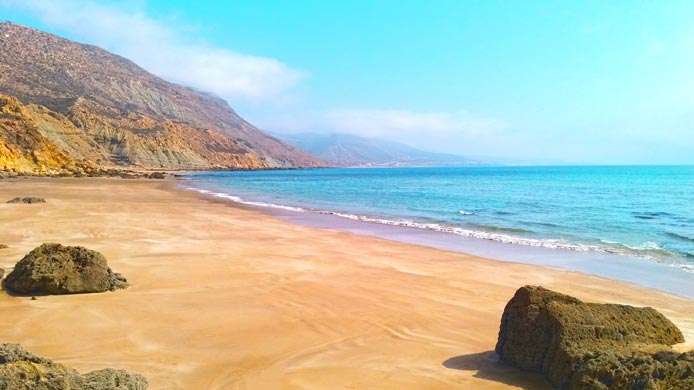
Morocco: here are the cleanest beaches in 2026
Morocco has reaffirmed its commitment to sustainable seaside tourism. For the summer of 2026, the Kingdom has set a new record with 38 Blue Flag-certified sites, including 33 beaches, recognised for the quality of their bathing waters, their cleanliness, their safety and their environmental management.
According to the Mohammed VI Foundation for Environmental Protection, chaired by Her Royal Highness Princess Lalla Hasnaa, this international accolade once again places Morocco amongst the countries most committed to preserving its coastline.
A record 38 sites awarded the Blue Flag
The 2026 list includes 33 beaches, four marinas and a natural mountain lake – the highest number of Moroccan sites ever to be awarded the Blue Flag.
This year, five new beaches have been added to the list of award-winning sites:
Oualidia Grande Plage (Sidi Bennour province)
Tamaris II (Nouaceur province)
Contrebandiers (Skhirate-Témara prefecture)
Sable d’Or (Skhirate-Témara prefecture)
Amsa (Tétouan province)
The 28 beaches that had already been awarded the Blue Flag in 2025 retain their status in 2026, demonstrating the ongoing efforts to preserve the quality of Morocco’s coastline.
What does the Blue Flag certification guarantee?
The Blue Flag is one of the world’s most recognised environmental labels for beaches and marinas.
To be awarded the Blue Flag, sites must meet stringent criteria relating in particular to:
the quality of bathing water;
the cleanliness and hygiene of beaches;
the safety of holidaymakers;
the facilities and services provided;
environmental education;
sustainable coastal management.
Unannounced inspections are carried out throughout the summer season to ensure that these criteria continue to be met.
Morocco’s cleanest beaches in 2026
Thanks to the Blue Flag certification, these beaches are among the leading destinations along the Moroccan coast for the summer of 2026. They offer holidaymakers bathing conditions that meet international standards for environmental quality, safety and services.
With this new record of 38 certified sites, Morocco is reaffirming its commitment to enhancing the appeal of its seaside destinations whilst sustainably preserving its coastal heritage.
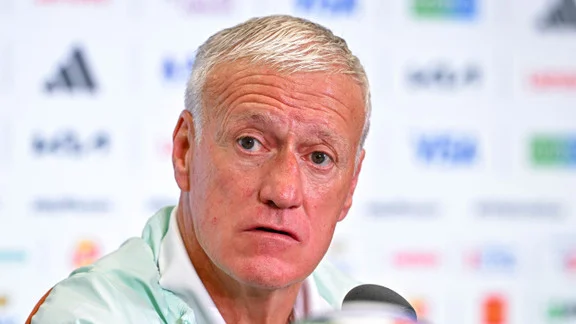
2026 World Cup: Didier Deschamps counts Morocco among the world’s “best teams”
France manager Didier Deschamps praised the quality of the Moroccan side – Les Bleus’s future opponents in the quarter-finals of the 2026 World Cup – following his team’s 1–0 victory over Paraguay.
At a press conference, the French manager highlighted the steady progress of the Atlas Lions and said that their presence at this stage of the competition was by no means a fluke.
“Based on what they’ve done, and what I saw in the match against Canada, this confirms that Morocco are a very good team,” said Didier Deschamps.
The France manager also pointed out that Morocco’s run in the tournament was a continuation of their performances at the previous World Cup.
“Morocco didn’t reach the World Cup quarter-finals by chance. Obviously, they have what it takes to do so,” he added.
The Atlas Lions will face France on 9 July in Boston, aiming to continue their remarkable run at the 2026 World Cup and secure a place in the semi-finals of the tournament.
Having convincingly knocked out Canada, Mohamed Ouahbi’s men will be looking to cement their status against Les Bleus and continue to make history for Moroccan and African football.
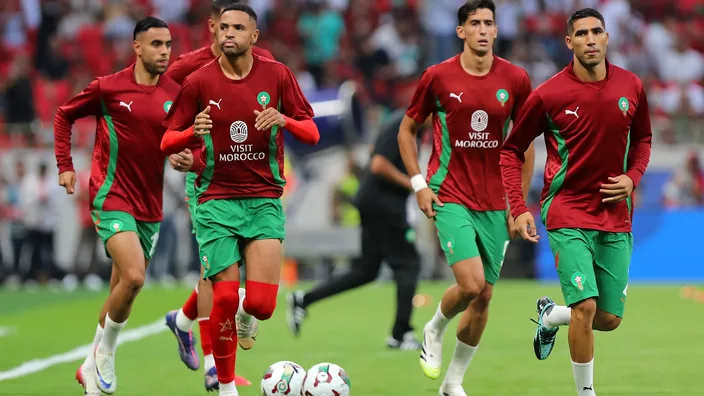
2026 World Cup: the heat, the Atlas Lions’ invisible challenge
Beyond their opponents, the Atlas Lions face another major challenge at the 2026 World Cup: the heat. In Houston, Atlanta, Miami and Monterrey, high temperatures and humidity put the players’ bodies under severe strain and force the teams to adapt their preparations.
In several host cities across the United States and Mexico, temperatures regularly exceed 35°C. For medical staff and fitness coaches, the aim is now to protect the players’ bodies whilst maintaining a high level of performance.
Hydration and recovery at the heart of preparations
Faced with these weather conditions, the national teams have radically altered their working methods. Training sessions are held early in the morning or in the evening to avoid the hottest part of the day, whilst players follow personalised hydration protocols before, during and after each session.
Weight, hydration levels and recovery indicators are also monitored daily. According to experts, a footballer can lose between one and two litres of water during a 90-minute match, or even more when temperatures and humidity levels are particularly high.
Technologies to combat the heat
Recovery has become an essential part of performance. Several teams now use cooling vests, cooling jackets or other equipment specifically designed to rapidly lower body temperature after exercise.
These devices help to limit the effects of heat stress, delay the onset of fatigue and speed up recovery between different phases of play.
Cooling breaks during matches also play a strategic role. They give players a few minutes to rehydrate, recover physically and receive the latest tactical instructions.
A factor that can make all the difference
For physical preparation experts, acclimatisation to climatic conditions has become just as important as tactical or technical work. Several national teams arrived in North America several days before their opening matches to allow players to adapt gradually to the heat.
As the competition progresses and fatigue sets in, managing extreme temperatures could become a decisive factor. For the Atlas Lions, who are still in contention in this 2026 World Cup, being able to withstand the heat could prove to be an additional asset in their quest for another remarkable achievement.
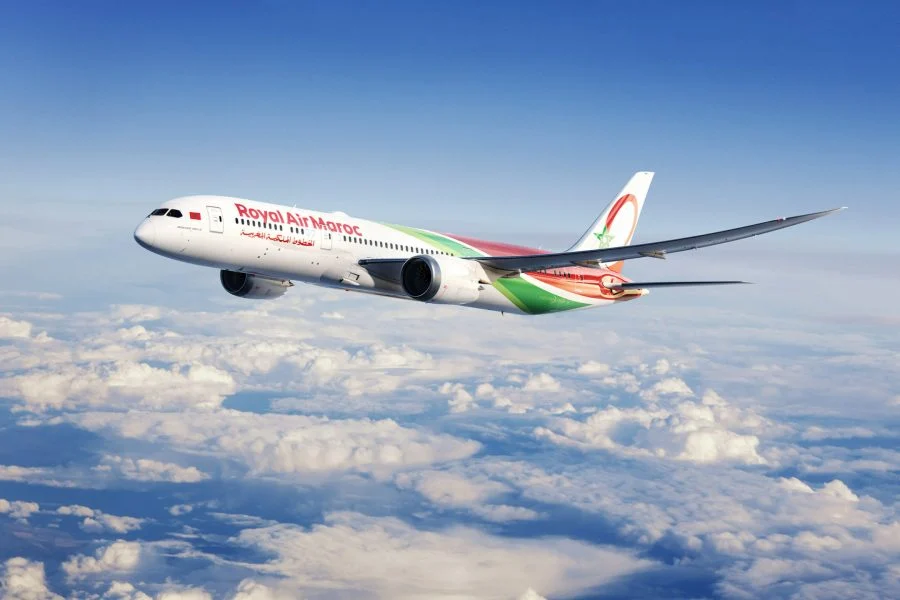
Morocco v France: Royal Air Maroc launches 12 flights to Boston
To mark the 2026 World Cup quarter-final between Morocco and France, Royal Air Maroc is putting in place a special arrangement to enable supporters of the Atlas Lions to travel to Boston. The national airline will operate 12 special direct flights between Casablanca and the American city to accommodate the thousands of Moroccans expected to attend this highly anticipated fixture.
As the national team’s official carrier, Royal Air Maroc is thus continuing its support for the Atlas Lions. Following the arrangements put in place for previous matches, the airline is once again stepping up its efforts to meet the demand generated by Morocco’s historic run in the 2026 World Cup.
3,600 seats for Atlas Lions supporters
In a statement released on Sunday, Royal Air Maroc announced that it had mobilised all its technical and logistical resources to enable as many Moroccan supporters as possible to attend the quarter-final against France.
The airline will operate 12 direct flights between Casablanca and Boston, using wide-body aircraft offering a total capacity of 3,600 seats, in optimal conditions of safety and comfort.
A flat fare of 10,000 dirhams
To make it easier for supporters to travel, Royal Air Maroc is offering a flat rate of 10,000 dirhams (including tax) for a return economy class ticket. These tickets are valid for fixed dates, non-changeable and non-refundable.
Tickets went on sale this Sunday at 9.30 pm at Royal Air Maroc’s sales offices in Morocco and via the airline’s dedicated website.
With this new air bridge, Royal Air Maroc is reaffirming its commitment to the Atlas Lions and supporting Moroccan supporters who wish to experience another historic moment in national football in Boston.

2026 World Cup: Ryan Reynolds reacts to Morocco’s victory
Morocco’s victory over Canada in the round of 16 of the 2026 World Cup continues to spark reactions far beyond the football pitch. In the wake of the Canadian team’s elimination (3–0), Hollywood actor Ryan Reynolds posted a message of support for his national team on social media.
A cinema icon and football enthusiast, the Deadpool star chose to pay tribute to Canada’s run despite the heavy defeat suffered at the hands of the Atlas Lions.
According to the Daily Mail, this post comes at a time when the news surrounding Ryan Reynolds is dominated by speculation regarding his wife Blake Lively and the singer Taylor Swift. The actor, however, chose instead to highlight the Canadian team’s campaign and his love of football.
Ryan Reynolds supports Canada
As owner of the Welsh club Wrexham, Ryan Reynolds follows football news closely. Following Canada’s elimination, he paid tribute to the players and manager Jesse Marsch, praising their performance in this home World Cup.
His message quickly went viral on social media amongst Canadian supporters.
The Atlas Lions too strong for Canada
On the pitch, the Atlas Lions put in a convincing performance to secure their place in the quarter-finals. Morocco won 3-0 thanks to a brace from Azzedine Ounahi and a goal from Soufiane Rahimi in added time.
This victory allows Morocco to continue their journey at the 2026 World Cup and confirms their status amongst the competition’s top teams. As one of the tournament’s co-hosts alongside the United States and Mexico, Canada had hoped to extend their campaign in front of their home crowd, but came up against a solid and particularly clinical Moroccan side.
The Atlas Lions will now face France in the quarter-finals, aiming to keep their World Cup dream alive.