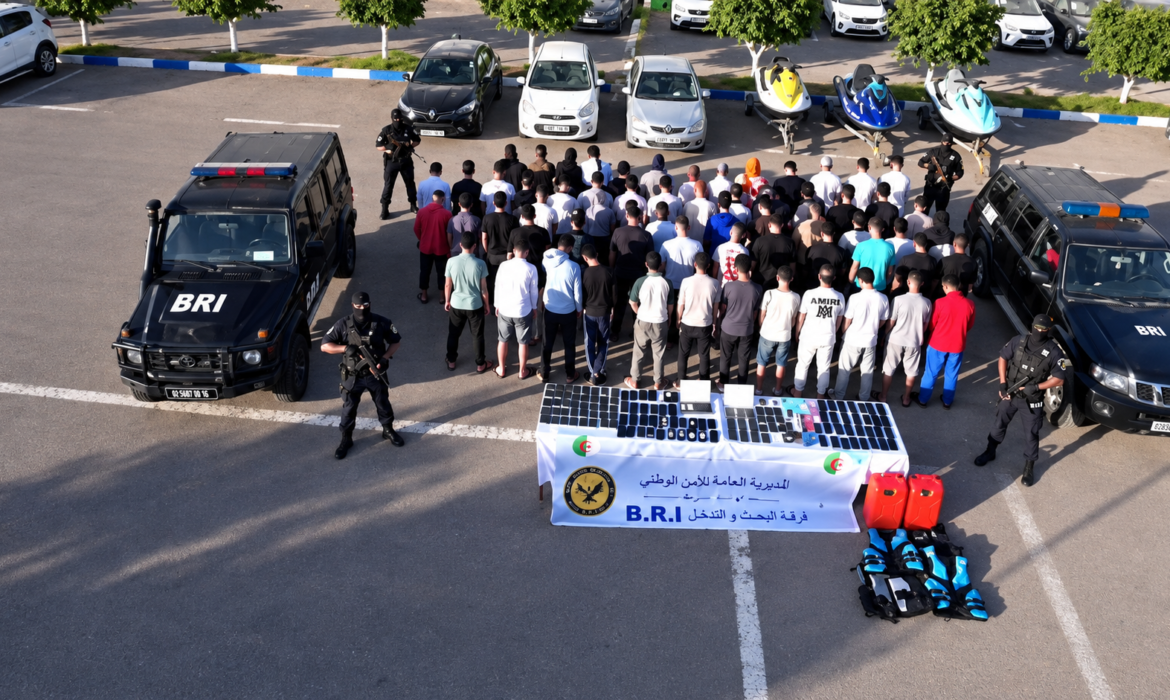
The Algerian police claim to have arrested 61 Moroccan nationals accused of planning ‘acts of sabotage’. However, in the complete absence of concrete evidence and details regarding these alleged plans, this announcement raises numerous questions and reservations.
Algiers is making the accusations, but the evidence is lacking. The Algerian police have announced the arrest of 61 Moroccan nationals whom they describe as members of an ‘international criminal network’. According to the Algerian authorities, this group is alleged to have planned actions targeting national security.
However, no further details have been provided regarding the exact nature of the alleged plans. This particularly serious accusation, backed by very little tangible evidence, has raised eyebrows amongst observers and sparked strong reactions in Morocco.
A serious accusation without any details
According to a statement from Algeria’s General Directorate of National Security (DGSN), the 61 individuals, who were arrested in early October, “were preparing to carry out acts of sabotage undermining public security and order”. The Algerian security services state that the group is believed to include a former Moroccan soldier who is said to have travelled to Algeria from Tunisia via rugged mountain paths, following an initial journey by plane.
However, the Algerian account suffers from a glaring lack of detail. The authorities have not identified the potential targets, nor the nature of the planned attacks, nor provided any material evidence to support their claims. Faced with this terse statement, the Moroccan authorities have not yet issued an official response.
Gaps and inconsistencies in the official account
In analysing the DGSN’s statement, several media outlets, notably the Moroccan newspaper Médias24, have highlighted significant gaps in the Algerian police’s account:
Lack of operational equipment: No military equipment, weapons, explosives, maps or lists of targets were presented. When the seized items were displayed, only mobile phones, passports and a few dirham and euro notes were shown.
An implausible route: The idea that a large group of 61 foreign nationals could travel nearly 1,000 kilometres — from the Tunisian border to the city of Oran — without local logistical support and without being detected raises serious questions.
Doubts about the investigating unit: The unit appearing in the footage released by the DGSN specialises in combating illegal immigration, not in counter-terrorism or strategic intelligence.
A familiar line of rhetoric in a tense climate
This case comes against a backdrop of severely strained bilateral political relations. Since the severing of diplomatic ties, decided unilaterally by Algiers in 2021, this is not the first time that the Kingdom of Morocco has been singled out by the Algerian authorities as the designated culprit for internal tensions or difficulties.
Whilst uncertainty persists regarding the fate of these 61 Moroccan citizens, the lack of tangible evidence reinforces the notion that this is a political publicity stunt rather than the foiling of a genuine security threat.