In its latest World Economic Outlook published in Bangkok, the International Monetary Fund (IMF) forecasts robust growth of 4.5 per cent for Morocco in 2026. This performance is all the more remarkable given that the MENA region is expected to face a contraction in economic activity.
At the IMF and World Bank Annual Meetings held in Bangkok, the financial institution unveiled its World Economic Outlook report. The projections for the Kingdom demonstrate remarkable macroeconomic resilience in what remains an uncertain international environment.
Solid growth despite the downturn in the MENA region
The IMF anticipates a dynamic trajectory for the Moroccan economy, with gross domestic product (GDP) rising by 4.5 per cent in 2026, followed by 4.2 per cent in 2027. At the same time, inflation remains firmly under control: it is expected to stand at 0.9 per cent in 2026 before rising slightly to 1.4 per cent in 2027.
These indicators stand in stark contrast to regional and international conditions:
At regional level: The IMF forecasts a 2 per cent contraction for the Middle East and North Africa (MENA) economy in 2026.
Globally: Morocco outperforms the global average, estimated at 3.1 per cent for 2026, whilst avoiding the global inflationary surge, which stands at 4.7 per cent.
International credibility that attracts investment
This positive momentum is bolstering the confidence of international markets and investors in the Moroccan model. In particular, the rigorous management of public finances and the sustained pace of structural reforms have enabled the Kingdom to regain its ‘investment grade’ status with the rating agency Standard & Poor’s.
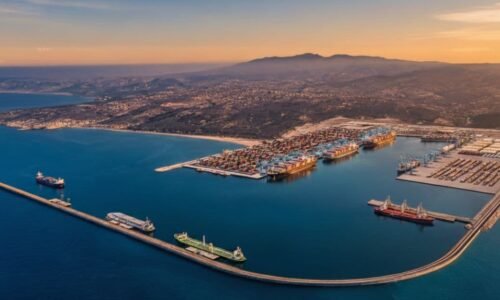
Achieving this sovereign rating gives Morocco privileged access to financial markets on preferential borrowing terms. This is a decisive advantage for financing and accelerating the delivery of its major infrastructure projects, such as preparations for the 2030 World Cup, the development of the Nador West Med port complex and the roll-out of the green hydrogen sector.