Morocco secure first win under Ouahbi with victory over Paraguay
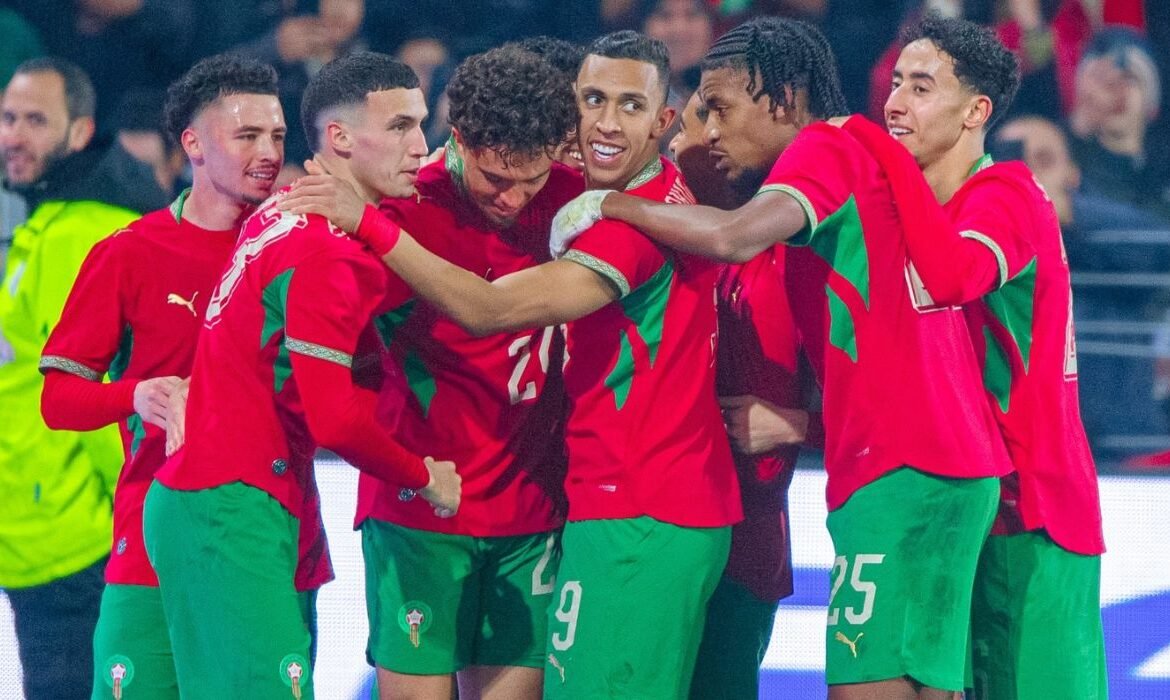
After a 1-1 draw against Ecuador in his debut match last Friday in Madrid, Ouahbi saw his side make the difference early in the second half, thanks to a decisive five-minute spell inspired by the duo of Achraf Hakimi and Gessime Yassine.
The match turned immediately after the break. Yassine set up Hakimi on the right flank, whose cross found Bilal El Khannouss to open the scoring in the 48th minute. Just five minutes later, a nearly identical move saw Hakimi deliver another cross, this time converted by Neil El Aynaoui, who netted his second goal in as many matches.
The attacking combination proved highly effective, even if Yassine may still have to compete for a regular spot alongside Brahim Díaz on the flank.
Paraguay pulled one back late in the game through Caballero, who scored from close range in the 88th minute. However, it came too late to threaten Morocco’s control, as the Atlas Lions comfortably held on to secure the win.
The victory was celebrated in front of a lively crowd in Lens, where supporters from the Moroccan diaspora gathered in large numbers. The evening also carried symbolic value, as fans paid tribute to former coach Walid Regragui with a banner reading, “Thank you for everything Walid, welcome Ouahbi.”
With this first success, Morocco begin a new chapter under Ouahbi with growing confidence and momentum.
CAF: Patrice Motsepe highlights Morocco’s key role in African football competitions
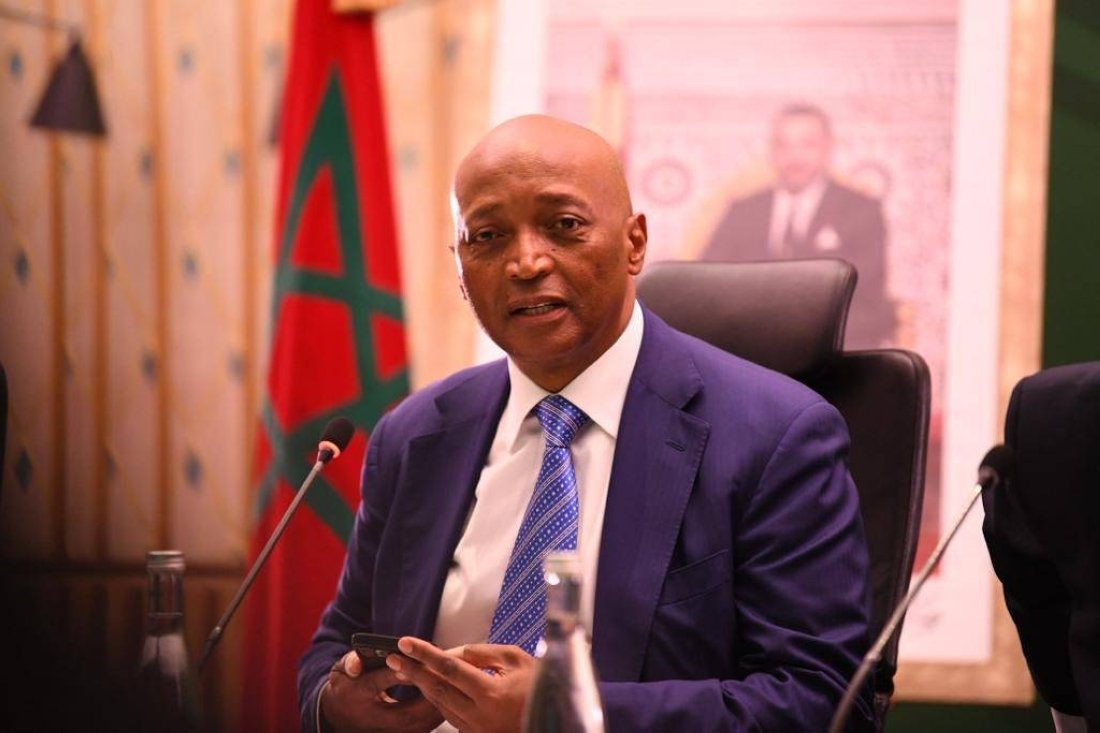
During a press conference held in Cairo on March 29, 2026, Patrice Motsepe emphasized Morocco’s crucial contribution to the organization and sustainability of African football competitions, particularly those considered less profitable.
The Executive Committee of the Confédération africaine de football addressed several major issues, including refereeing reforms, the controversy surrounding the AFCON 2025 final between Morocco and Senegal, and the decision by the Senegalese Football Federation (FSF) to appeal to the Court of Arbitration for Sport (CAS).
Amid these discussions, Patrice Motsepe took the opportunity to underline the importance of certain nations in sustaining African competitions.
Morocco, a cornerstone in hosting competitions
The CAF president highlighted the consistent commitment of Morocco, which often steps forward to host tournaments—even those with limited financial returns: “We launch calls for bids, and any member association can apply. But for some of the most challenging and least profitable competitions, such as futsal or the Women’s AFCON, we lose money. In many cases, Morocco is the only country that submits a bid.”
According to Motsepe, tournaments like futsal competitions and the Women’s Africa Cup of Nations are vital for the development of football across the continent, yet they struggle to attract hosts due to their low profitability. This creates a structural challenge for CAF in maintaining a balanced and sustainable competition calendar.
Balancing fairness and economic reality
Motsepe also stressed the importance of giving all African regions the opportunity to host tournaments. However, he acknowledged the practical necessity of relying on countries willing and able to organize these events: “We must give every zone the opportunity to host competitions, but I also have to ensure that these competitions continue to exist.”
This statement highlights a broader challenge facing CAF: balancing development, financial sustainability, and equitable distribution of competitions across the continent. In this context, Morocco’s role appears increasingly strategic in ensuring the continuity of key African football events.
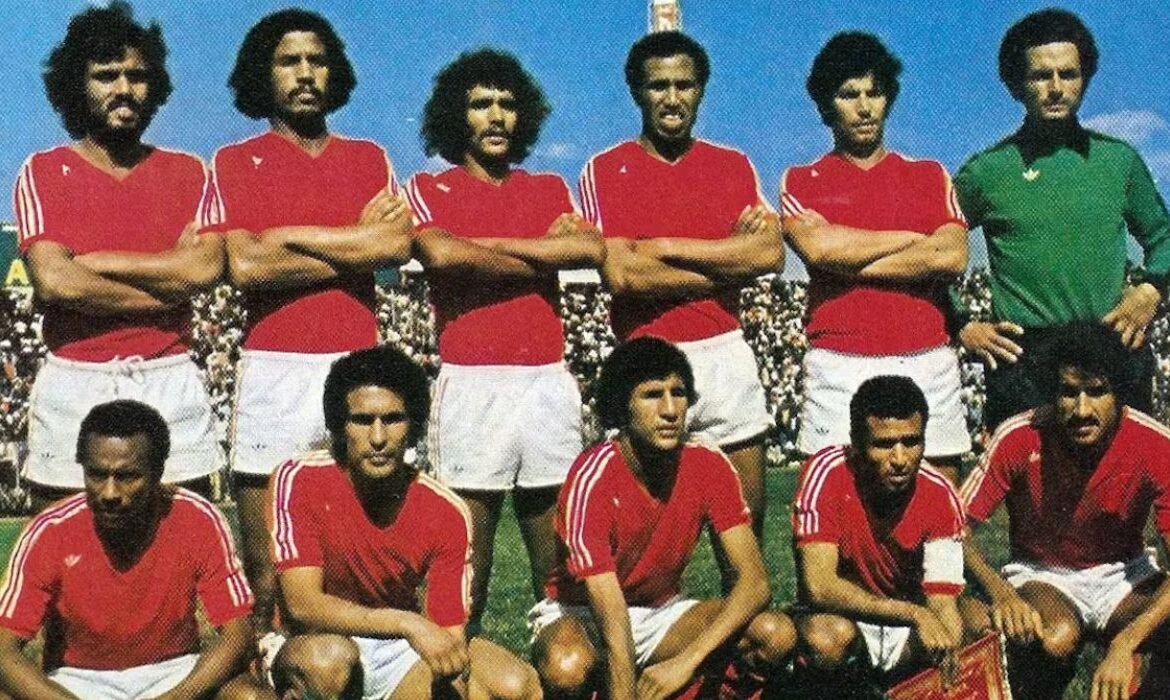
AFCON 1976: Guinea FA dismisses rumors, confirms Morocco’s historic title was legitimate
Guinea FA issues strong denial
In response, the Fédération guinéenne de football (FGF) released an official statement firmly rejecting these allegations. The federation confirmed that it has not initiated any legal action before the Court of Arbitration for Sport (CAS) or CAF regarding AFCON 1976, describing the circulating claims as “inaccurate and unfounded.”
Match facts contradict the rumors
To clarify the situation, the Guinean FA revisited the details of the March 14, 1976 match played in Addis Ababa. The game ended in a 1-1 draw, with Chérif Souleymane opening the scoring before Ahmed Makrouh, also known as “Baba,” equalized late in the match. No incidents were reported during or after the game, directly contradicting the viral narrative.
A different competition format in 1976
The controversy also highlights a common misunderstanding of the tournament format at the time. Unlike today’s final-based system, AFCON 1976 concluded with a final group stage. Morocco finished top of that group, ahead of Guinea, securing the title in full compliance with the rules.
Statement from the Guinean Football Federation
The Guinean Football Federation (FGF) wishes to inform the national and international public that it has not initiated any proceedings before either the Court of Arbitration for Sport (CAS) or the Confederation of African Football (CAF) in connection with the 1976 Africa Cup of Nations.
In recent days, information circulated across various platforms, particularly on social media, has incorrectly suggested that Guinea has taken steps to challenge the result of the match between the Syli National and Morocco during that tournament.
The Guinean Football Federation would like to clarify, in a spirit of responsibility and calm, that these claims are inaccurate and have no official basis.
Regarding the historical facts, the FGF recalls that the Guinea–Morocco match was played on March 14, 1976, in Addis Ababa, under the officiating of Zambian referee Nyirenda Chayu.
The match ended in a 1–1 draw, with Guinea opening the scoring in the 33rd minute through Chérif Souleymane, before Morocco equalized in the 86th minute through Ahmed Makrouh, known as “Baba”.
The Federation also wishes to recall, for historical clarification, that in accordance with the regulations in force at the time, the competition did not include a traditional final.
After an initial group stage, the qualified teams competed in a final round-robin group, with the standings directly determining the winner.
In this context, Morocco finished at the top of this final group and was duly crowned African champion, with Guinea finishing in second place.
The Guinean Football Federation reaffirms its commitment to respecting historical facts and sporting regulations.
It calls, with composure, on the media and all stakeholders to prioritize verified information and to avoid any interpretation likely to create confusion.
The FGF remains fully committed to promoting the values of fair play, mutual respect, and unity within African football.

AFCON 2025 : CAS verdict looms as legal expert backs Morocco’s title
The Morocco’s AFCON 2025 triumph remains a major talking point across African football. Awarded by the Confederation of African Football at the expense of Senegal, the title is now under scrutiny, with a final decision expected from the Court of Arbitration for Sport.
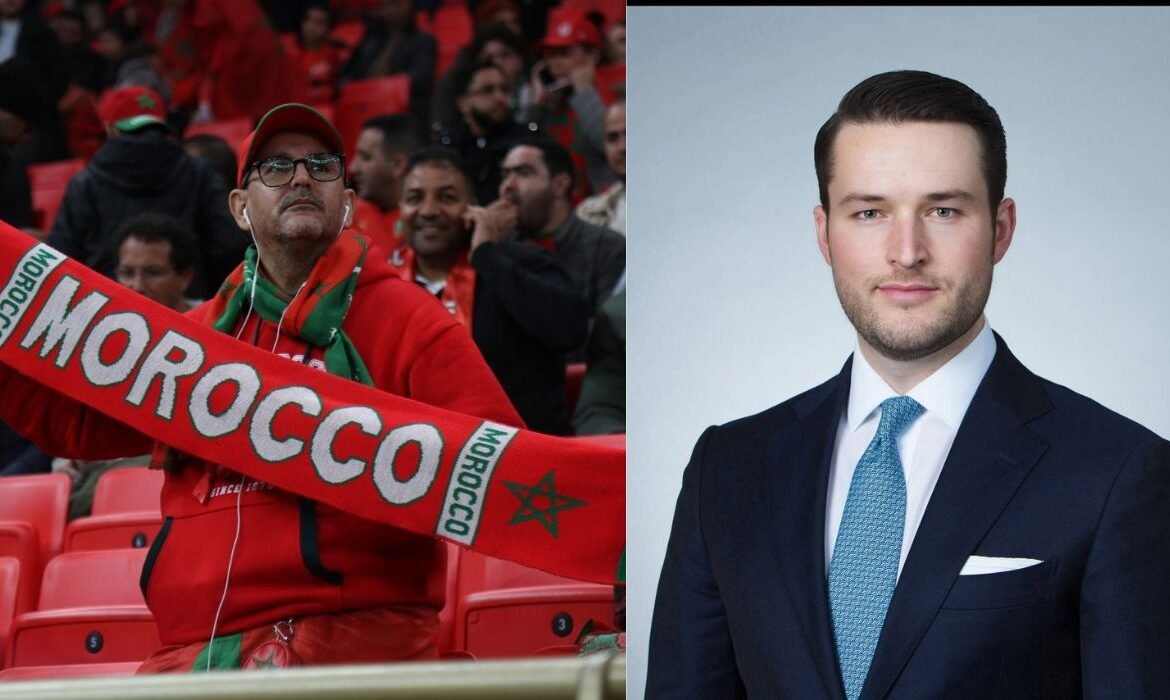
As the legal battle unfolds, confidence appears to be growing on the Moroccan side. Speaking to Onze Mondial, Paris-based lawyer Romain Bizzini suggested that the odds favor Morocco retaining the title.
“I would say there is a 75% chance that CAF’s decision will be upheld and that Morocco will remain champions (…) The strict application of the regulations works in favor of confirming the forfeit,” he explained.
This legal perspective reinforces the idea that the governing body’s decision was grounded in regulatory compliance. Unless procedural flaws or new evidence emerge, CAS is likely to validate CAF’s ruling.
For Morocco, this would represent not only a legal victory but also the confirmation of a historic continental achievement. As the football world awaits the final verdict, Moroccan supporters remain cautiously optimistic that the title will stand.

Amine Birouk defends Morocco’s victory at the AFCON 2025, the text takes precedence
Birouk’s intervention focused on a key principle: in modern football, regulations prevail over on-field results. While the Sénégal initially won the match, he argued that leaving the pitch to protest a VAR decision fundamentally altered the legal status of the game.
Referring to Articles 82 and 84 of CAF regulations, Birouk explained that such actions are considered a refusal to play, automatically resulting in a forfeit. In this framework, the original score becomes legally irrelevant.
Beyond the technical argument, Birouk positioned Morocco as an actor committed to institutional integrity. Rather than engaging in emotional reactions, he emphasized respect for the rulebook and judicial processes, reinforcing the credibility of the Fédération royale marocaine de football.
He also addressed criticism regarding the timing of the decision, explaining that CAF’s disciplinary bodies needed time to conduct a thorough investigation. According to him, the delay reflects due process rather than external influence.
Looking ahead, Birouk’s message clearly anticipates a potential appeal before the Tribunal arbitral du sport. His argument is consistent: confirming Senegal’s title despite the rule breach would set a dangerous precedent for international football.
By shifting the discussion from emotion to legality, Birouk framed the controversy as a broader issue of governance and respect for the rules — a position that strongly supports Morocco’s claim to the title.
RMC Sport backs CAF decision : Morocco’s AFCON 2025 win “fully justified”
Speaking on the “After Foot” show hosted by Gilbert Brisbois, pundits emphasized that CAF simply applied its own regulations. “It is logical that the jury applies a fair rule, but this decision should have come earlier,” the program stated.
At the core of the ruling is a clear regulatory framework. By leaving the pitch during the final, the Sénégal triggered a disciplinary mechanism that leads to an automatic forfeit. CAF’s Appeals Jury enforced Articles 82 and 84, awarding a 3-0 victory to Morocco.
For analyst Daniel Riolo, the case highlights a broader issue in modern football. He warned about the growing trend of teams walking off the pitch to protest refereeing decisions, calling it “a dangerous precedent” if not properly sanctioned.
Riolo also stressed that Morocco was fully within its rights to demand the enforcement of the rules. The Fédération royale marocaine de football formally challenged the situation, ultimately leading to the Appeals Jury’s ruling.
While the timing of the decision has been questioned, RMC Sport maintains that the outcome itself is legally sound. The case reinforces a key principle in football governance: regulations must prevail, regardless of match circumstances or emotional reactions.
AFCON 2025 : Patrick Rode confirms CAF ruling as strictly rule-based
The decision by the Confédération africaine de football to strip the Sénégal of the AFCON 2025 title and award it to the Maroc continues to generate debate. However, from a legal standpoint, experts argue that the ruling is firmly grounded in established regulations.
According to sports lawyer Patrick Rode, the case is a textbook example of how competition rules are applied in international football. The turning point came when Senegal players left the pitch to protest a VAR decision during the final.
Under CAF regulations, leaving the field without the referee’s authorization is considered a refusal to play. This automatically triggers a forfeit, resulting in a 3-0 loss. The Appeals Jury therefore enforced the rules as written, without discretionary interpretation.
This automatic nature of the sanction is key. The decision was not based on opinion or context, but on a clear regulatory framework aligned with principles set by the Fédération internationale de football association.
While Senegal initially won the match on the pitch and celebrated the title, such factors are legally irrelevant. In football governance, regulations prevail over match circumstances or emotional reactions.
The Fédération sénégalaise de football is expected to appeal to the Tribunal arbitral du sport. However, the chances of overturning the decision appear limited. The CAS typically examines procedural errors, arbitrariness, or disproportionate sanctions — none of which are clearly evident in this case.
Potential arguments may focus on the match resumption or shared responsibility involving refereeing decisions. Yet, given the strict and automatic nature of the applicable rule, such arguments are unlikely to significantly alter the outcome.
Ultimately, the case highlights a fundamental principle: in modern football, the rulebook is decisive. Morocco’s title stands as the legal consequence of that principle.
Morocco explains AFCON 2025 victory : “A simple application of the rules”
AFCON 2025: Morocco “Takes Note” of CAF decision, calls for respect of regulations
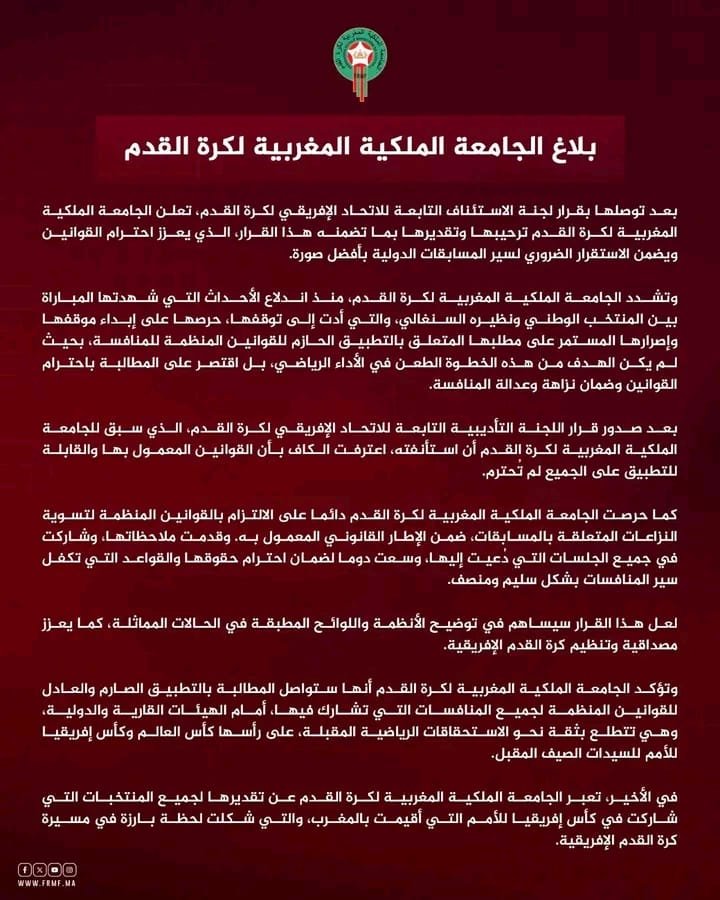
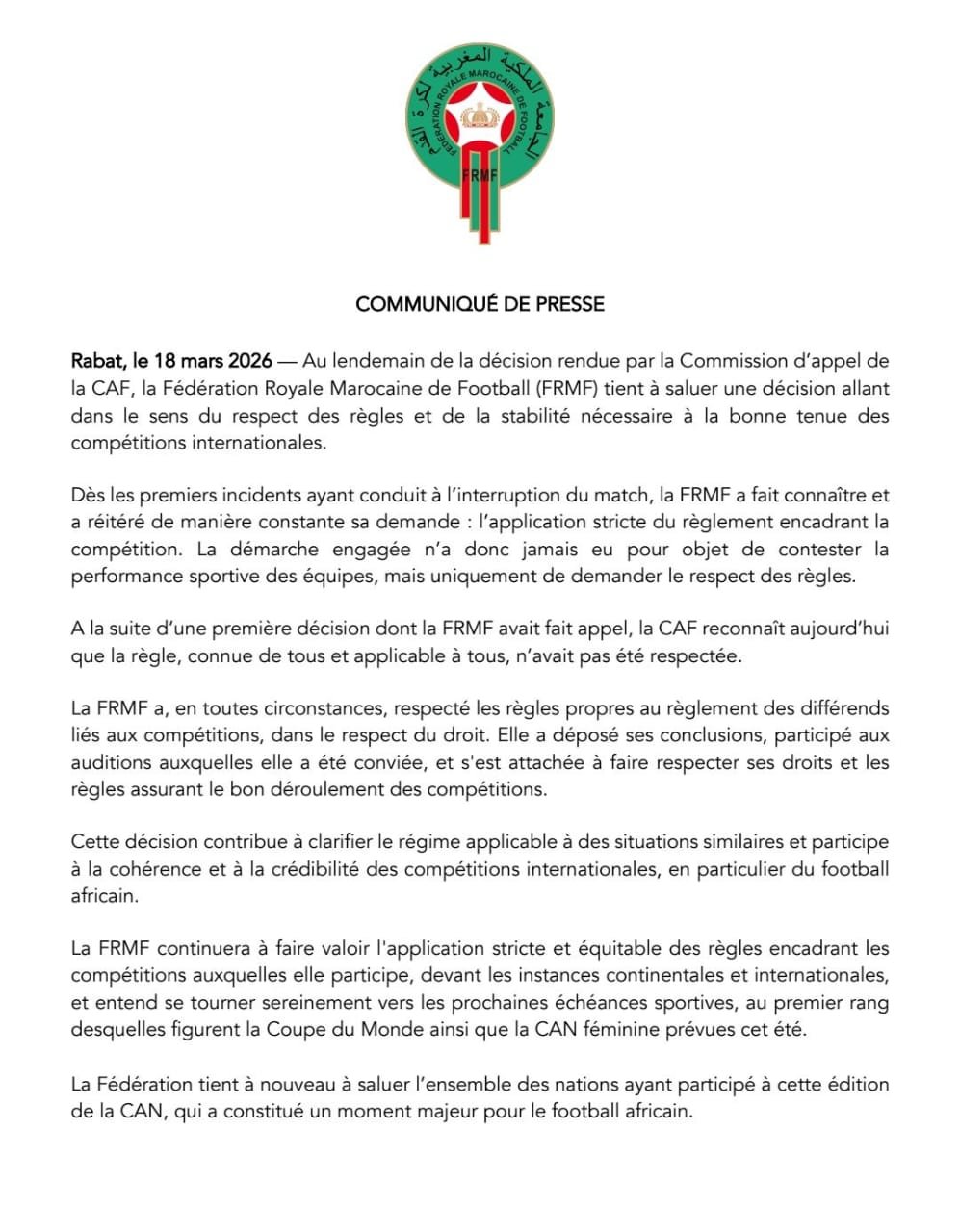
FRMF reacts cautiously after being awarded the title. Following the ruling of the Confederation of African Football (CAF) regarding the final of the 2025 Africa Cup of Nations, Morocco has issued its first official response.
In a statement, the Royal Moroccan Football Federation (FRMF) said it “takes note” of the decision made by CAF’s Appeal Committee, which declared Senegal to have forfeited the final, awarding Morocco a 3-0 victory.
A focus on rules rather than sporting controversy
The FRMF emphasized that its approach was never intended to challenge the sporting performances of the teams involved, but rather to ensure the proper application of competition regulations. The federation reaffirmed its commitment to respect for rules, clarity in competition frameworks, and the stability of African football competitions.
A message of respect toward all participating nations
In a conciliatory tone, the FRMF praised all the teams that took part in the tournament, describing AFCON 2025 as a major milestone for African football. This approach reflects Morocco’s intention to ease tensions following a highly controversial final.
Further statement expected
The Royal Moroccan Football Federation also announced that a more detailed statement will be released after consultations with its governing bodies. This upcoming communication is expected to provide further clarity on Morocco’s official stance following CAF’s landmark decision.
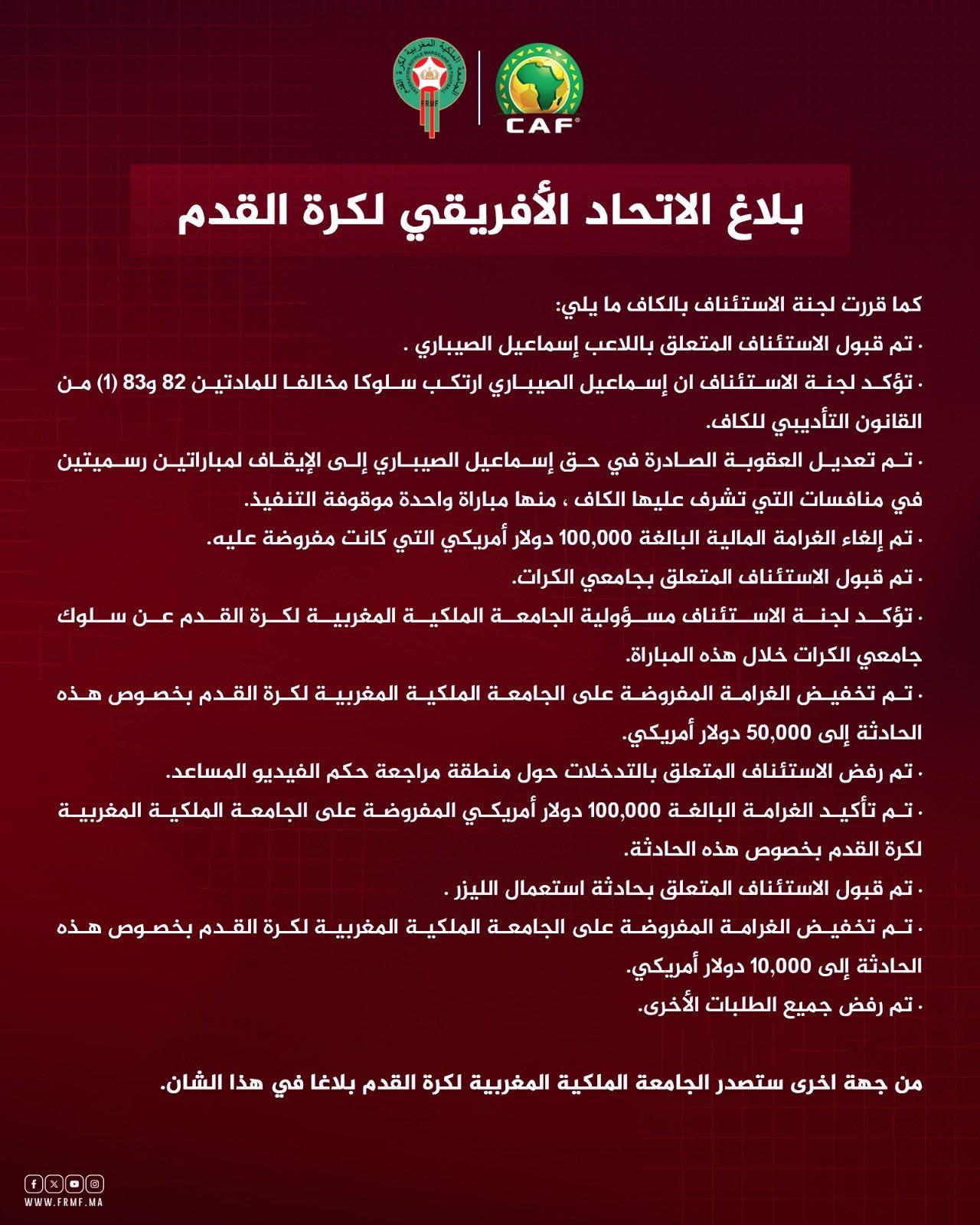
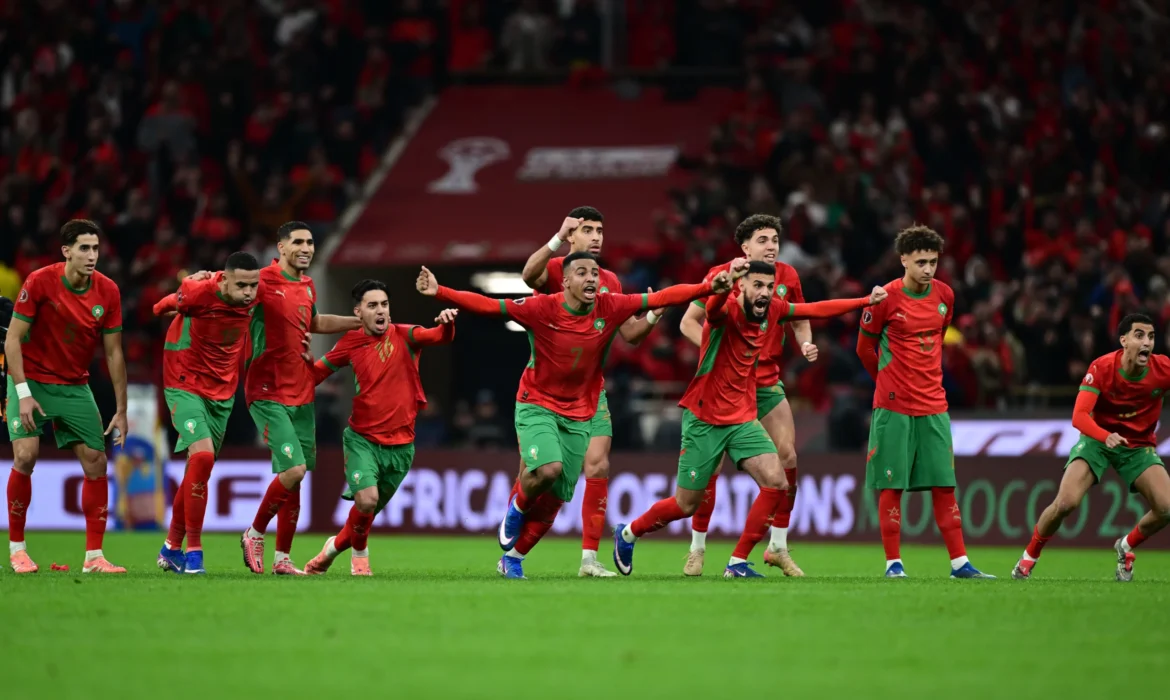
AFCON 2025: Morocco officially crowned champions after CAF decision
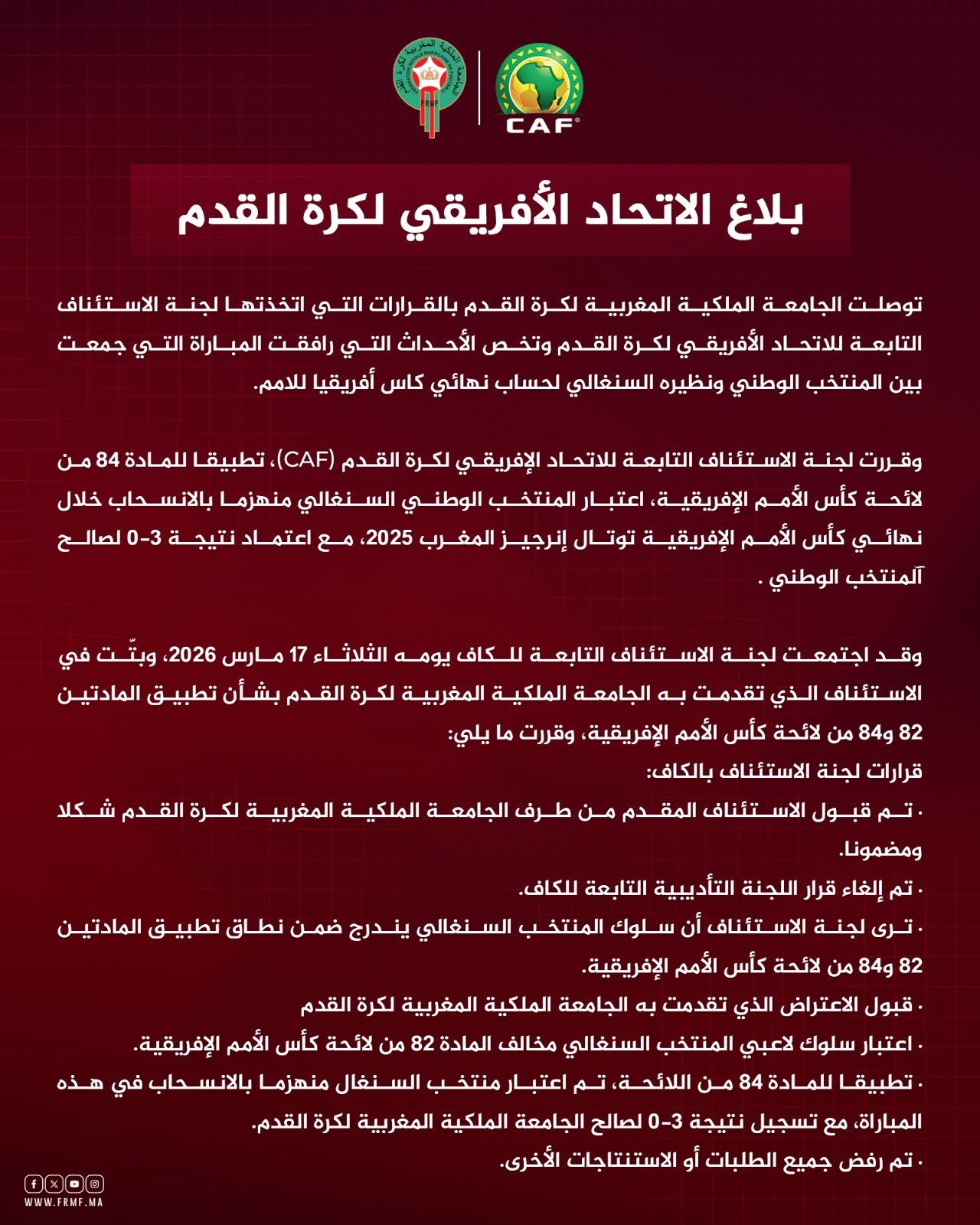
CAF awards final victory to Morocco following Senegal forfeiture. The Confederation of African Football (CAF) has officially declared Morocco as the winners of the 2025 Africa Cup of Nations after ruling that Senegal forfeited the final. According to the decision issued by CAF’s Appeal Committee, the match has been awarded as a 3-0 victory in favor of Morocco, in line with Article 84 of the tournament regulations.
A historic decision in African football
This ruling marks a significant and rare moment in African football history. While the final had initially ended under controversial circumstances, CAF’s decision now provides an official and definitive outcome. The Royal Moroccan Football Federation (FRMF) is therefore recognized as the official AFCON 2025 champion.
CAF applies regulations to close the case
CAF’s Appeal Committee emphasized that the decision strictly follows the competition’s disciplinary framework. In cases of forfeiture, regulations clearly state that the opposing team is awarded a 3-0 win. This administrative ruling brings closure to a highly debated final that had drawn attention across the continent.
Reactions expected as Senegal considers next steps
While Morocco celebrates its continental title, attention now turns to Senegal, which may consider further legal action through international sports bodies.
Regardless of potential appeals, CAF’s decision currently stands as final, confirming Morocco’s status as AFCON 2025 champions.