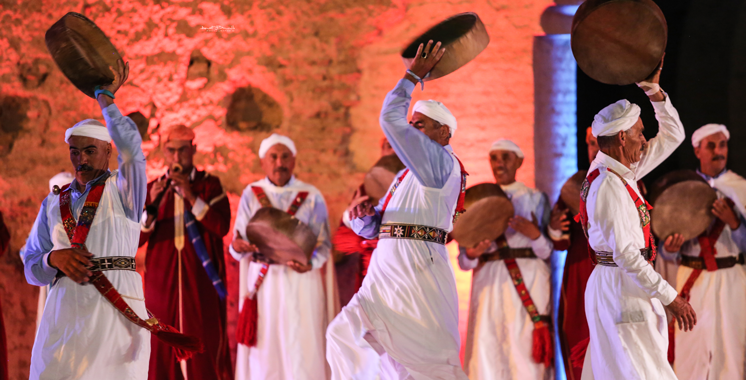
Marrakech is set to come alive to the rhythm of Moroccan traditions. From 2 to 6 July 2026, the ochre city will host the 55th edition of the National Festival of Folk Arts (FNAP), one of the Kingdom’s oldest cultural events. Under the theme ‘‘ Folk Arts: Treasures of Yesterday and Today”, this year’s festival will celebrate Morocco’s intangible cultural heritage through performances, songs and dances from the country’s various regions.
Organised by the Le Grand Atlas Association, in partnership with the Ministry of Youth, Culture and Communication and several local institutions, the Festival continues the mission it has upheld since its creation in 1960: to preserve, pass on and promote Moroccan folk arts to new generations.
El Badiâ Palace regains its iconic role
One of the highlights of this 55th edition will be the return of the grand show at El Badiâ Palace. An iconic landmark of Marrakech, built in the 16th century during the reign of Sultan Ahmed El Mansour, this historic venue is once again taking on its role as the Festival’s main stage.
Against this backdrop steeped in history, folk troupes from different regions of the Kingdom will bring to life the traditional songs, music and dances that form the rich tapestry of Morocco’s cultural heritage.
Two new initiatives to showcase Morocco’s cultural heritage
The 2026 edition features two major new initiatives.
The first is a unique tribute dedicated to women’s Aïta, embodied by the singer Zina Daoudia. Through this initiative, the Festival highlights one of the most iconic musical expressions of Moroccan heritage and pays tribute to the vital role played by women in passing on this heritage.
The second new feature is the opening of the Medersa Ben Youssef as a new performance venue. For the first time, this historic monument will host Festival performances. Singer Nabila Maan will give a performance there that will create a dialogue between architectural heritage and Moroccan music, before other artists take the stage during the five days of festivities.
Marrakech, capital of living heritage
A city intrinsically linked to the National Festival of Popular Arts, Marrakech provides a natural setting for celebrating the Kingdom’s cultural diversity. Its famous Jemaâ El-Fna Square, listed by UNESCO as part of the Intangible Cultural Heritage of Humanity, symbolises in itself the richness of Moroccan oral traditions.
For five days, folk troupes, musicians, dancers and artists from all regions of Morocco will take the audience on a journey into the heart of folk arts, demonstrating the vitality of a heritage that is still very much alive.
A legacy at the heart of Moroccan identity
For Mohamed Knidiri, president of the Le Grand Atlas Association, the festival’s longevity illustrates, above all, a constant commitment to preserving Moroccan culture.
“Fifty-five editions represent a loyalty that goes far beyond any one of us. This long history is not a trophy, but a responsibility. If the magic still works, it is because we have never treated these arts as a memory to be preserved, but as a movement to be nurtured. A nation that dances is a nation that remembers it is alive,” he emphasises.
Through this 55th edition, the National Festival of Popular Arts reaffirms its role as guardian of Morocco’s intangible heritage. More than just a cultural event, it celebrates a living memory that continues to be passed on, renewed and shared, showcasing the richness of the Kingdom’s traditions, with Marrakech serving as a showcase for this cultural identity.