Morocco : Jazzablanca 2026 comes to a close with another popular success
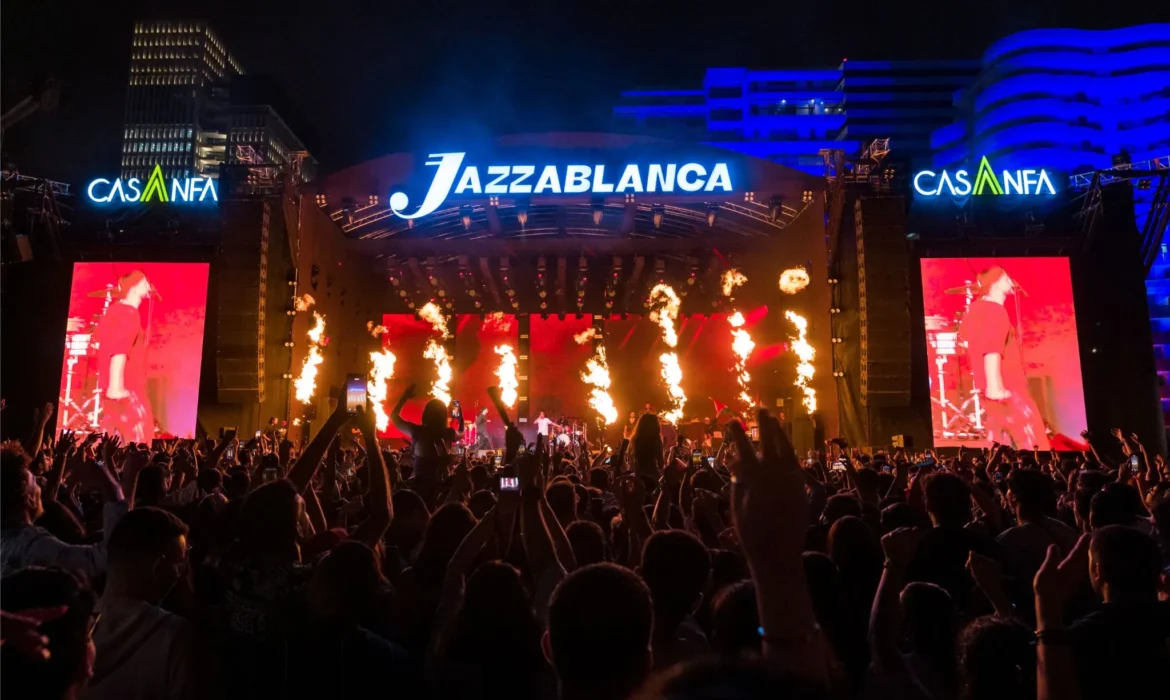
The 19th edition of Jazzablanca came to an end in Casablanca after ten days of concerts that attracted nearly 100,000 festivalgoers. Held from July 2 to 11 at Anfa Park and the Arab League Park, the festival once again confirmed its status as one of Morocco’s leading music events.
This year’s edition featured numerous international headliners, including Robbie Williams, Scorpions, Mika, Ms. Lauryn Hill, Jorja Smith, Jessie J, Naika, and Rilès, while also giving the spotlight to emerging artists from a wide range of musical backgrounds.
A festive closing night in Casablanca
The final evening reflected the festival’s diversity. Sara Moullablad opened the celebrations with a blend of jazz, Brazilian sounds, and chaâbi music, followed by performances from Madison McFerrin and Hind Ennaira & Omary, who combined soul, R&B, gnaoua music, and electronic sounds. On the Casa Anfa Stage, Jorja Smith performed her very first concert in Morocco before Jessie J brought the festival to a close with an energetic performance, highlighted by a surprise appearance from the British singer.
Remaining true to its identity, Jazzablanca also gave a prominent place to jazz through the Stage 21, which hosted several international artists while also embracing soul, blues, afrobeat, and African music. The 2026 edition also took place alongside the FIFA World Cup, with a dedicated area broadcasting the matches of the Atlas Lions, further enhancing the festival’s friendly atmosphere.
In total, nearly 1,800 people took part in organizing the event, alongside more than 600 artists, musicians, and technicians, contributing to the success of an edition that further confirms Jazzablanca’s place among Africa’s leading music festivals.

Morocco : Diesel and gasoline prices rise again
After three consecutive price cuts, fuel prices in Morocco will increase starting this Thursday. Diesel will rise by 0.70 dirham per litre, while gasoline will increase by 0.38 dirham per litre, according to the National Federation of Service Station Owners, Traders, and Managers.
This price increase brings to an end a series of successive reductions in pump prices. The Federation said it had been informed of the adjustment by one of the Kingdom’s leading fuel distribution companies as part of the bi-monthly pricing revision.
The increase is mainly due to developments in the global oil market, which has been affected in recent days by ongoing geopolitical tensions. Despite a slight decline in crude oil prices on Wednesday, prices remain supported by uncertainty surrounding global supply.
According to Reuters, Brent crude was trading at $83.62 per barrel, while U.S. West Texas Intermediate (WTI) fell to $78.53 per barrel. Markets also reacted to a smaller-than-expected decline in U.S. crude oil inventories, a factor that continues to influence international oil prices.
With this latest increase, Moroccan motorists are seeing fuel prices rise again after several weeks of relative stability.
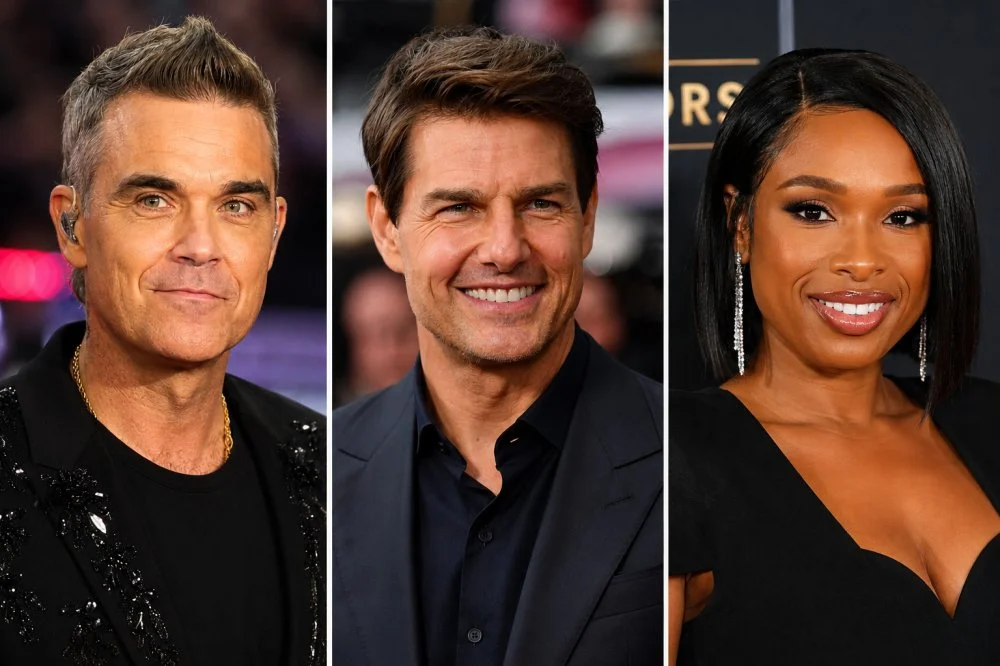
2026 World Cup : Robbie Williams, Tom Cruise and Jennifer Hudson expected at the final
FIFA has unveiled the program for the closing ceremony of the 2026 FIFA World Cup, scheduled for July 19 at MetLife Stadium in New York–New Jersey, ahead of the tournament final.
The ceremony will feature several international celebrities, including Robbie Williams, Laura Pausini, Nicole Scherzinger, IShowSpeed, and Tom Cruise, who will make a special appearance. Jennifer Hudson will perform the United States national anthem before kick-off.
The final will also feature the first-ever halftime show in FIFA World Cup history, inspired by the Super Bowl. Overseen by Chris Martin of Coldplay, the performance will include Shakira, Justin Bieber, Madonna, Burna Boy, and BTS, in support of Global Citizen’s education fund.
Produced in collaboration with Balich Wonder Studio, the ceremony will pay tribute to the journey of the 48 national teams that took part in this historic edition hosted by the United States, Canada, and Mexico. According to FIFA, the show will celebrate the passion, cultural diversity, and universal appeal of football before the crowning of the new world champion.
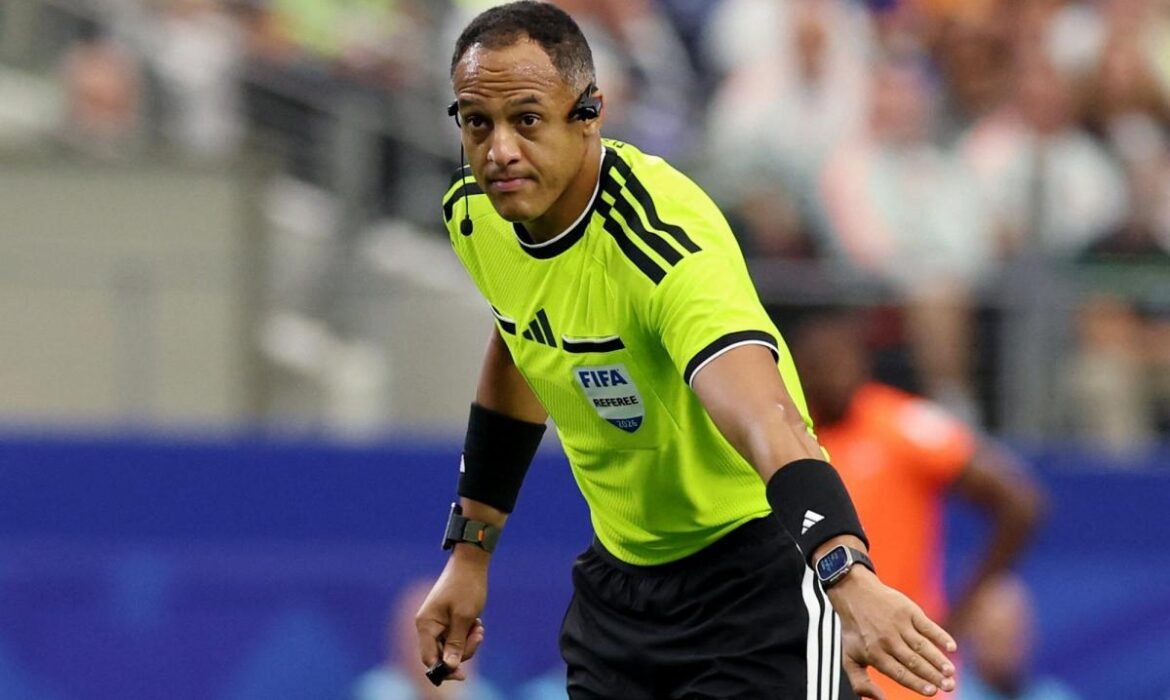
Morocco: Ismail El Fath appointed referee for the England–Argentina semi-final
Born in Casablanca and naturalized as an American citizen, Ismail El Fath has been appointed to referee the 2026 FIFA World Cup semi-final between England and Argentina. At the age of 44, one of FIFA’s most respected referees continues his remarkable journey, four years after serving as the fourth official in the 2022 World Cup final.
Having moved to the United States at the age of 18 through the Diversity Visa Lottery, El Fath studied mechanical engineering in Texas before turning to refereeing. After officiating in Major League Soccer (MLS) from 2012, he became the first referee to oversee a match using VAR in the American league in 2016.
An inspiring journey to the World Cup
An international referee since 2017, Ismail El Fath has officiated at a series of major tournaments, including the FIFA U-20 World Cup, the CONCACAF Gold Cup, the Africa Cup of Nations (AFCON), the Olympic Games, the 2022 FIFA World Cup, and now the 2026 FIFA World Cup.
During this edition, he has already refereed several important matches, including Netherlands vs. Japan, Spain vs. Uruguay, and Norway vs. Brazil in the Round of 16. Nicknamed by some as Lionel Messi’s « lucky referee » because of the Argentine star’s many victories under his officiating, the Casablanca native continues to proudly represent his Moroccan roots on the world stage.
In 2025, the Royal Moroccan Football Federation (FRMF) entrusted him with a mission to modernize refereeing in Morocco, a project that was eventually interrupted for family reasons. Nevertheless, Ismail El Fath remains one of Morocco’s greatest success stories in the world of international refereeing.
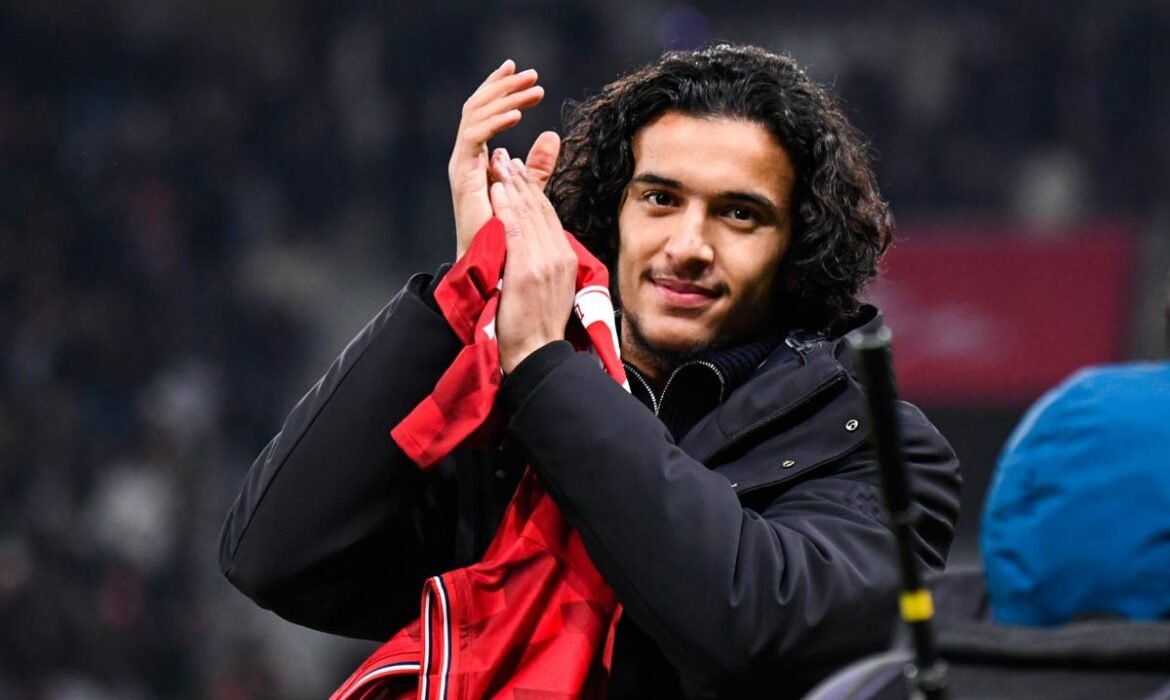
Morocco: Deschamps did not consider Bouaddi ready before his decision
Didier Deschamps believed that Ayyoub Bouaddi was not yet ready to join the France senior national team before the young midfielder decided to represent Morocco. The revelation was made by Hubert Fournier, the French Football Federation’s (FFF) National Technical Director, in an interview with The Athletic.
According to Hubert Fournier, Bouaddi was included in France’s extended squad for the 2026 FIFA World Cup, but the strong competition in midfield meant that he was not guaranteed a place in the final squad. « Deschamps chose not to select Bouaddi, while Morocco offered him the opportunity to play in the World Cup, » he explained, describing the decision as « a significant loss » for French football.
Last May, the 18-year-old midfielder, who was developed in France and had represented all of France’s youth national teams, officially chose to represent the Atlas Lions.
Morocco gave him his chance
A few weeks later, Bouaddi played at the 2026 FIFA World Cup with Morocco, where he quickly established himself as one of the tournament’s breakout stars. His performances, particularly against Brazil in the group stage, confirmed the Moroccan Royal Football Federation’s decision to place its trust in him.
His decision proved to be the right one: while France still considered him to be in the learning phase, Morocco gave him a leading role on the world stage, further strengthening one of the most promising generations in its history.
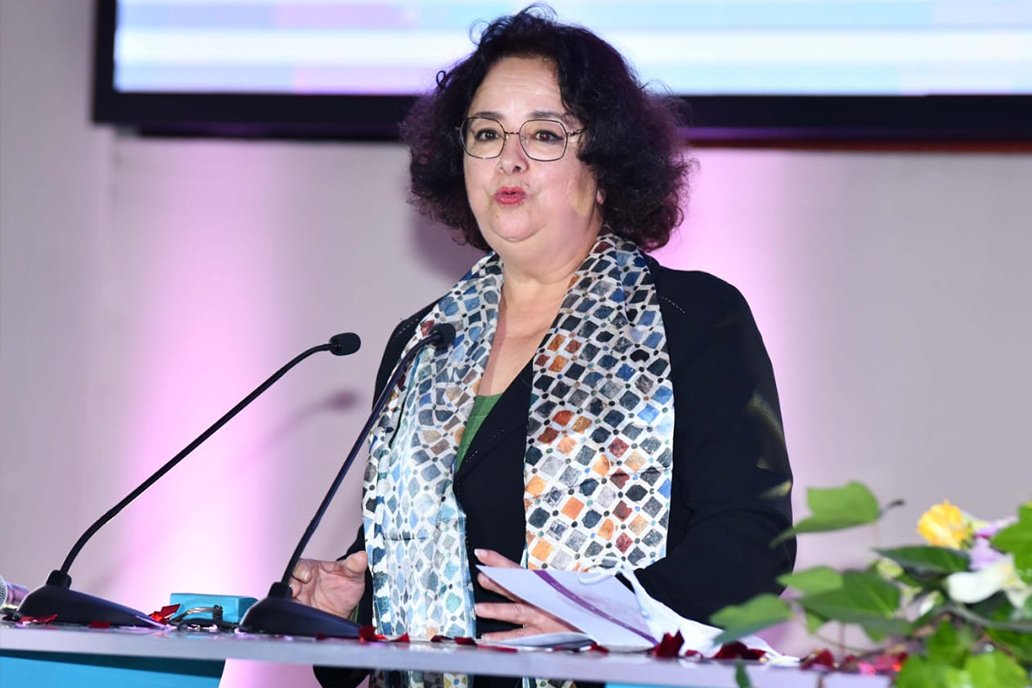
Morocco: HACA denounces a media campaign against the Kingdom
The President of the High Authority for Audiovisual Communication (HACA), Latifa Akharbach, has denounced a disinformation campaign targeting Morocco, calling for stronger trust in the media in the face of the growing spread of digital manipulation.
Speaking at the Global Media Forum, held in Shusha, Azerbaijan, Latifa Akharbach warned against the excesses of major digital platforms, whose business models, she said, encourage virality, polarizing content, and disinformation.
The Moroccan official cited the example of the most recent Africa Cup of Nations (AFCON), during which the Kingdom was allegedly targeted by a « media war » fueled by conspiracy theories, hate speech, racist content, and deepfakes circulated on social media. According to her, this campaign helped create a climate of mistrust between Morocco and Senegal, two countries linked by historic and brotherly relations.
In response to these challenges, Latifa Akharbach called for greater media responsibility, the ethical regulation of artificial intelligence in newsrooms, and stronger media and digital literacy. She also called for better regulation of global digital platforms, arguing that their algorithms often promote the spread of hateful and misleading content.
For the HACA President, strengthening professional journalism remains an essential tool for preserving social cohesion, restoring public trust, and protecting civil peace.
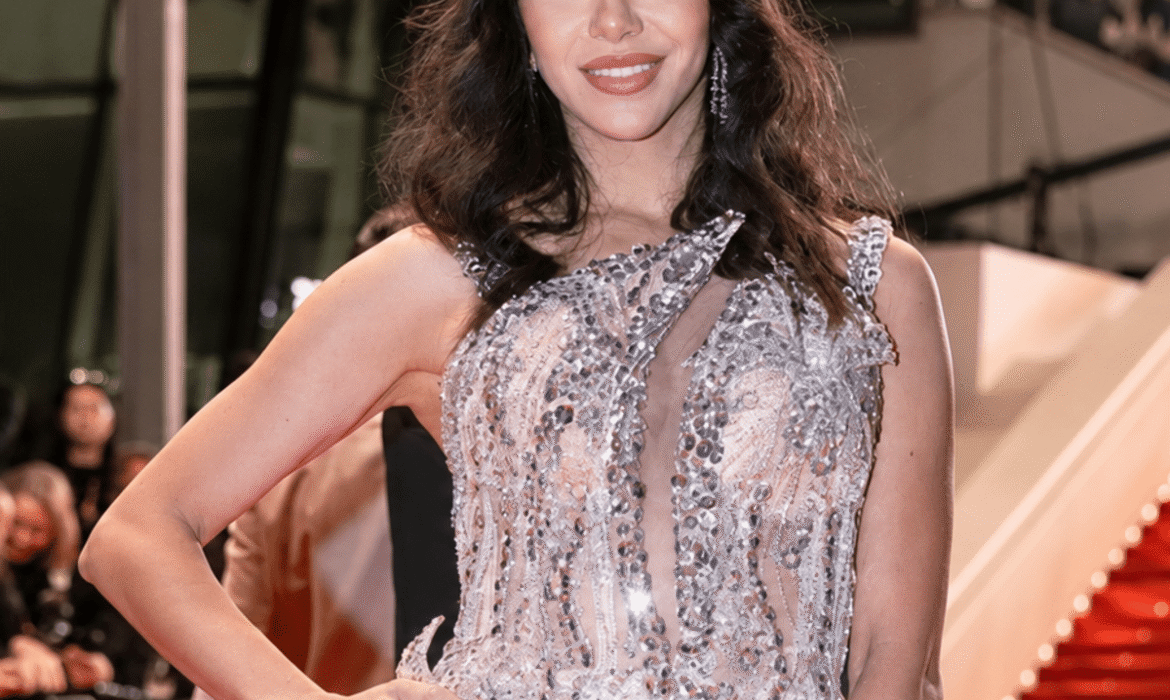
Morocco: Chirihan Chergui to represent the Kingdom at Miss World 2026
Morocco will be represented by Chirihan Chergui at the 73rd edition of Miss World 2026, which will take place in Vietnam from August 9 to September 5, with the participation of more than 130 countries.
Originally from Berkane, the Moroccan contestant aims to showcase the Kingdom’s rich cultural heritage. For the national costume competition, she will wear a caftan inspired by Fassi zellige, designed by fashion designer Hind El Iraqi. Chirihan Chergui will also present an artistic performance entitled « Roots », paying tribute to Morocco’s Oriental region. The Blouza Oujdia and the Reggada dance will be at the heart of the performance, in honor of her origins.
« I am taking Morocco with me to the world. I am proud to represent my country and to show that Moroccan ambition knows no limits, » the contestant said.
Beyond beauty pageants, Chirihan Chergui is an entrepreneur in the field of artificial intelligence in France. She also serves as an ambassador for SOS Children’s Villages Morocco, where she supports young people in their journey toward education, employment, and independence. Through her participation, the Moroccan representative hopes to promote the Kingdom’s culture, craftsmanship, and values on the international stage.
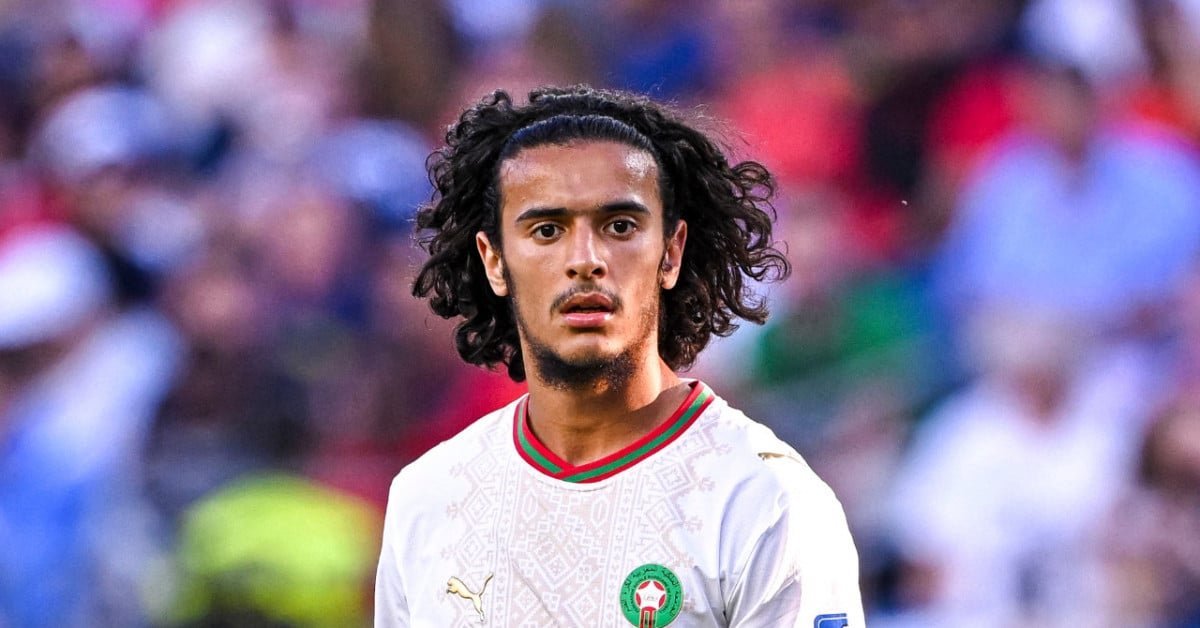
Morocco: Bouaddi and Aït Boudlal among the 100 finalists for the 2026 Golden Boy award
Moroccan football continues to confirm its rise on the European stage. Morocco internationals Ayyoub Bouaddi and Abdelhamid Aït Boudlal are among the 100 finalists for the 2026 Golden Boy award, the prestigious prize presented each year to the best under-21 player competing in Europe.
Italian newspaper Tuttosport, the organizer of the award, has unveiled its latest ranking update. Ayyoub Bouaddi, the LOSC midfielder, has climbed to an impressive fifth place following his outstanding performances with the Atlas Lions at the 2026 FIFA World Cup.
At just 18 years old, Bouaddi has been praised for his maturity and composure, with Tuttosport stating that he plays with « the confidence and maturity of an experienced player. » His performances continue to attract the attention of several major European clubs, including Arsenal, Real Madrid, and Paris Saint-Germain. Meanwhile, Abdelhamid Aït Boudlal is also continuing his progress. The Stade Rennais defender, who was developed at the Mohammed VI Football Academy, is the second Moroccan player featured in the Top 100.
Created in 2003 by Tuttosport, the Golden Boy award is one of the most prestigious individual honors in European football. Previous winners include Lionel Messi, Kylian Mbappé, Erling Haaland, Jude Bellingham, and Lamine Yamal. France’s Désiré Doué is the reigning title holder.
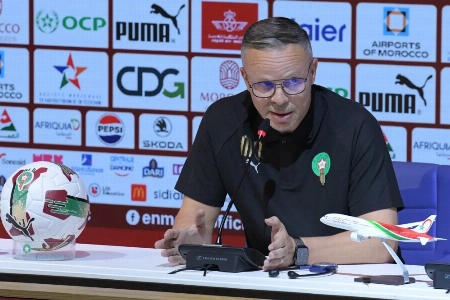
Morocco: Ouahbi sees a promising future after the 2026 World Cup
Mohamed Ouahbi gave a positive assessment of the Atlas Lions’ campaign at the 2026 FIFA World Cup, despite Morocco’s 2-0 quarter-final defeat to France. The Morocco head coach believes that this campaign has laid the foundations for a promising future for Moroccan football.
During his press conference at the Mohammed VI Football Complex, Ouahbi first thanked King Mohammed VI, the Royal Moroccan Football Federation, his coaching staff, the players, and the supporters for their support throughout the tournament. The Moroccan coach also congratulated France on its victory, acknowledging the superiority of Les Bleus and taking full responsibility for Morocco’s elimination. However, he pointed out that the Atlas Lions had enjoyed a remarkable campaign, producing five convincing performances in six matches.
Looking back on the quarter-final, Ouahbi insisted that his team had not changed its playing philosophy. According to him, the main issue was a lack of efficiency in the final third rather than a tactical problem. The head coach also refused to use injuries or fatigue as excuses. « Those are excuses. I want to keep moving forward, » he said, arguing that this level of ambition is essential if Morocco is to continue its progress.
Finally, Mohamed Ouahbi expressed great optimism about the future. He emphasized that Morocco had one of the youngest squads in the tournament and that the experience gained would be invaluable for the challenges ahead.
« The future of Moroccan football is bright, » the head coach concluded, convinced that the Atlas Lions will continue to grow in the years to come.
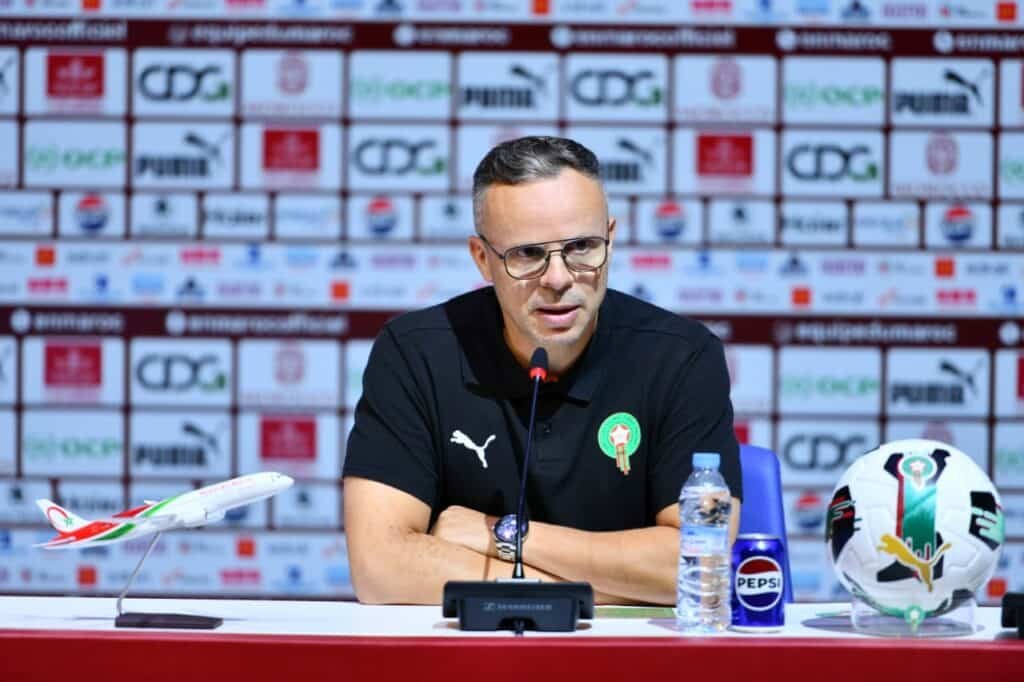
Morocco: Ouahbi responds to rumors about João Sacramento and Amrabat
Mohamed Ouahbi has put an end to the speculation surrounding his coaching staff and Sofyan Amrabat. The Morocco head coach confirmed that his assistant, João Sacramento, will continue his role with the Atlas Lions and denied any disagreement with the Moroccan midfielder.
During the press conference reviewing Morocco’s 2026 FIFA World Cup campaign, Ouahbi stated that João Sacramento will normally return to his duties after his vacation. He denounced the rumors that emerged following Morocco’s elimination, saying they were intended only to destabilize the national team. The Moroccan coach also praised the work of his Portuguese assistant, highlighting his professionalism, his commitment to Morocco, and his contribution to the coaching staff.
Mohamed Ouahbi also dismissed the speculation surrounding Sofyan Amrabat. He insisted that there is no conflict with the Atlas Lions midfielder, explaining that the player was simply frustrated by his limited playing time during the tournament. The head coach said that he had explained Amrabat’s role to him from the very beginning. According to Ouahbi, the player accepted the situation professionally and continued to work hard, which allowed him to take part in the tournament.
Regarding the comments made by Sofyan Amrabat’s brother, Ouahbi attributed them to emotion, pointing out that the relatives of players also experience major tournaments very intensely. He concluded by stating that his relationship with the Moroccan international is excellent and that there is no tension within the squad.