

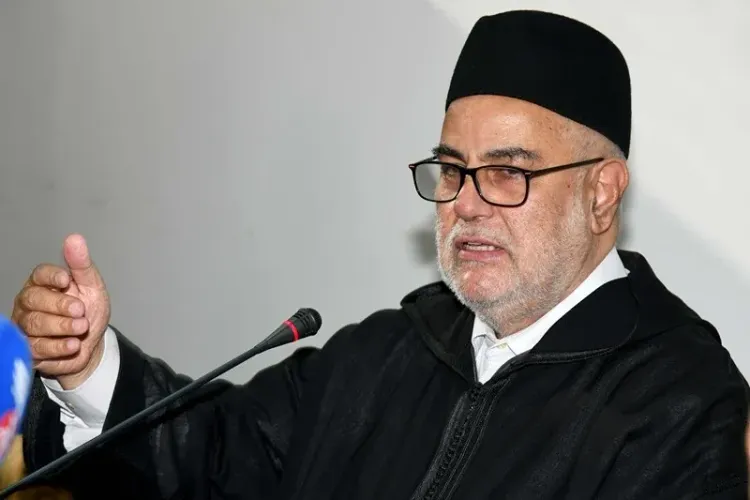
The Secretary-General of the PJD maintains his opposition to normalisation whilst refusing to condemn the state.
The balance between partisan convictions and the defence of the nation’s higher interests regularly shapes the statements made by figures on the political scene. Speaking on Tuesday 10 November 2026 in Casablanca at a meeting with students organised by the Student Renewal Organisation, the Secretary-General of the Justice and Development Party, Abdelilah Benkirane, addressed the gathering following the official visit to the Kingdom by the Director-General of the Israeli Ministry of Defence, Amir Baram. Whilst reaffirming the doctrinal opposition of his political party and the Unity and Reform Movement to the normalisation of relations with Tel Aviv, the former head of government drew a clear line between his ideological disagreement and his unwavering commitment to national institutions. He firmly rejected any questioning of the state’s strategic choices, emphasising that the country faces regional threats and sovereign defence imperatives that demand unwavering cohesion.
Distinguishing between official policy and public debate
During this discussion, the politician qualified the scale of the current popular backlash compared with the protests seen in the early 2000s, whilst urging young activists to prioritise peaceful expression and lawful political channels to defend their convictions within society. This statement comes against a backdrop of deepening bilateral security and industrial cooperation, as illustrated on Monday 9 November in Rabat by talks between defence officials from both countries and the inauguration of the permanent premises of the Israeli defence attaché’s office. Whilst regional opinion polls continue to reflect strong public sentiment amongst the Moroccan population regarding the Palestinian cause, the speech by the PJD leader serves as a reminder of the priority accorded by the entire political class to national security and the territorial integrity of the Kingdom.
Implications for institutional stability and national sovereignty
The ability of opposition politicians to express ideological differences whilst reaffirming their solidarity on defence issues illustrates the maturity of the national institutional model. This façade of unity on matters of national sovereignty strengthens the country’s political stability and reassures international partners involved in long-term investment projects within the country. At the same time, partnerships forged in the fields of cutting-edge technology and the defence industry contribute to the transfer of know-how, the creation of a local industrial base and the strengthening of the Kingdom’s strategic autonomy in a challenging regional environment.