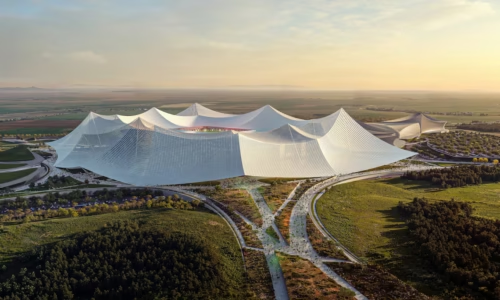


Journalist David Sánchez praises the modernity of the Hassan II Grand Stadium in Casablanca compared to the venues in Madrid.
The debate surrounding the selection of the stadium to host the 2030 World Cup final is prompting nuanced responses on both sides of the Strait of Gibraltar. Whilst several politicians and sports commentators in Spain are making repeated statements in support of hosting the final at Madrid’s Santiago Bernabéu or Barcelona’s Camp Nou, a well-known figure in the Spanish media landscape has just tempered this enthusiasm. Speaking on the sports programme *El Partidazo* on COPE, journalist David Sánchez urged his colleagues to objectively acknowledge the exceptional quality of the infrastructure currently under construction near Casablanca. The observer emphasised that, given FIFA considers the Kingdom to have the largest, most modern and best-prepared venue to meet the logistical demands of such an event, awarding the final to the Casablanca site would be a perfectly natural decision from both a sporting and organisational perspective.
An architectural project designed to world-class standards
This media recognition highlights the technical merits of the future Hassan II Grand Stadium in Benslimane, designed to accommodate a record capacity of 115,000 spectators. Far from being limited to the construction of a monumental stadium, the project is based on the creation of an integrated urban and logistical ecosystem, encompassing dedicated transport networks, streamlined access routes and ancillary infrastructure designed to accommodate official delegations, the international media and tens of thousands of supporters simultaneously. This comprehensive approach enables the country to present a strong bid to world football’s governing bodies, which alone retain the regulatory authority to determine the schedule and venues for the decisive matches of the tournament co-organised by Morocco, Spain and Portugal.
Benefits for the national engineering sector and tourism appeal
The international credibility gained through this flagship project highlights the expertise of the engineers, architects and construction firms working in the region. The construction of a world-class infrastructure project stimulates the transfer of technological know-how, boosts skilled employment in the Casablanca-Settat region and strengthens the integration of local industrial sectors. In the medium term, this international profile will consolidate the Kingdom’s appeal as a prime destination for events and sports tourism, ensuring sustainable economic benefits for the hotel, catering and transport sectors well beyond the 2030 deadline.