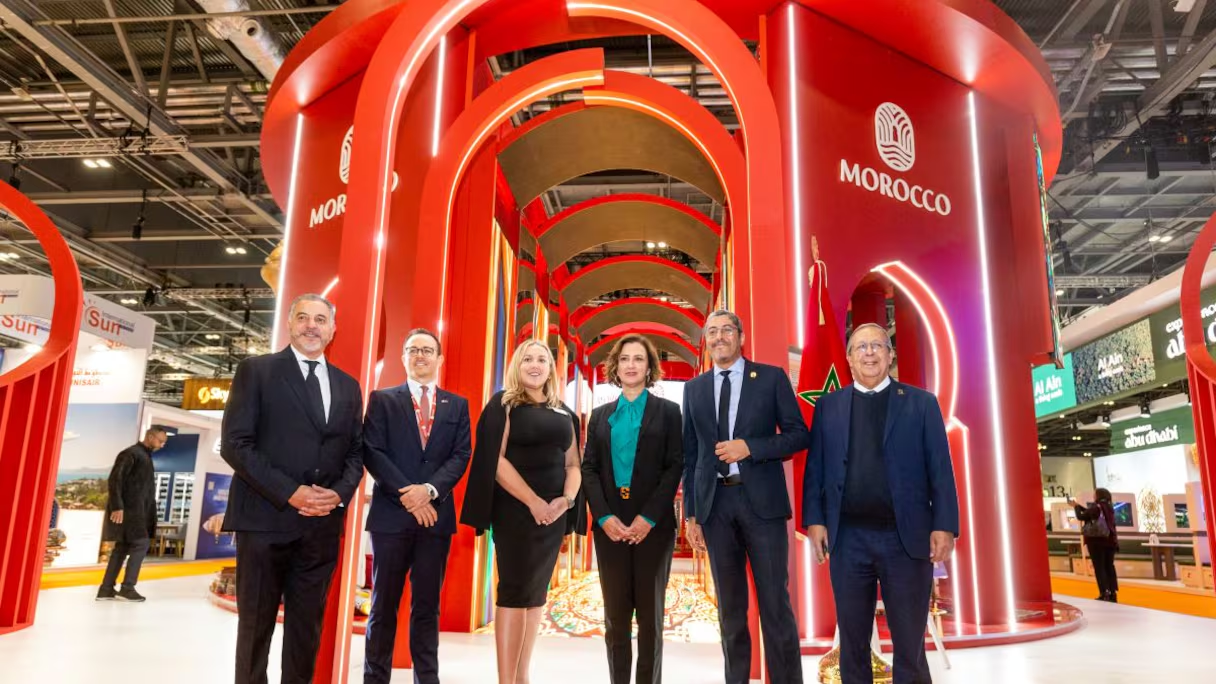
On the sidelines of the World Travel Market, the ONMT and the embassy celebrated the historical and artistic ties linking Winston Churchill to the Kingdom.
Promoting the national destination across international markets now relies on major cultural levers to enhance its reach. On Tuesday, 3 November 2026, in London, alongside the global World Travel Market trade show, the Moroccan National Tourist Office (ONMT) and the Embassy of the Kingdom in the United Kingdom gathered decision-makers and prominent figures at the prestigious Wallace Collection. Jointly hosted by Ambassador Hakim Hajoui and ONMT Director General Achraf Fayda, this exceptional evening was dedicated to an exhibition showcasing the paintings of Winston Churchill. The former British Prime Minister held a deep fascination for the light of Marrakech and the Atlas Mountains, capturing national landscapes across several of his major canvases, including the famous representation of the Koutoubia painted in 1943 following the Anfa Conference.
Cultural diplomacy driving premium positioning
This initiative marks a strategic shift in the tourism communication policy deployed by national authorities across key European source markets. By hosting events at top-tier art institutions in the presence of the Churchill family, tourism promotion officials refine the destination’s narrative to engage a high-net-worth audience sensitive to heritage and exclusive experiences. Highlighting this historical and artistic legacy provides the national brand with strong historical roots, capitalizing on the global fame of masterworks traded at major international auction houses. This approach diversifies the country’s image beyond traditional beach tourism by emphasizing its potential for cultural inspiration.
Economic spillovers and reinforcement of high-end tourism
Integrating art and history into the tourism roadmap generates direct economic returns across the national ecosystem. Attracting international visitors focused on culture and heritage boosts occupancy rates for luxury hotels, museum spaces, and art galleries in the imperial cities. This dynamic encourages private investment in restoring historic buildings, promoting fine craft arts, and developing premium thematic tours. By consolidating market share in the cultural tourism segment, the Kingdom supports skilled job creation across tour guiding, conservation, and luxury event management, reinforcing its status as an exceptional destination on the global tourism stage.