

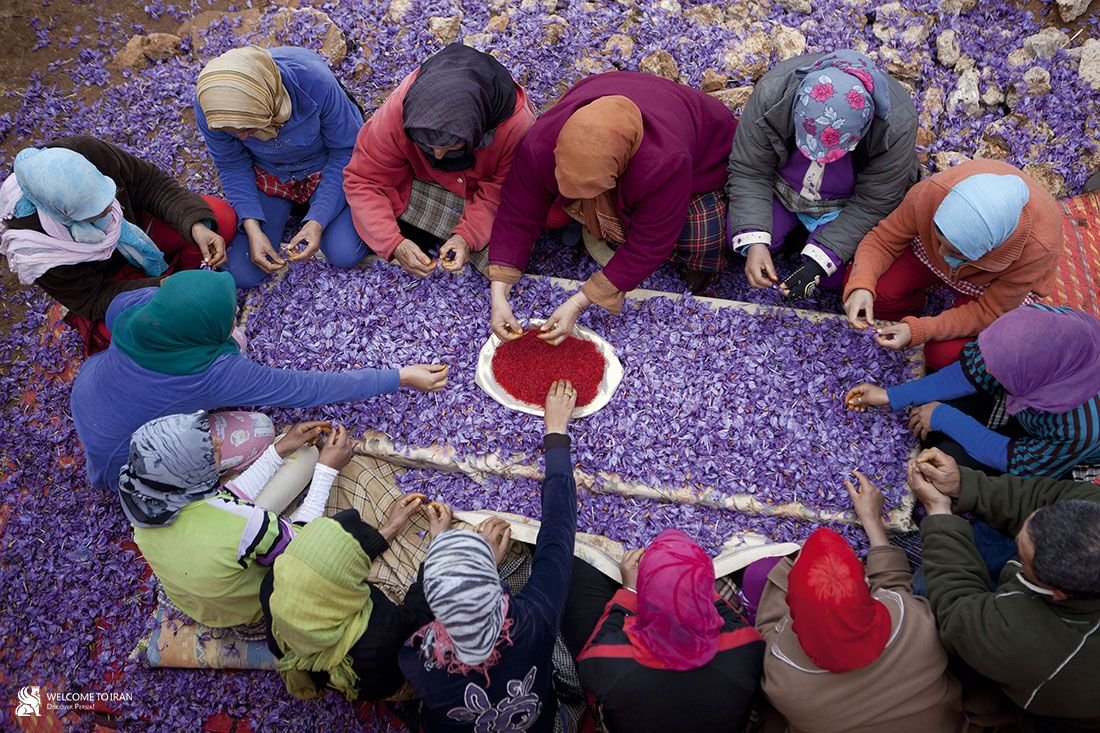
In Taroudant province, harvesting red gold requires meticulous know-how passed down through generations of women. Facing climate challenges and labor scarcity, the sector maintains its high standards of quality.
At the heart of Taroudant province, late October marks the launch of an agricultural campaign of extreme precision in the historical cradle of red gold. In Taliouine, an iconic region for national production, hundreds of women gather before dawn to pick the saffron flower during a condensed three-week period. Morning harvesting is a fundamental technical requirement to pick the flowers while still closed and preserve the flavor and aromatic integrity of the precious filaments. This seasonal frenzy perpetuates an ancestral tradition within local cooperatives, where mastery of gesture dictates the reputation of an exceptional spice marketed across the Kingdom and internationally.
A transformation process entirely shaped by hand
The delicacy of this crop requires constant rigor during the steps following picking in the fields. Transported to processing units, the flowers are trimmed by hand to scrupulously extract the three characteristic red filaments, keeping in mind that approximately 140 flowers are required to yield a single gram of dried spice. Drying is then carried out either using controlled dryers to speed up the process, or in sheltered rooms away from direct sunlight for several days. This painstaking manual labor relies on a skilled female workforce that is increasingly difficult to mobilize at the exact moment of flowering.
The resilience of a terroir facing climate hazards
The thriving of the saffron plant relies on very specific soil and climate conditions based on suitable soils and a cool climate, making Taliouine and Taznakht the two main strongholds for this production at the national level. Caring for the corms, which are renewed every six to seven years, requires precise drip-irrigation cycles, particularly in early spring and just before autumn flowering. Although persistent drought in recent years has weighed heavily on yields, recent rainfall in the region has brought welcome relief to producers. This combination of environmental constraints and human effort justifies the exceptional status of the king of spices.