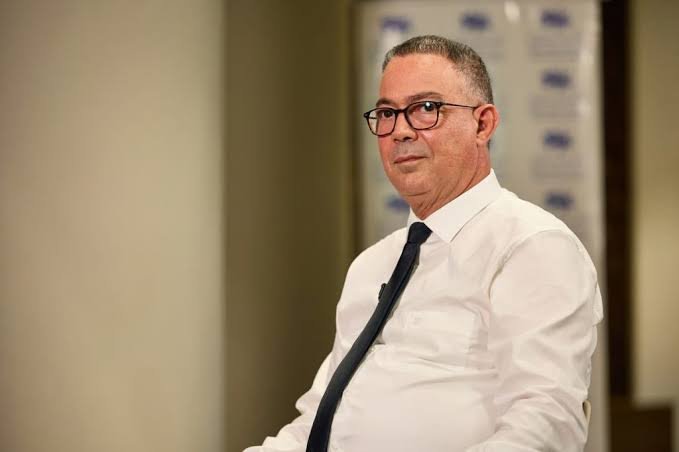
Invited on the channel 2M, the president of the Royal Moroccan Football Federation detailed the progress of the Grand Stade Hassan II. He believes that its 115,000-seat capacity makes it the natural candidate to host the 2030 World Cup final.
The allocation of the 2030 World Cup final is supported by strong arguments put forward by national sports authorities. Appearing this Wednesday, 28 October 2026, on the show Saât Assaraha broadcast on channel 2M, the president of the Royal Moroccan Football Federation and head of the Morocco 2030 Foundation, Fouzi Lekjaa, addressed the main directions of the project. Evoking the monumental construction site of the Grand Stade Hassan II in Benslimane, the official affirmed that the venue possesses all the necessary assets to host the ultimate match of the centennial competition. He notably emphasized that the World Cup final should naturally be awarded to the stadium offering the largest seating capacity of the tournament, a key criterion that places the Moroccan project in the lead with its planned 115,000 seats.
Early completion in 2028 and an urban metamorphosis
Beyond the sporting competition, the construction of this venue is integrated into a broader strategy of urban development and transformation for the Casablanca metropolis. The project is accompanied by a vast transport infrastructure programme including the development of the regional express network and the extension of the high-speed rail line. Regarding the construction schedule, forecasts point to full delivery of the facility by early 2028, nearly two years before the kickoff of the global tournament. This early completion will allow the teams of Wydad, Raja, as well as the national team of the Atlas Lions, to step onto the stadium pitch and play several high-profile international matches well before the 2030 spectacle.
A civilisational ambition beyond match allocations
While reaffirming the legitimate ambitions of the national bid to host the final against Spanish and Portuguese proposals, the sports executive was keen to frame this effort within the strategic guidelines set by the royal vision. Recalling the significance of the royal message delivered in Kigali during the announcement of the tripartite bid, the official insisted on the human, historical, and civilisational dimension uniting the nations on both shores of the Mediterranean. Jointly hosting the 2030 World Cup represents a unique opportunity to promote togetherness and strengthen cultural bridges between African and European peoples around the universal values of sport.