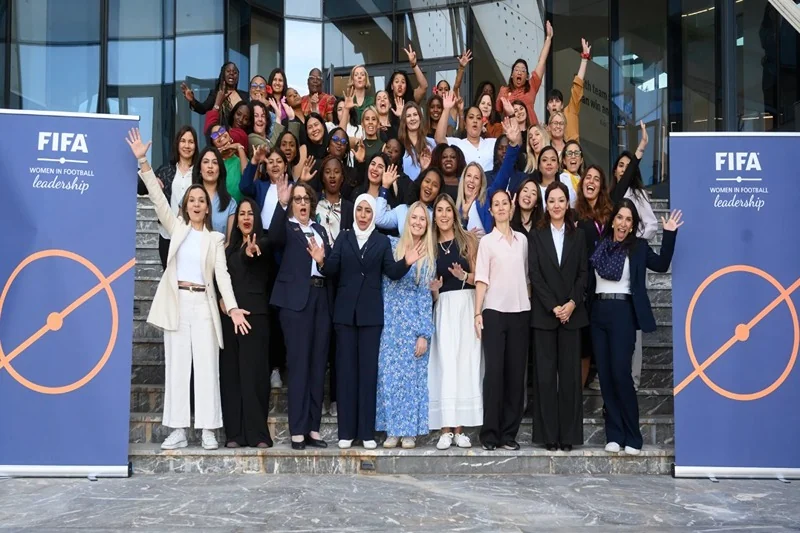
On the sidelines of the FIFA U-17 Women’s World Cup 2026, the Moroccan capital hosted FIFA’s leadership programme aimed at strengthening the presence of women in decision-making bodies across global sport.
The national capital’s status as an international hub for sport and governance was reaffirmed on the occasion of major global events. From 18 to 21 October 2026, Rabat hosted the *Women in Football Leadership* programme organized by FIFA alongside the U-17 Women’s World Cup being held in the Kingdom. This major initiative brought together fifty female participants from all six global confederations with the objective of promoting parity and accelerating women’s access to strategic decision-making roles in football. Over four days of intensive sessions, participants alternated between practical workshops, experience sharing, and professional networking, while visiting local facilities of the governing body and attending matches of the global tournament.
Skills development and structuring decision-making networks
The presence of senior FIFA officials, notably Chief Women’s Football Officer Sarai Bareman, underscored the importance of building strong professional networks to support the transformation of sporting bodies. Prominent leaders—including the President of Liga MX Femenil in Mexico, the Head of Development at the Ghanaian Football Association, and the Infrastructure Director at the Brazilian Football Confederation—praised the quality of exchanges. This specialized training enriches management skills and offers concrete answers to governance challenges in a sector historically dominated by male profiles, thereby fostering the transfer of know-how within each member association.
Promoting infrastructure and the reach of the national model
Hosting this international gathering highlights the Kingdom’s organizational capacity and the quality of its infrastructure dedicated to major sporting and institutional events. This programme forms part of the thirteen major development initiatives deployed by FIFA to support its member associations. By establishing itself as a central platform for the empowerment of female executives and the promotion of sporting excellence, the country enhances its international appeal. This momentum also generates positive spillovers for the local economy, supports event management professions, and consolidates the driving role of national sports diplomacy.