
What Fouzi Lekjaa said about the organization of CAF competitions in Morocco
In recent days, various interpretations have circulated regarding remarks attributed to Fouzi Lekjaa about Morocco’s role in organizing African football competitions. Some publications have suggested that the president of the Royal Moroccan Football Federation announced a complete withdrawal of the country from bidding for continental events. However, this reading appears to go beyond what was actually said.
The comments made by Fouzi Lekjaa are in fact better understood within a broader vision of African football governance, rather than as a disengagement from hosting competitions.
A Message Focused on Cooperation
Rather than signaling a withdrawal, Lekjaa’s remarks emphasize a logic of cooperation and solidarity between member associations of the Confederation of African Football (CAF). According to his statements reported in various media appearances, Morocco’s approach would be based on supporting other African countries in organizing competitions, including those initially scheduled or technically prepared to be held on Moroccan soil. In such scenarios, the Kingdom could potentially agree to make way for another host nation while still providing logistical and organizational assistance, as part of a wider spirit of continental solidarity.
A Repositioning, Not a Retreat
This stance should not be interpreted as a lack of interest in CAF competitions. Instead, it reflects a desire to rethink hosting arrangements in favor of a more flexible and cooperative framework between African federations.
The idea presented is less about competition for hosting rights and more about coordination, mutual support, and shared responsibility in the organization of major sporting events across the continent.
In the background, Morocco continues to play an active role in African and international football, both through past tournaments it has hosted and through its ongoing involvement in major football projects.
A Broader Strategic Context
This interpretation comes as Morocco maintains a central position in African football governance and continues to be involved in several major sporting initiatives.
Rather than a withdrawal from the continental stage, the remarks are seen as part of a broader reflection on how African football can optimize cooperation between its member countries while managing overlapping ambitions and capacities.
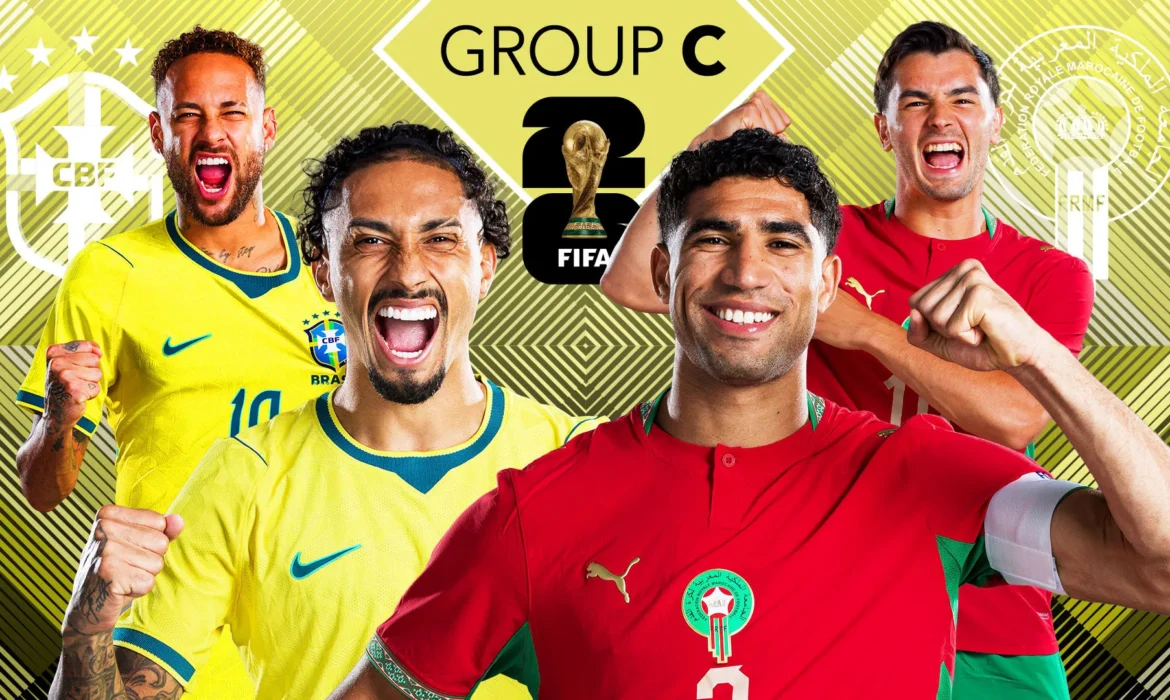
Morocco vs. Brazil: Details of the first clash of the 2026 World Cup
Four years after their historic run at the 2022 World Cup in Qatar, the Morocco national football team begin their 2026 campaign with a blockbuster Group C clash against five-time world champions Brazil. The match, set to take place on Saturday night at the MetLife Stadium in New Jersey, is widely regarded as one of the standout fixtures of the opening round of the tournament.
Both teams arrive with strong ambitions. Brazil are looking to bounce back after a quarter-final exit at the previous World Cup, while Morocco aim to relive—or even surpass—their remarkable journey to the semi-finals in Qatar.
A High-Profile Opening Test
The encounter between Brazil and Morocco will be played in the early hours of Sunday, June 14, 2026 (French time), corresponding to 11:00 PM in Morocco on Saturday night. It will mark a major early test for the Atlas Lions, who face one of the tournament favourites in their very first group-stage match.
Global Broadcast Coverage
Fans around the world will be able to follow the match live through multiple official broadcasters. In France, the game will be shown on M6 and beIN Sports 1, while viewers in the MENA region will have access via beIN Sports MENA. In Morocco, the match will be broadcast free-to-air on Arryadia.
Across Sub-Saharan Africa, New World TV holds the official broadcasting rights for the 2026 FIFA World Cup, with several national public broadcasters also expected to air the fixture depending on local agreements.
A Continental Showcase
Beyond the sporting stakes, the Morocco–Brazil clash represents a major continental showcase, with African fans especially eager to see whether the Atlas Lions can once again challenge one of the giants of world football on the global stage. With anticipation building, all eyes will be on New Jersey for one of the most closely watched matches of the tournament’s opening weekend.

2026 World Cup: Morocco regroups ahead of clash with Brazil
The Morocco national football team is working to restore focus and unity on the eve of its 2026 FIFA World Cup opener against Brazil, following setbacks caused by injuries to key players Ez Abde and Nayef Aguerd. The two withdrawals, affecting both attacking and defensive sectors, have disrupted the final phase of preparation for the Atlas Lions. However, the Moroccan Football Federation (FRMF) and the coaching staff have quickly moved to stabilize the group and maintain momentum ahead of a high-stakes debut.
Turning Setbacks into Opportunity
Internally, the message remains one of resilience and collective strength. The technical staff has emphasized that the absences should open the door for other squad members to step up on the world stage. Newly integrated players, including Amine Sbaï and Marwane Saâdane, are expected to play a more significant role as they join the squad in the final preparations. The staff believes that squad depth will be a key factor in navigating a demanding group stage campaign.

Focus and Mental Discipline Ahead of Brazil Test
The FRMF has also urged full concentration within the squad, stressing the importance of mental discipline ahead of what is expected to be one of the toughest opening fixtures of the tournament. Team leaders within the dressing room have reportedly reinforced the need for a strong start, highlighting that early results could prove decisive in a tightly contested group.
A High-Stakes Opening Match
Morocco will begin its World Cup journey against a Brazilian side widely regarded as one of the main contenders for the title. Despite the absences, the Atlas Lions remain determined to approach the match with ambition, organization, and belief in their ability to compete at the highest level. For Morocco, the encounter represents both a major challenge and an opportunity to set the tone for its 2026 campaign on the global stage.

2026 World Cup: FIFA appoints referee for Morocco’s opening match against Brazil
FIFA has officially appointed Slovenian referee Slavko Vinčić to oversee Morocco’s opening match of the 2026 FIFA World Cup, a highly anticipated clash against Brazil in Group C. The Atlas Lions will begin their campaign on June 13 at MetLife Stadium in New York/New Jersey, where they will face one of the tournament favorites in what promises to be one of the standout fixtures of the opening round.
Experienced Slovenian Official Gets the Nod
Vinčić will be assisted by fellow Slovenians Tomaž Klančnik and Andraž Kovačić, while Swiss referee Sandro Schärer has been named fourth official. Stéphane De Almeida will serve as reserve assistant referee. The appointment reflects FIFA’s desire to place one of Europe’s most experienced match officials in charge of a high-profile encounter expected to attract global attention.
A Referee for the Biggest Stages
At 46 years old, Vinčić has built a reputation as one of the leading referees in international football.
His recent appointments include some of the sport’s most prestigious matches:
- UEFA Champions League Final 2024: Borussia Dortmund vs Real Madrid
- UEFA Euro 2024 Semi-final: Spain vs France
- UEFA Europa League Final 2022: Eintracht Frankfurt vs Rangers
His experience in managing high-pressure contests is expected to be a valuable asset as Morocco and Brazil meet in a crucial opening fixture.
A Major Early Test for Morocco
The match will represent an immediate challenge for the Atlas Lions, who enter the tournament carrying high expectations following their historic run at the 2022 World Cup. Facing five-time world champions Brazil in their first group-stage game, Morocco will have an opportunity to make an early statement and strengthen its chances of progressing to the knockout rounds.
With a place among world football’s emerging powers already established, the Atlas Lions will be eager to prove once again that they can compete with the sport’s biggest nations on the grandest stage.

Morocco’s 2026 World Cup home kit ranked among tournament’s best by the New York Times
The home jersey of the Morocco national football team continues to attract attention well beyond Africa, with international media praising its design ahead of the 2026 FIFA World Cup. In a recent ranking published ahead of the tournament, The New York Times placed Morocco’s home kit fifth among the best jerseys of the competition, which will kick off on June 11 across the United States, Canada, and Mexico.
The American newspaper highlighted the shirt’s aesthetic appeal and cultural depth, noting its blend of tradition and modern design. “It’s a real beauty, with a very original collar, a magnificent color and remarkable finishes inspired by traditional Moroccan textile patterns,” the publication wrote.

A Celebration of Moroccan Identity
The Moroccan kit stands out for its strong connection to national heritage. Designed by Puma, the jersey incorporates elements inspired by traditional Moroccan embroidery, known for its intricate craftsmanship and symbolic richness. The design aims to reflect both cultural pride and contemporary football identity, merging authenticity with modern performance aesthetics.
A Strong Global Ranking
In the New York Times’ Top 5 ranking, Morocco sits alongside football powerhouses such as Germany, England, and Brazil. Ghana was notably placed at the top of the list, ahead of all other nations. The recognition further highlights Morocco’s growing influence not only on the pitch but also in global football culture.
World Cup Campaign Ahead
On the sporting front, Morocco will begin its 2026 World Cup campaign on June 13 against Brazil at MetLife Stadium in New Jersey. The Atlas Lions will then face Scotland on June 19 in Boston, before concluding their group stage on June 24 against Haiti in Atlanta. With anticipation building both on and off the field, Morocco enters the tournament with high expectations and increasing international visibility.

2026 FIFA World Cup: Full match schedule in Morocco Time (GMT+1)
The 2026 FIFA World Cup will take place from June 11 to July 19 across the United States, Canada, and Mexico. For fans in Morocco and West Africa, all matches are scheduled in GMT+1. With 48 teams and 104 matches, this edition will be the largest World Cup in history.
GROUP STAGE
Thursday, June 11
Group A: Mexico vs South Africa — 20:00, Estadio Azteca (Mexico City)
Friday, June 12
Group A: South Korea vs Czech Republic — 03:00, Estadio Akron (Guadalajara)
Group B: Canada vs Bosnia & Herzegovina — 20:00, BMO Field (Toronto)
Saturday, June 13
Group D: United States vs Paraguay — 02:00, SoFi Stadium (Los Angeles)
Group B: Qatar vs Switzerland — 20:00, Levi’s Stadium (Santa Clara)
Group C: Brazil vs Morocco — 23:00, MetLife Stadium (New Jersey)
Sunday, June 14
Group C: Haiti vs Scotland — 02:00
Group D: Australia vs Turkey — 05:00
Group E: Germany vs Curaçao — 18:00
Group D: Netherlands vs Japan — 21:00
Monday, June 15
Group E: Ivory Coast vs Ecuador — 00:00
Group F: Sweden vs Tunisia — 03:00
Group H: Spain vs Cape Verde — 17:00
Group G: Belgium vs Egypt — 20:00
Group H: Saudi Arabia vs Uruguay — 23:00
Tuesday, June 16
Group G: Iran vs New Zealand — 02:00
Group I: France vs Senegal — 20:00
Group I: Iraq vs Norway — 23:00
Wednesday, June 17
Group J: Argentina vs Algeria — 02:00
Group J: Austria vs Jordan — 05:00
Group K: Portugal vs DR Congo — 18:00
Group L: England vs Croatia — 21:00
Thursday, June 18
Group L: Ghana vs Panama — 00:00
Group K: Uzbekistan vs Colombia — 03:00
Group A: Czech Republic vs South Africa — 17:00
Group B: Switzerland vs Bosnia & Herzegovina — 20:00
Group B: Canada vs Qatar — 23:00
Friday, June 19
Group A: Mexico vs South Korea — 02:00
Group D: United States vs Australia — 20:00
Group C: Scotland vs Morocco — 23:00
Saturday, June 20
Group C: Brazil vs Haiti — 01:30
Group D: Turkey vs Paraguay — 04:00
Group F: Netherlands vs Sweden — 18:00
Group E: Germany vs Ivory Coast — 21:00
Sunday, June 21
Group E: Ecuador vs Curaçao — 01:00
Group F: Tunisia vs Japan — 05:00
Group H: Spain vs Saudi Arabia — 17:00
Group G: Belgium vs Iran — 20:00
Group H: Uruguay vs Cape Verde — 23:00
Monday, June 22
Group G: New Zealand vs Egypt — 02:00
Group J: Argentina vs Austria — 18:00
Group I: France vs Iraq — 22:00
Tuesday, June 23
Group I: Norway vs Senegal — 01:00
Group J: Jordan vs Algeria — 04:00
Group K: Portugal vs Uzbekistan — 18:00
Group L: England vs Ghana — 21:00
Wednesday, June 24
Group L: Panama vs Croatia — 00:00
Group K: Colombia vs DR Congo — 03:00
Group B: Switzerland vs Canada — 20:00
Group B: Bosnia & Herzegovina vs Qatar — 20:00
Group C: Morocco vs Haiti — 23:00
Group C: Scotland vs Brazil — 23:00
Thursday, June 25
Group A: South Africa vs South Korea — 02:00
Group A: Czech Republic vs Mexico — 02:00
Group E: Curaçao vs Ivory Coast — 21:00
Group E: Ecuador vs Germany — 21:00
Friday, June 26
Group F: Tunisia vs Netherlands — 00:00
Group F: Japan vs Sweden — 00:00
Group D: Turkey vs United States — 03:00
Group D: Paraguay vs Australia — 03:00
Group I: Norway vs France — 20:00
Group I: Senegal vs Iraq — 20:00
Saturday, June 27
Group H: Cape Verde vs Saudi Arabia — 01:00
Group H: Uruguay vs Spain — 01:00
Group G: New Zealand vs Belgium — 04:00
Group G: Egypt vs Iran — 04:00
Group L: Panama vs England — 22:00
Group L: Croatia vs Ghana — 22:00
Sunday, June 28
Group K: Colombia vs Portugal — 00:30
Group K: DR Congo vs Uzbekistan — 00:30
Group J: Algeria vs Austria — 03:00
Group J: Jordan vs Argentina — 03:00
KNOCKOUT STAGE
Round of 16
July 4 – July 7, 2026
(Houston, Philadelphia, New York/New Jersey, Mexico City, Dallas, Seattle, Atlanta, Vancouver)
Quarter-finals
July 9 – July 15, 2026
(Boston, Los Angeles, Miami, Kansas City, Dallas, Atlanta)
Third-place match
July 18, 2026 — Miami
Final
July 19, 2026 — New York / New Jersey
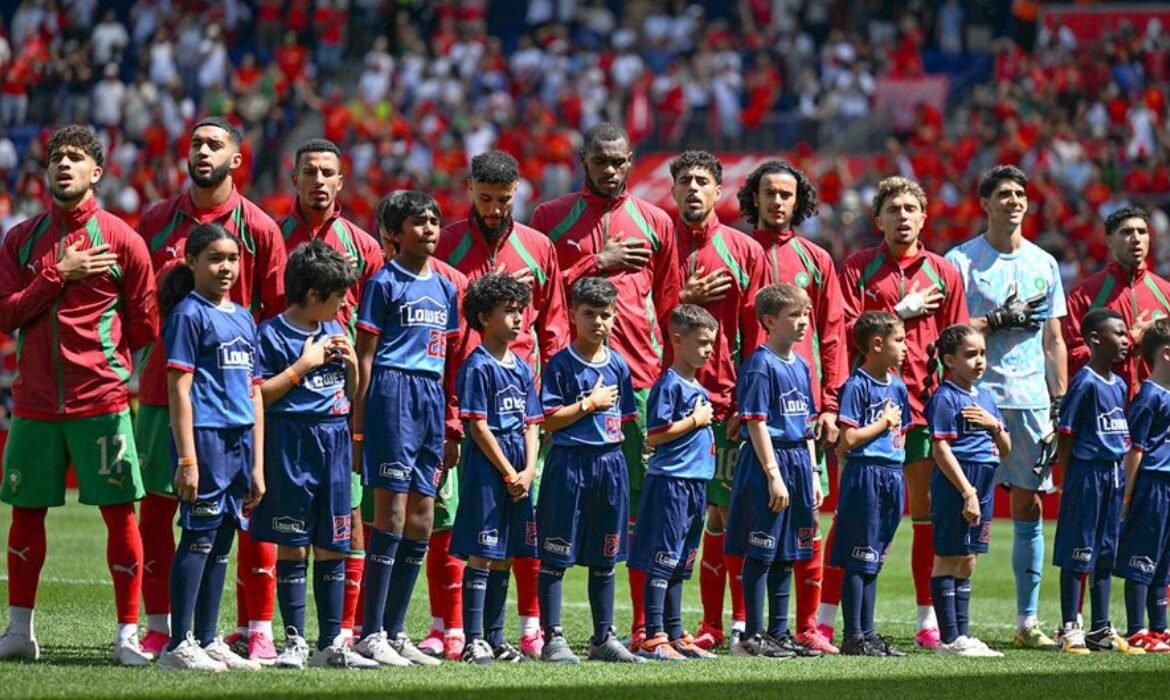
Morocco holds its own in the final friendly match of the 2026 World Cup – next stop Brazil
Morocco concluded its World Cup 2026 preparation campaign with a 1-1 draw against Norway at the Sport Illustrated Stadium in Harrison, United States, a result that reflects both resilience and promise ahead of the tournament.
The Atlas Lions started brightly, with an early goal in the 8th minute from Brahim Díaz, showcasing the team’s technical quality and attacking flair. Under the guidance of coach Mohamed Ouahbi, Morocco delivered a confident and energetic opening period.
For much of the match, the team demonstrated the structured, modern style that has become a hallmark of Moroccan football in recent years. Even as Norway increased pressure in the second half, Morocco maintained discipline and composure.
Although the equalizer came in the 75th minute, the performance was widely seen as a constructive test rather than a setback. The match provided valuable insights ahead of the World Cup, where Morocco will face Brazil in its opening Group C fixture.
Beyond football, Morocco continues to strengthen its global sporting image as a host nation and a consistent competitor on the world stage. Performances like this reinforce the country’s growing reputation for high-level football development and international engagement.
With anticipation building for the World Cup, fans and observers alike see this draw as part of a broader journey—one that combines sport, visibility, and the continued rise of Morocco on the global sporting map.
Brazil vs Morocco: all eyes are on this football clash at the 2026 World Cup
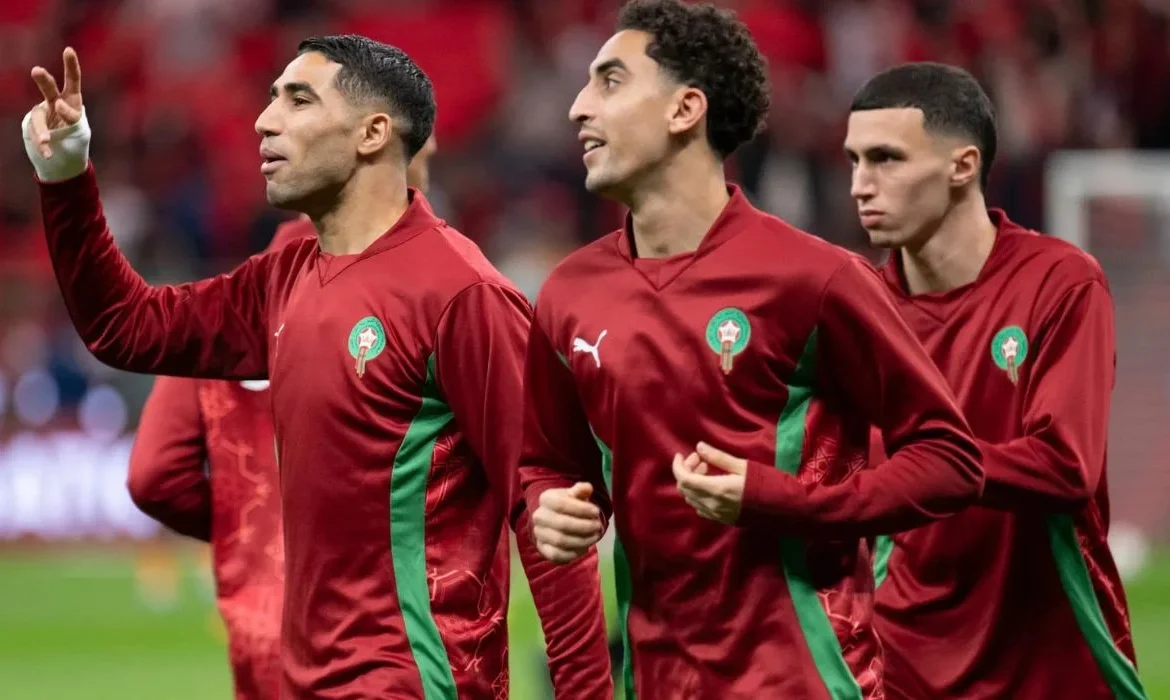
One of the most anticipated fixtures of the Coupe du monde 2026 will see the Brésil national football team face Morocco national football team, a team that has transformed its global standing since its historic 2022 World Cup campaign. Morocco is no longer viewed simply as an African success story. The Atlas Lions have established themselves among the world’s most respected national teams, driven by consistency, elite talent and a long-term football vision.
A generation built at the highest level
Players such as Achraf Hakimi, Noussair Mazraoui and Nayef Aguerd represent a generation competing at the highest levels of European football. Their success has helped elevate Morocco’s international profile, reinforcing the country’s reputation as a destination for talent development, tourism and investment.
More than a football match
As global audiences follow the tournament, Morocco continues to attract attention not only for its performances on the pitch but also for its broader ambitions and growing international influence. The clash with Brazil offers another opportunity for the Atlas Lions to demonstrate why many observers see them as one of the teams shaping football’s next era.
Morocco emerges as a strategic gateway in a changing global economy
As global companies and investors rethink supply chains and investment destinations, Morocco is increasingly positioning itself as one of the most attractive gateways between Africa, Europe and the Atlantic world. Recent developments highlight this growing momentum. The African Development Bank has committed a record €1.3 billion to support infrastructure, entrepreneurship, agriculture and climate resilience projects across the country.
At the same time, Chinese investments totaling approximately $6 billion are accelerating Morocco’s transformation into Africa’s leading electric vehicle manufacturing hub, including the development of a $1.3 billion battery gigafactory. The country is also strengthening its maritime connectivity. Italian ferry operator GNV, part of MSC Group, has deployed its newest LNG-powered vessels on Moroccan routes, reinforcing the Kingdom’s role as a key Mediterranean transport hub.
Combined with strategic investments in critical minerals and renewable industries, these developments illustrate how Morocco continues to attract global capital seeking stability, connectivity and long-term growth opportunities. As international economic flows diversify, Morocco is increasingly emerging as a point of convergence for trade, industry and investment.