2026 World Cup: Kylian Mbappé explains the penalty saved by Yassine Bounou against Morocco
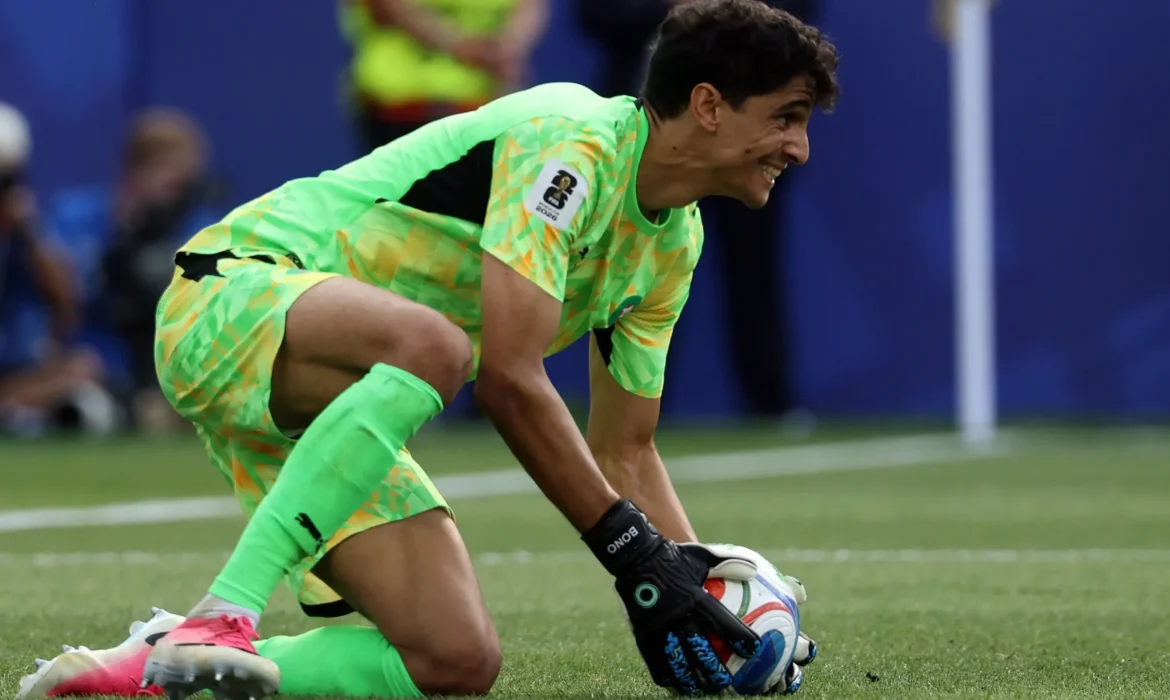
Despite France’s 2-0 victory over Morocco in the quarter-finals of the 2026 FIFA World Cup, Kylian Mbappé has not forgotten the penalty he missed against Yassine Bounou. The France captain admitted that he was distracted by a Video Assistant Referee (VAR) intervention just before taking his spot-kick.
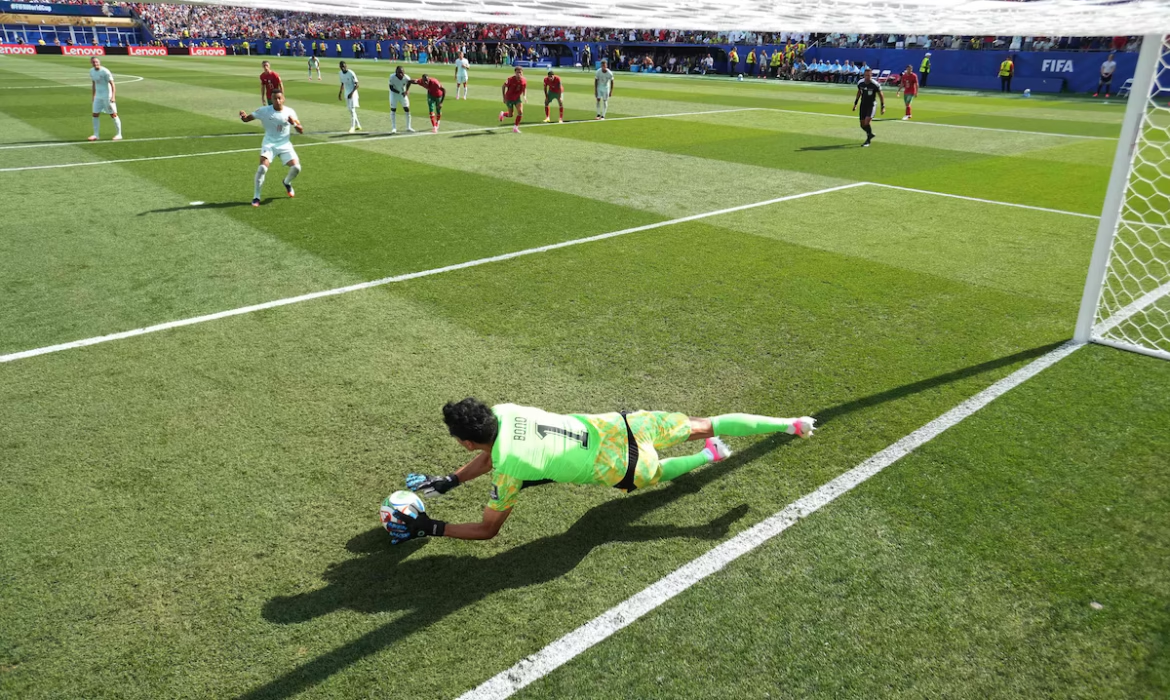
With the score still 0-0 in the first half, France were awarded a penalty, giving Mbappé the opportunity to open the scoring. However, Moroccan goalkeeper Yassine Bounou perfectly anticipated the French forward’s attempt, keeping the Atlas Lions’ hopes alive.
Speaking to LCI after the match, Mbappé reflected on the incident. He explained that his concentration had been disrupted by discussions with the referee, who initially confirmed the penalty before informing him that a VAR review was still underway.
According to the French striker, the interruption came just as he was beginning his pre-kick routine. Once the penalty was finally confirmed, he felt he was unable to regain the same level of focus.
« I let myself get distracted, » admitted the France captain, joking about the unusual situation caused by the VAR procedure. He nevertheless acknowledged that his penalty was not well taken.
This explanation does not take anything away from Yassine Bounou’s performance, as the Moroccan goalkeeper produced a decisive save against one of the best strikers in the world. Bounou once again demonstrated his composure on the biggest stage, keeping the Atlas Lions in the game for much of the match.
France eventually found the breakthrough in the second half to secure a 2-0 victory and book their place in the semi-finals. However, the saved penalty will remain one of the defining moments of this quarter-final, once again highlighting Bounou’s ability to deliver in decisive moments while wearing the Morocco jersey.
Morocco 2030: The move already causing concern in Spain
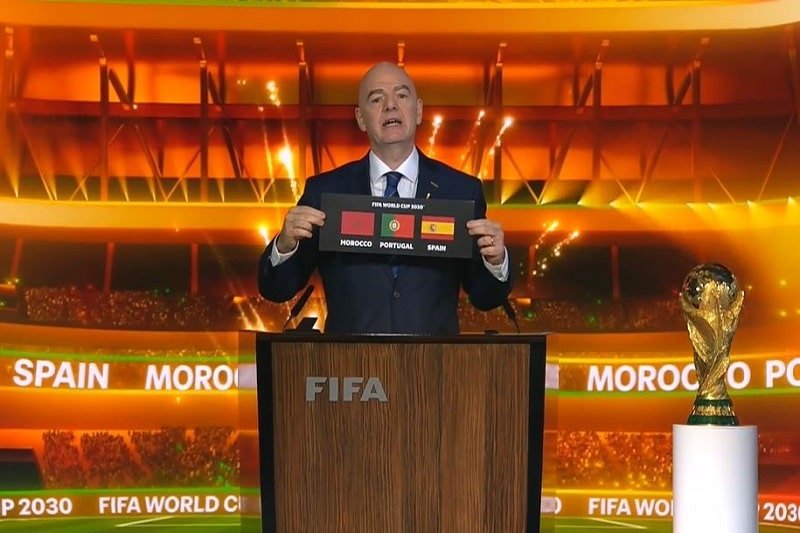
Morocco is emerging as an increasingly credible candidate to host the 2030 FIFA World Cup final. According to several Spanish media outlets, this growing momentum is causing real concern in Spain.
According to The Objective, Casablanca has taken the lead in the race thanks to significant diplomatic and sporting efforts aimed at several members of the FIFA Council. The newspaper reports growing support for the Moroccan bid, notably backed by the future Grand Hassan II Stadium.
The Spanish media outlet also highlights the role played by FRMF President Fouzi Lekjaa, as well as Moroccan diplomacy, in strengthening the Kingdom’s support across Africa, Asia, and other confederations.
In the face of this momentum, Madrid and Barcelona are seeing their ambitions weakened. Spain still hopes to host the final at either the Santiago Bernabéu or Camp Nou, but the Spanish press believes that Morocco is now its main rival.
No official decision has yet been made by FIFA. However, the debate surrounding the 2030 World Cup final illustrates Morocco’s growing influence on the international football stage.
Morocco: Manchester City steps up its pursuit of Ayyoub Bouaddi
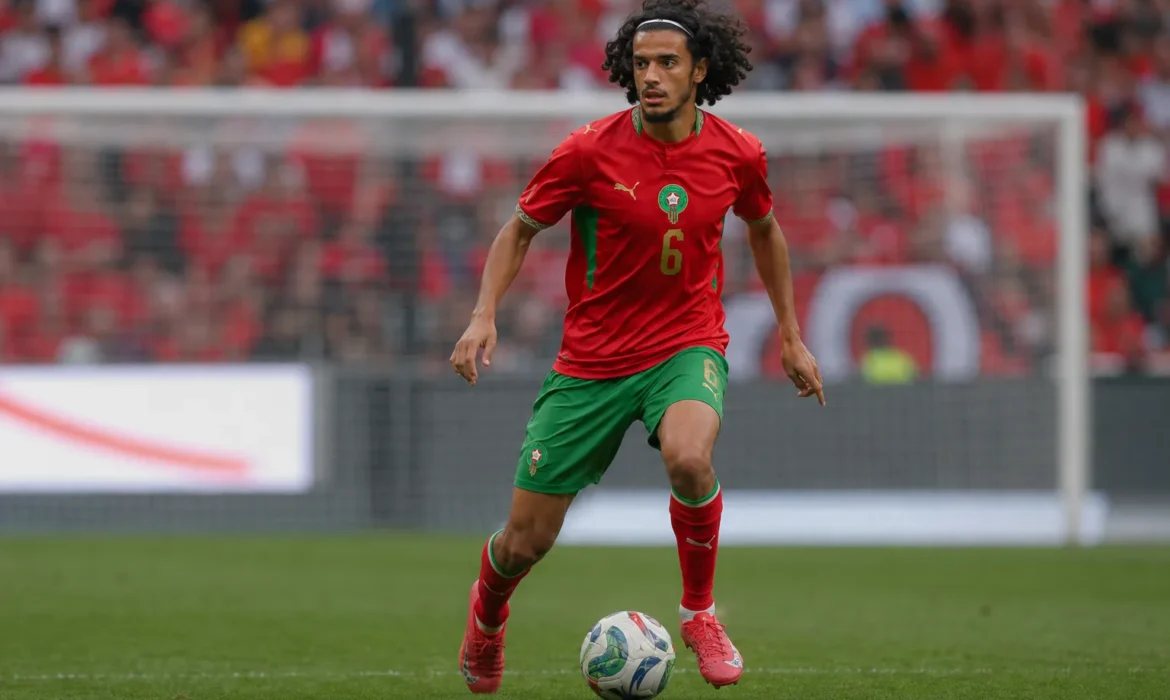
Manchester City has stepped up its efforts to sign Ayyoub Bouaddi. Impressed by the Moroccan midfielder’s performances at the 2026 FIFA World Cup, the English club wants to quickly complete his transfer.
According to The Athletic, Bouaddi’s performances with the Atlas Lions, who reached the World Cup quarter-finals, have strengthened the interest of Europe’s biggest clubs. Manchester City is now considered the favourite, although Arsenal and Manchester United are also monitoring the situation.
The 18-year-old Moroccan international is expected to make a decision on his future soon. LOSC would not rule out a transfer, provided it receives an offer that meets its expectations.
According to the same source, Lille values Bouaddi at around €100 million. Unlike some other interested clubs, Manchester City wants to integrate the Atlas Lion into Pep Guardiola’s squad immediately, rather than allowing him to remain on loan in northern France for another season.
Morocco: Bounou leaves the 2026 World Cup by entering the history books
Despite Morocco’s 2-0 defeat to France in the quarter-finals, Yassine Bounou made history at the 2026 FIFA World Cup. The Atlas Lions goalkeeper once again stood out by saving a penalty from Kylian Mbappé.
With this save, Bounou has now seen seven penalties missed against him at the FIFA World Cup, setting a new record in the history of the competition. He now surpasses renowned goalkeepers such as Sergio Goycochea, Cláudio Taffarel, Danijel Subašić and Dominik Livaković.
Since making his World Cup debut, the Moroccan goalkeeper has faced nine penalties. Only two have been converted, while the other seven resulted either in a save by Bounou or a missed attempt by the opposing player.
Already a hero at the 2022 World Cup against Spain, and decisive against the Netherlands during this edition, the 35-year-old goalkeeper has confirmed his reputation as a penalty specialist. Despite the Atlas Lions’ elimination on the verge of the semi-finals, Bounou leaves the 2026 World Cup with another outstanding performance that further strengthens his place among the most memorable goalkeepers in the tournament’s history.
Morocco: Mustapha Hadji points to the Atlas Lions’ main challenge
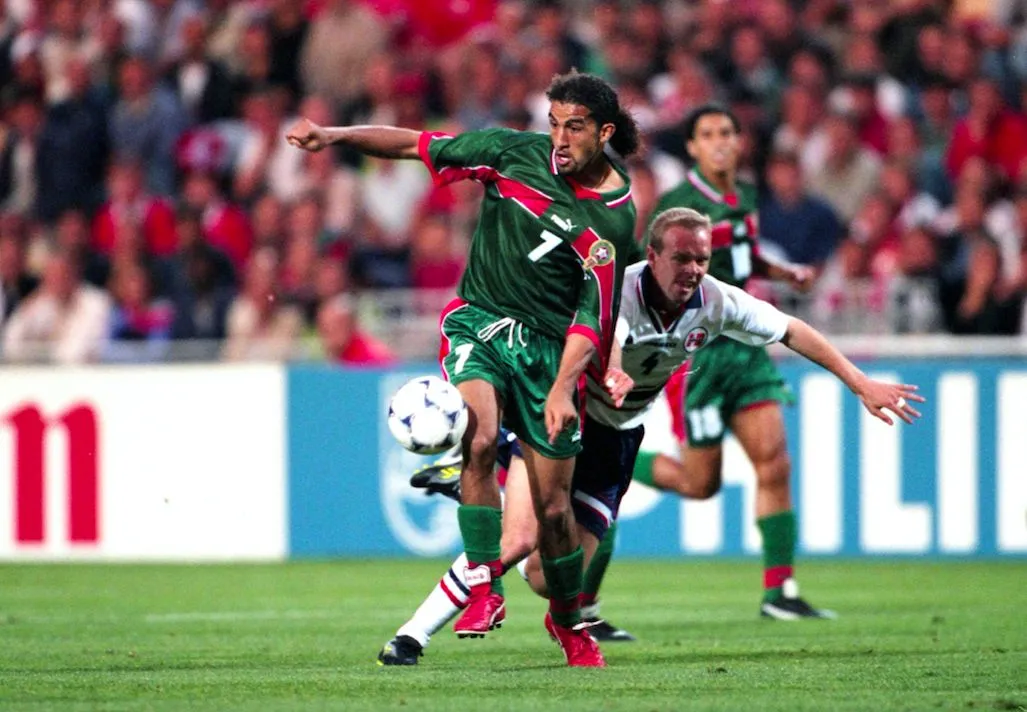
Former Morocco international Mustapha Hadji believes that Morocco must now strengthen the depth of its squad following its run at the 2026 FIFA World Cup. According to him, the Atlas Lions have a quality starting eleven but still lack enough options on the bench to compete with the world’s biggest national teams.
Speaking to Al Arabiya, Hadji praised the work done by Mohamed Ouahbi’s side while identifying the team’s main priority for the coming competitions. « The Morocco national team needs a stronger bench, » he said.
The former African Footballer of the Year pointed out that several players were playing in their first FIFA World Cup and that the experience gained would be valuable for the future. However, he stressed that the top national teams often make the difference thanks to the quality of their substitutes.
« If you want to compete with teams like France, the quality of the bench is essential, » Mustapha Hadji insisted.
Despite Morocco’s elimination in the quarter-finals, the former international believes that the team has a solid foundation. He now calls for expanding the Atlas Lions’ player pool in order to continue their progress and approach future competitions with even greater ambition.
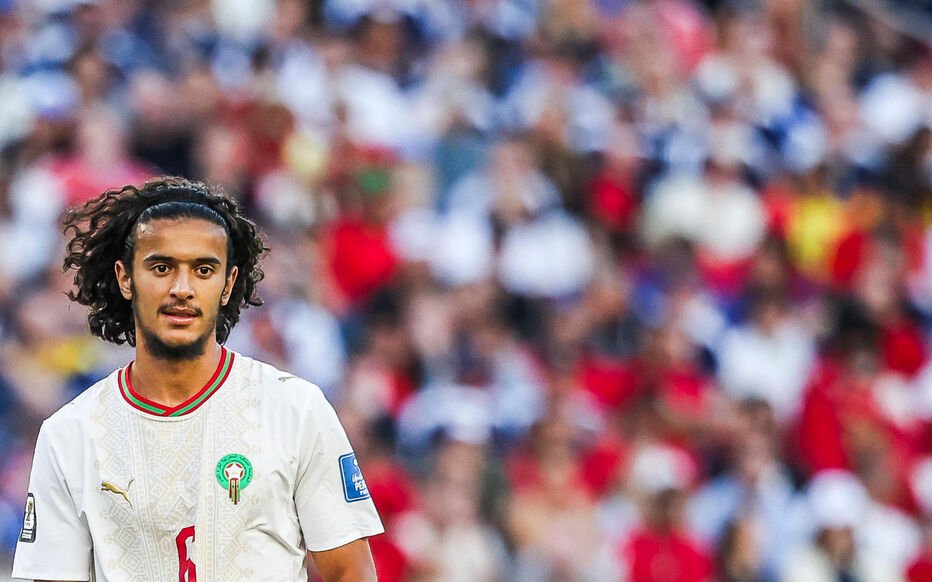
Mercato: Ayyoub Bouaddi, Lille would claim nearly 115 million euros
Ayyoub Bouaddi’s run with the Atlas Lions during the 2026 World Cup continues to boost his rating in the transfer market. At only 18 years old, the Moroccan midfielder would now be in the sights of several Premier League giants, while LOSC would have set a particularly high price to consider his departure.
A revelation of the World Cup with Morocco, Bouaddi impressed with his maturity, technical quality and ability to manage high points against the best selections. His performances would have convinced several English heavyweights to go on the offensive.
According to Football Insider, Arsenal and Liverpool would be ready to accept the conditions set by Lille, namely to recruit the young Moroccan international this summer before leaving him for an additional season in the North in the form of a loan in order to continue his development.
For its part, Manchester City would also be closely following the issue. The presence of several Premier League clubs in the ranks could increase the player’s value even further, even if no official offer has yet been made to the French club.
The LOSC would be particularly firm in negotiations. The leaders of Lille would claim nearly 100 million pounds sterling, or about 115 million euros, to accept a possible transfer. An amount that reflects the immense potential attributed to the Moroccan environment.
Lille also has an important advantage: Ayyoub Bouaddi has extended his contract until June 2029, which puts the club in a position of strength and allows him to face no pressure to sell his young talent.
Already considered as one of the greatest hopes of European football before the World Cup, Ayyoub Bouaddi has reached a new milestone thanks to his performances in the jersey of Morocco. His name is now among the priorities of several major English clubs, confirming that the Atlas Lions continue to reveal players capable of attracting the greatest teams in world football.
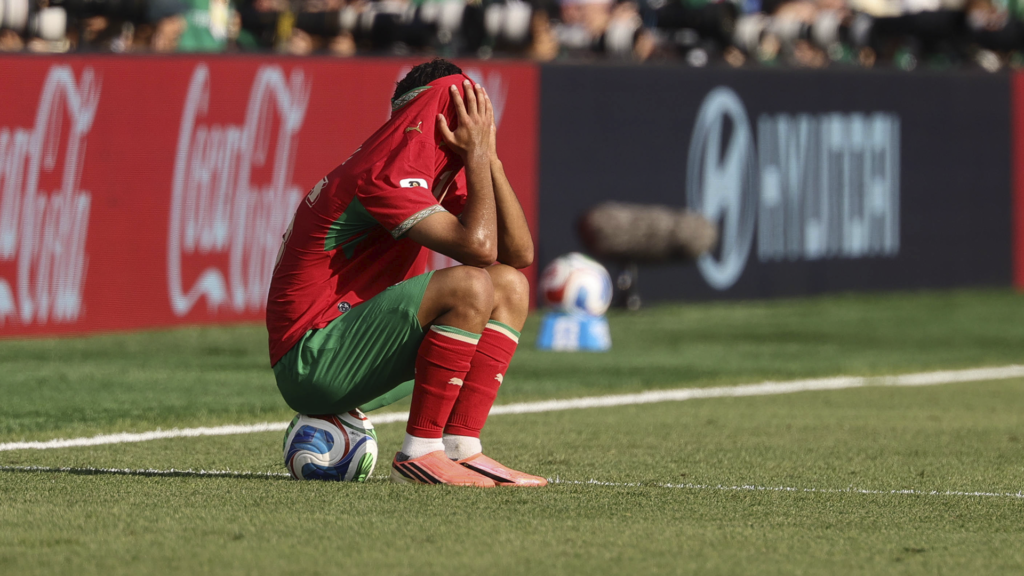
World Cup 2026 : despite its elimination, Morocco will receive $21.5 million from FIFA
Eliminated in the quarter-finals of the 2026 World Cup by France, Morocco leaves the competition with a significant financial reward. Thanks to its remarkable track record, the Royal Moroccan Football Federation (FRMF) should receive 21.5 million dollars from FIFA.
By finishing among the top eight selections of the tournament, the Atlas Lions place in the category of teams eliminated in quarterfinals, a result that entitles them to a **performance bonus of 19 million dollars*.
To this reward is added an allocation of $2.5 million* intended to cover the preparation costs incurred before the tournament. In total, the FRMF should thus receive **21.5 million dollars**, regardless of any additional expenses related to the organization of the competition.
It should be noted, however, that **$19 million** corresponds to the final bonus awarded to teams ranked between fifth and eighth place. This amount already includes participation in the competition and therefore does not have to be accumulated a second time with an attendance bonus.
Even if this award is lower than the amounts reserved for the four best nations in the world, it constitutes an important source of income for the FRMF. Indeed, FIFA is providing $50 million for the future world champion, $33 million for the runner-up, $29 million for the third and $27 million for the fourth.
Beyond the financial aspect, this journey confirms once again the progress of Moroccan football. After reaching the semi-finals in 2022 and then the quarter-finals in 2026, Morocco has established itself as a lasting presence among the major world football nations, while strengthening the FRMF’s resources to continue developing national football with a view to the upcoming events, notably the CAN and the 2030 World Cup.
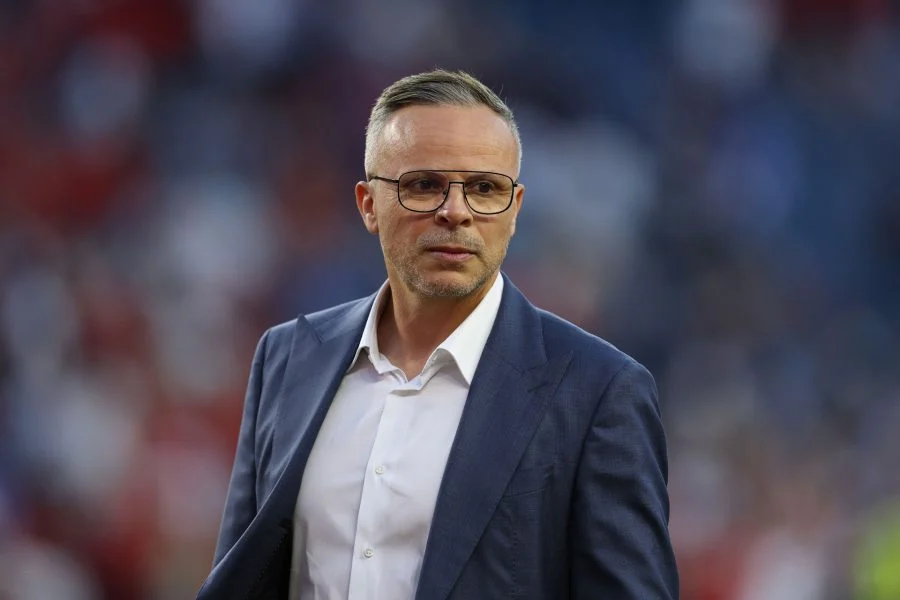
Morocco: after the 2026 World Cup, Mohamed Ouahbi is already setting course for the CAN
Eliminated by France in the quarter-finals of the 2026 World Cup, Morocco is already planning its next goals. For the coach Mohamed Ouahbi, it is not a question of questioning the work accomplished, but rather to draw lessons from this defeat in order to prepare as well as possible the next African Cup of Nations.
The day after the elimination against Les Bleus (2-0), the Moroccan technician recognized the superiority of France, believing that the Lions of the Atlas had been forced to defend lower than expected. According to him, the technical and tactical mastery of the French prevented Morocco from developing its game and being more dangerous offensively.
In an interview with Arryadia, Mohamed Ouahbi explained that his team had never intended to suffer so much, but that it was pushed to back by the quality of the opponent. He also pointed out the lack of offensive solutions and moves to unbalance the French bloc.
Despite this disappointment, the coach refuses to talk about failure. He recalls that Morocco has once again reached the quarter-finals of a World Cup, confirming its status among the best selections in the world. He also believes that several young players have reached a milestone during the competition.
However, Ouahbi calls for a lucid analysis of this journey. He wants a constructive self-criticism in order to identify the areas of progress, especially against the major nations capable of imposing a rhythm and a style of play different from those encountered on the African continent.
The focus is now on the African Cup of Nations. From the next rallies, the Atlas Lions will return to the playoffs with a clearly stated goal: to clinch the qualification and then go for the continental title.
For Mohamed Ouahbi, this AFCON will also be an essential step in the preparation of Morocco for the 2030 World Cup, which the Kingdom will co-organize with Spain and Portugal. The coach is confident in the potential of his group, while recalling that expectations around the Atlas Lions have changed: it is no longer just a question of achieving a great run, but now to win trophies and sustainably confirm Morocco’s place among the major nations of world football.
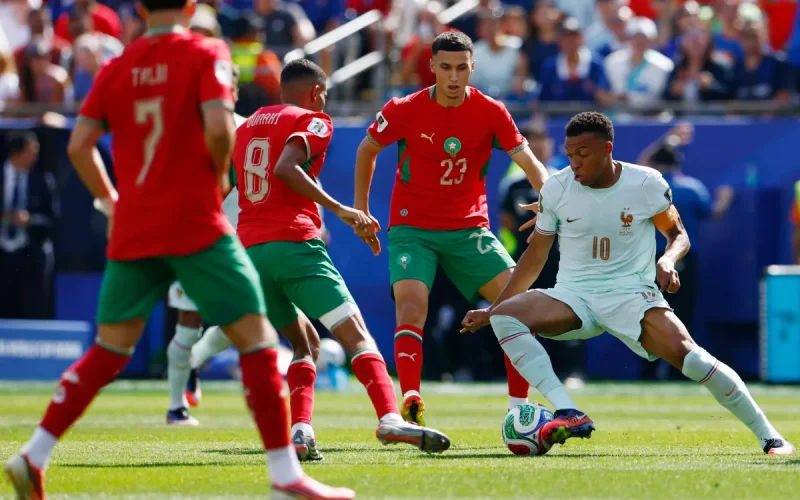
World Cup 2026: the international press judges Morocco too cautious towards France
The elimination of Morocco against France (2-0) in the quarterfinals of the 2026 World Cup has provoked many reactions in the international press. If the course of the Atlas Lions is widely praised, several media believe that the Moroccan selection has approached this poster with too much caution against Les Bleus considered superior.
According to Reuters, the game plan of Mohamed Ouahbi quickly showed its limits. The British media believe that Brahim Diaz found himself too isolated in attack and that the French midfielder, led by Adrien Rabiot and Manu Koné, took control of the game. The agency also highlights the lack of offensive effectiveness of Morocco, which framed only one shot during the entire game.
For its part, The Guardian considers that the Atlas Lions have long resisted thanks to the interventions of Yassine Bounou, before giving in under French pressure. The British daily believes that Morocco has never managed to impose its usual offensive play nor to really worry the defense of the Blues.
The Associated Press also notes the difficulties of the Moroccans to create the danger and recalls that, as in the semi-finals of the 2022 World Cup, France has won on the score of 2-0.
Despite the elimination, the performance of Yassine Bounou is unanimous. His penalty against Kylian Mbappé and several decisive interventions allowed Morocco to stay in the match for almost an hour.
In the Netherlands, the NOS described a French team « much too strong » for the Atlas Lions unable to take control of the game. In Spain, El País believes that the match has definitely changed after the break, while La Gazzetta dello Sport mentions a France playing « in another category », notably praising the performances of Manu Koné, Kylian Mbappé and Ousmane Dembélé.
If the analyses are critical of Morocco’s performance in this quarter-final, they also highlight the status now acquired by the Atlas Lions. With two consecutive qualifiers among the world’s top eight nations, the Kingdom confirms its long-term presence at the highest level of international football, even if this elimination is a reminder that there is still a step to take in order to reach the final four of a World Cup.
Morocco: the heatwave is receding after nine days of hot weather, but up to 46 °C remains expected
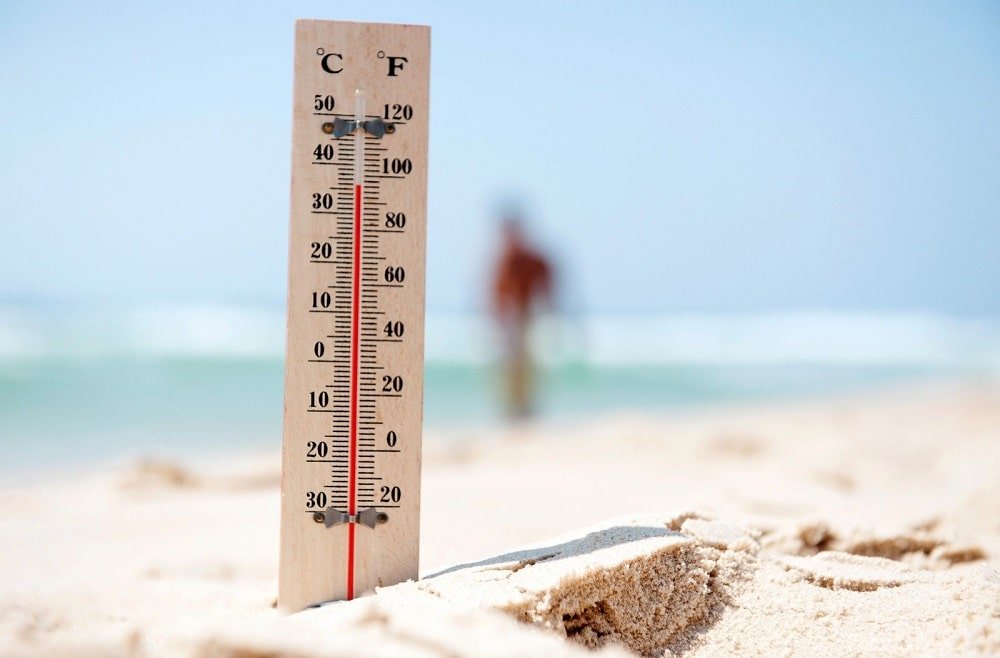
After nine days marked by an exceptional heat wave, Morocco is about to experience a slight respite. According to the General Directorate of Meteorology (DGM), temperatures should gradually decrease in several regions of the Kingdom thanks to the arrival of cooler Atlantic air currents, even if the heat will remain very marked in the interior of the country.
According to DGM forecasts, the heatwave will gradually recede in northern and central Morocco over the next few days. This trend should allow a gradual drop in temperatures, ending an episode during which peaks exceeded the seasonal normals by 5-13 °C in many regions.
However, this refreshment will not concern the entire territory. The regions of the South-East, the Oriental, the valley of the Moulouya and the southern provinces will continue to record particularly high temperatures. The maxima will still be able to reach between 41°C and 46°C in certain areas, while the coasts and reliefs of the Atlas will benefit from more lenient conditions, with temperatures between 25°C and 30°C.
Meteorologists also predict a return of some atmospheric instability at the beginning of next week, with a risk of localized thunderstorms on the reliefs of the Atlas, accompanied by a slight rise in temperatures in several regions.
This heat episode was caused by the rise of the Saharan thermal depression and the arrival of the chergui, a warm and dry wind coming from the Sahara. More than fourteen Moroccan cities exceeded 40 °C, while Smara recorded the highest temperature in the country with a peak of 47 °C.
Despite this particularly intense heat wave, the General Directorate of Meteorology points out that no absolute temperature record for the month of July has been broken so far. The authorities nevertheless invite the inhabitants of the most exposed regions to remain vigilant in the face of the hot weather that will still persist in several provinces of the Kingdom.