King Mohammed VI to Receive Morocco’s U20 World Champions at the Royal Palace in Rabat
Royal and Public Celebration for Morocco’s U20 Team. The Ministry of the Royal Household, Protocol, and Chancellery announced that, on the instructions of King Mohammed VI, Morocco’s U20 national football team, winners of the U20 World Cup in Chile, will be honored on Wednesday, October 22 in Rabat.
Royal Reception at the Palace
The King will personally receive the players and coaching staff at the Royal Palace, recognizing their historic and unprecedented world title victory.
Public Parade in the Streets of Rabat
Following the audience, the team will be greeted by thousands of supporters during a public celebration starting at 6:30 p.m. The parade will begin at Bab Essoufara and continue along Avenue Mohammed V.
A National Tribute to Historic Champions
This double tribute — royal and popular — celebrates a landmark moment for Moroccan football, marking the country’s first world title in the U20 category.
U20 World Cup: Morocco Crowned World Champion, Mohammed VI Academy at the Core of Success
Morocco clinched the U20 World Cup title after a 2-0 victory over Argentina at the Julio Martínez Prádanos Stadium in Santiago, Chile. The triumph highlights the impact of the Mohammed VI Football Academy, a cornerstone of Morocco’s football development strategy.
Academy Graduates Lead the Way
Under coach Mohamed Ouahbi, four players trained at the Academy — Fouad Zahouani, Houssam Essadak, Yassir Zabiri, and Yassine Khalifi — played a decisive role throughout the tournament, demonstrating the strength of Morocco’s youth training model.
Zabiri Shines as Tournament Top Scorer
Academy graduate Yassir Zabiri scored both goals in the final (15th and 28th minutes) and finished as the tournament’s top scorer with five goals. His performance symbolizes the success of Morocco’s player development system.
The Mohammed VI Academy: A Visionary Project
Established in 2009 under the leadership of King Mohammed VI, the Academy combines academic excellence, modern facilities, and professional coaching to prepare young players for international competition. It has become a model of football education in Africa and beyond.
A Triumph of Vision and Development
Morocco’s U20 world title confirms the effectiveness of a long-term national vision built on discipline, education, and technical mastery. From Salé to Santiago, the Mohammed VI Academy stands as the foundation of Morocco’s footballing future.
Sport Business Insights (Oct.–Nov. 2025): AFCON Morocco 2025, Africa’s Sports Pulse, and Exclusive Interviews
The latest issue of Sport Business Insights is finally available! For the October–November 2025 edition, the spotlight is on AFCON 2025 in Morocco—a flagship event embodying the ambitions and future prospects of African sport. From diplomacy to investment, and leadership to infrastructure, this issue explores how the continental tournament is reshaping the sport business landscape across Africa.
From the Democratic Republic of Congo, where sport is emerging as a tool for global influence, to AFCON 2025 as a strategic showcase, discover insights from Zelkifli “Zul” Rahman Ngoufonnja, CEO of Quick-Witted Management Ltd, as he breaks down Morocco’s initiatives ahead of this historic event. The CAF’s evolving geopolitical dynamics also take center stage, alongside exclusive perspectives from Tony Parker and Geremi Njitap on governance and the growing appeal of African sport.
📍 Read now at: https://sportbusinessinsights.com
Morocco crowned U20 World Champions : Royal vision and youth development triumph
In a historic night at the Julio Martínez Prádanos Stadium, the Atlas Cubs stunned six-time champions Argentina (2–0) to win the U20 World Cup, marking the first-ever world title in the nation’s football history. It was a victory of talent, strategy, and vision — the fruit of years of investment in youth football under the leadership of His Majesty King Mohammed VI.
A Message of Royal Pride and National Unity
Following the final, King Mohammed VI expressed his “immense joy and profound pride” in a heartfelt message addressed to the national team. “We salute this sporting feat, the fruit of your confidence, unwavering belief in your abilities, and the spirit of cohesion and harmony that you have shown,” declared the Monarch.
His Majesty congratulated the young Lions for “honoring their country and representing Africa with dignity,” emphasizing that they have proven Morocco’s youth “possess the talent and determination to create history.”
The King’s message encapsulated what this title means for Morocco — not just a sporting triumph, but the confirmation of a national project built around youth empowerment and football excellence.

Zabiri’s Brilliance Seals a Dream Final
The star of the night was Yassir Zabiri, Morocco’s 20-year-old forward and graduate of the Mohammed VI Football Academy, who scored both goals to sink Argentina.
In the 12th minute, Zabiri curled a stunning free-kick into the top corner to give Morocco the lead. Minutes later, he doubled the score with a composed finish after a fast counterattack (29’), cementing his status as top scorer and Player of the Tournament.
Behind him, the Moroccan defense stood firm — captain El Kabbaj and goalkeeper Hamza El Mellouki led a disciplined line that denied Argentina any chance of comeback.
The Mohammed VI Academy: Heart of a National Vision
At the heart of this golden generation lies the Mohammed VI Football Academy, inaugurated in 2009 under royal initiative.
Nearly all of the U20 world champions — including Zabiri, Maamma, and Hachimi — are products of this state-of-the-art institution in Salé.
The Academy has become a symbol of Morocco’s long-term investment in modern football training, emphasizing education, discipline, and tactical intelligence.
Head coach Mohamed Ouahbi praised the Academy’s role in the team’s rise: “This title is the result of years of structured work, of a vision that believes in Moroccan talent and trusts in local formation.”
Morocco’s Football Renaissance Continues
This U20 World Cup victory follows a series of exceptional performances by Moroccan teams: the men’s semi-final run at Qatar 2022, the U23 AFCON title, and the women’s and U17 teams’ continental breakthroughs.
Each of these achievements bears the imprint of the royal strategy for football development, combining infrastructure, elite training, and social investment.
The victory in Santiago confirms Morocco’s position as Africa’s new football benchmark, and a growing force on the global stage.
From Vision to Glory
From the training pitches of Salé to the world stage in Santiago, this triumph is more than a sporting feat — it is the manifestation of a royal vision, built on faith in youth, investment in knowledge, and the pursuit of excellence.
As King Mohammed VI declared, the young Atlas Cubs have brought “joy to millions of Moroccan fans” and proven that the Kingdom’s youth “can rise to every challenge and shine on the world stage.”
Morocco, once a dreamer, is now a world champion — and its journey is far from over.
AFCON 2025 : Huge demand for tickets, with two more sales phases ahead
The Organizing Committee of the 2025 Africa Cup of Nations (CAN 2025) has released a very positive initial report on ticket sales for the tournament, which will be hosted in Morocco. Enthusiasm is already running high, with more than one-third of available tickets snapped up just days after sales opened.
According to figures released by the committee, early sales data confirms the immense anticipation surrounding the tournament. Out of the 400,000 tickets made available during the first phase, 137,250 have already been purchased by football fans across Africa and beyond.
Launched in early October, this first sales phase has achieved a purchase rate of over 30%, reflecting the widespread excitement for this 35th edition of the tournament, set to take place in Morocco.
Fans from Around the World
Another strong indicator of this enthusiasm is the number of FAN ID applications, which are required for stadium entry. According to the Confederation of African Football (CAF), 211,078 FAN ID requests have already been submitted, with 170,350 cards issued so far. Of these, 43,865 came from international fans representing 124 different countries—highlighting the global appeal of the tournament, which extends far beyond the African continent.
Upcoming Sales Phases
For those who haven’t secured their tickets yet, there’s still hope. CAF has already announced the dates for the next two ticket sales phases:
- Second phase: October 25, 2025
- Third phase: November 25, 2025
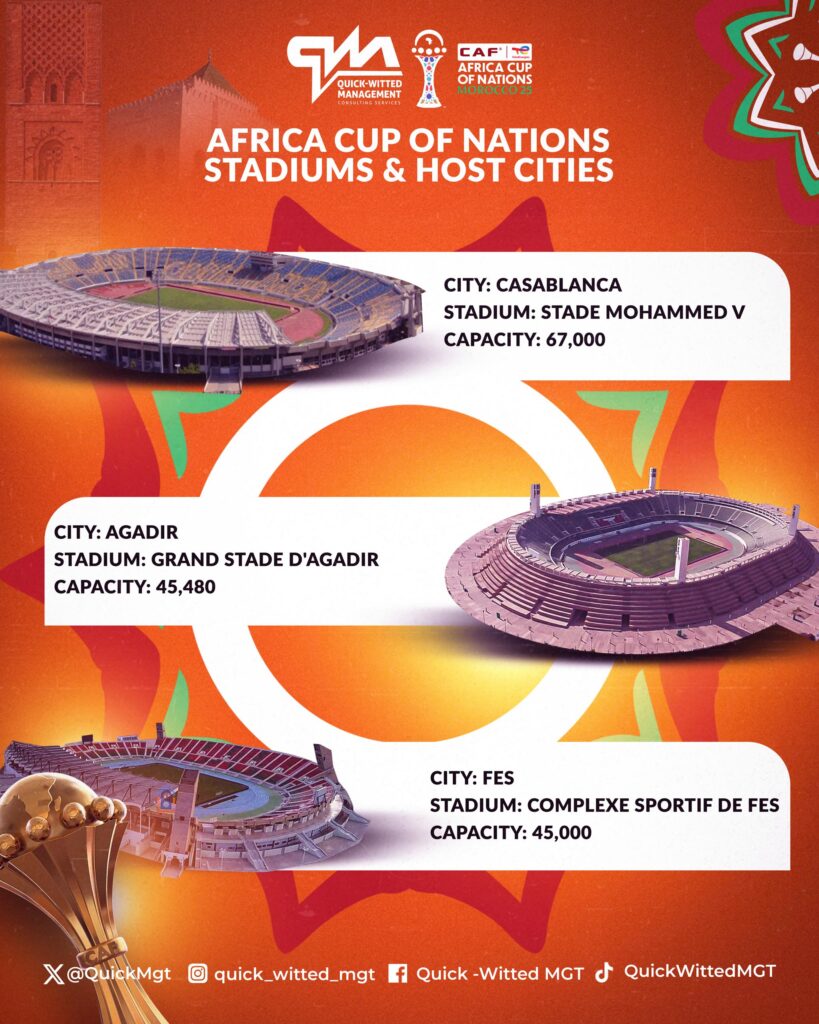
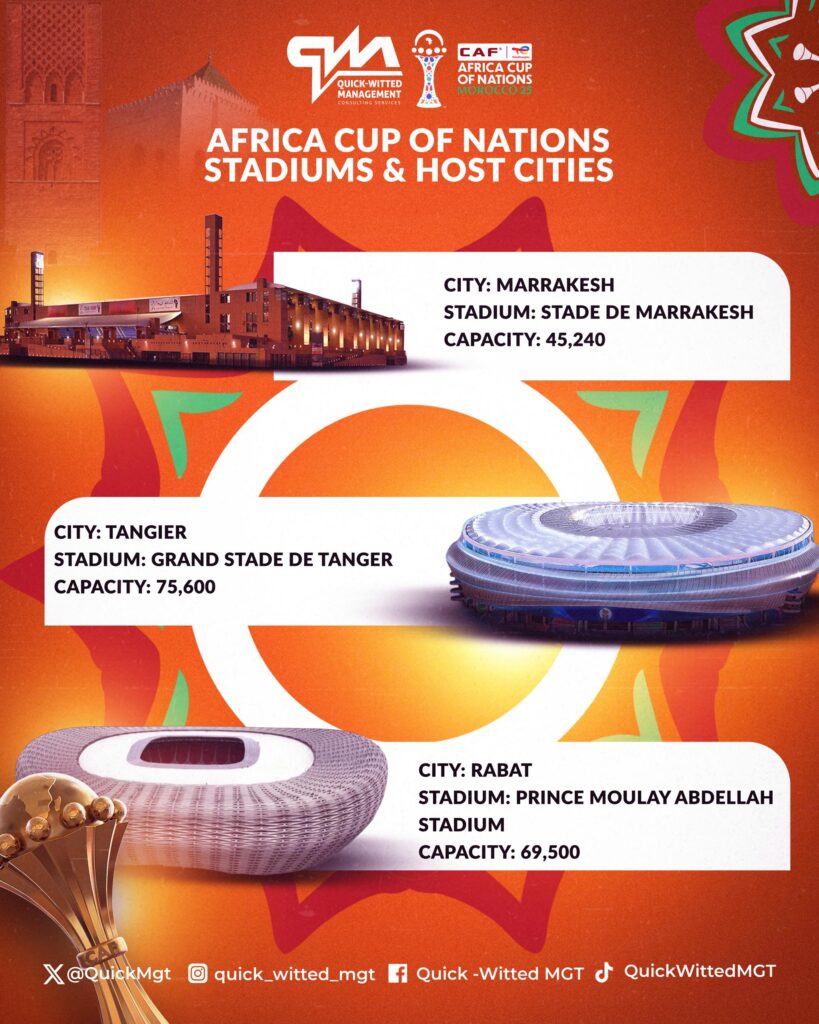
Each phase will offer fans the opportunity to obtain tickets to matches held in various Moroccan cities, including Casablanca, Rabat, Marrakech, Agadir, Fès, and Tangier.
A CAN Marked by Passion and Anticipation
With less than three months to go until kickoff, CAN 2025 is shaping up to be a major continental event. With Morocco as a determined and modern host, an upgraded organization, and a passionate fanbase, all the ingredients are in place for this edition to be one of the most spectacular in the history of African football.
U20 World Cup 2025 : Morocco’s historic final, the fruit of His Majesty King Mohammed VI’s vision
Morocco’s qualification for the final of the U20 World Cup 2025 marks a milestone for the Kingdom and for Africa. Beyond the sporting triumph, it is the tangible result of the vision and leadership of His Majesty King Mohammed VI, may God assist Him, whose strategic investments in youth development and sports infrastructure are now shining on the world stage.
A historic journey for Morocco and Africa
On Wednesday, October 15, 2025, in Valparaíso (Chile), the Atlas Cubs made history by defeating France (1-1, 5-4 on penalties) to reach the U20 World Cup final — a first in Morocco’s football history. After overcoming giants like Spain, Brazil, and France, the Moroccan U20 team will now face Argentina in a final that symbolizes the rise of African football to global prominence.

A triumph born of royal foresight
This unprecedented achievement is not a coincidence. It is the direct outcome of His Majesty King Mohammed VI’s visionary approach to sports as a pillar of national development. Under His leadership, the Kingdom has made youth empowerment, training, and excellence central to its sporting strategy.
The Mohammed VI Football Complex in Maâmora — one of the most advanced training centers in the world — stands as a testament to this royal vision. It has become a cradle of talent, providing Moroccan football with the structure and ambition to compete with the best nations on the planet.
The success of a coherent national strategy
Morocco’s recent footballing milestones — from the senior team’s historic semi-final at the 2022 World Cup to this U20 final — reflect a long-term, structured national project built on three key foundations: Talent development and education, State-of-the-art infrastructure, Sound governance through the Royal Moroccan Football Federation (FRMF).
This framework, inspired by the royal vision, has turned Morocco into a continental leader and a model for football governance and development.
A final that crowns a nation’s ambition
As Morocco prepares to face Argentina in the final, the Atlas Cubs carry more than a dream — they embody a royal ambition and a nation’s pride.
Regardless of the result, Morocco has already achieved something historic: proving that with clear vision, unity, and dedication, Africa can stand among the world’s elite.
A royal vision shaping Morocco’s sporting future
This U20 World Cup final is not only a sporting success — it is a manifestation of His Majesty King Mohammed VI’s far-reaching vision for Morocco: a nation confident, modern, and influential through its youth and talents.
The Atlas Cubs’ journey is the living proof that royal leadership, combined with national effort, can turn dreams into reality — and elevate Morocco’s flag to the highest levels of world sport.

2026 World Cup: Morocco hosts decisive play-off tournament ahead of intercontinental challenge
The Confederation of African Football (CAF) has confirmed the host and schedule for the upcoming African playoff tournament that will determine the continent’s final contender for the 2026 FIFA World Cup. Morocco will host the high-stakes matches in Rabat from November 12 to 16, 2025, where Gabon, Cameroon, Nigeria, and the Democratic Republic of Congo will face off. Only one of these four nations will move on to the intercontinental playoff scheduled for March 2026.

One final African team for the world stage
Africa has been granted 9 direct qualification spots for the 2026 World Cup, which will feature 48 teams for the first time. However, a 10th spot remains open through the intercontinental playoff, giving these four teams one last shot at reaching the biggest tournament in football.
The format is straightforward: two semi-finals and one final. Three matches. One winner. One final chance.
Morocco steps up as neutral and reliable host
Already qualified for the World Cup, Morocco will not compete in the playoff but will serve as a neutral host for the matches. The Prince Moulay Abdellah Stadium in Rabat will provide world-class facilities for this decisive event.
With its strong track record in hosting major football events and tournaments, Morocco once again confirms its position as a central figure in African football development and logistics.
High stakes, high expectations
All four teams—Cameroon, Nigeria, Gabon, and DR Congo—bring strong football traditions and ambitions to the table. With only one ticket up for grabs, the intensity promises to be high as each team chases a dream that’s just two steps away.
The intercontinental playoff in March 2026 will pit the African playoff winner against a nation from another confederation (likely from Asia, CONCACAF, or Oceania), with a World Cup spot on the line.
Morocco breaks world record with 16th consecutive win after Beating Congo (1-0)
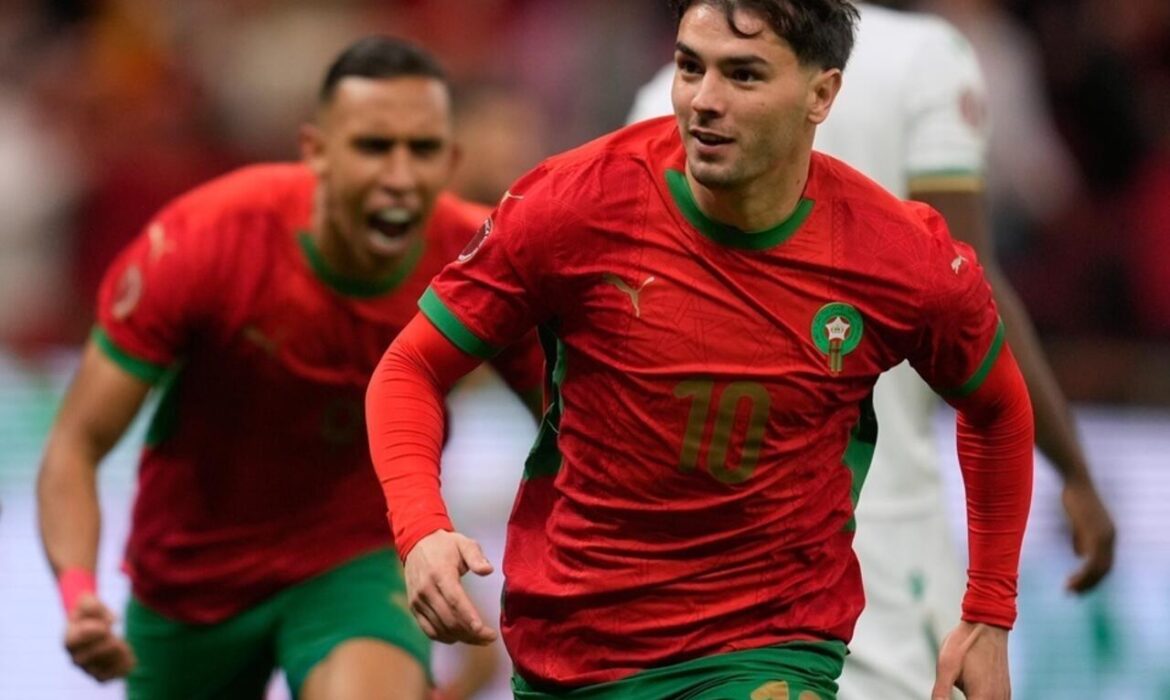
Morocco continues to make football history. Already qualified for the 2026 FIFA World Cup, the Atlas Lions defeated Congo (1-0) on Tuesday, October 14, 2025, at the Prince Moulay Abdellah Stadium in Rabat, during the final round of the African qualifiers. This victory, though narrow, is monumental — Morocco has now achieved 16 consecutive wins, setting a new world record.

A Tight Win with Historic Meaning
Under Walid Regragui, the Atlas Lions had nothing left to prove in terms of qualification but were determined to end their campaign on a perfect note. Facing a disciplined Congolese side, Morocco had to wait until the second half to break the deadlock.
A well-executed team move sealed a controlled yet symbolic victory, further showcasing the team’s tactical maturity and consistency.
Morocco Surpasses Spain and Germany to Set a Global Benchmark
With this 16th straight victory, Morocco surpasses the previous world record of 15 consecutive wins, jointly held by Spain (2008–2009) and Germany (2010–2011).
This unprecedented feat highlights the team’s discipline, consistency, and mental strength, hallmarks of Regragui’s management since taking charge. The Atlas Lions’ dominance is no accident — they have become one of the most formidable teams in international football, combining European tactical discipline with African flair and resilience.
Perfect Momentum Ahead of AFCON 2025
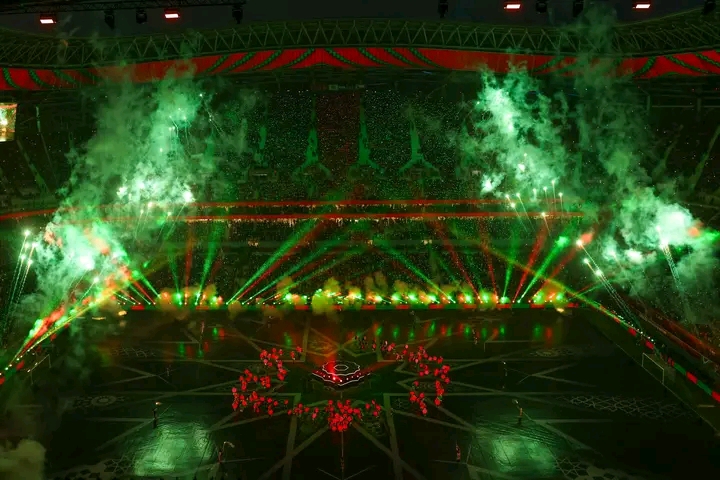
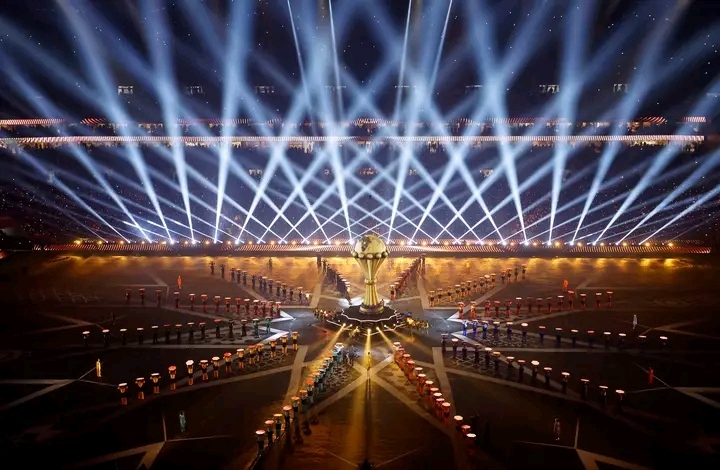
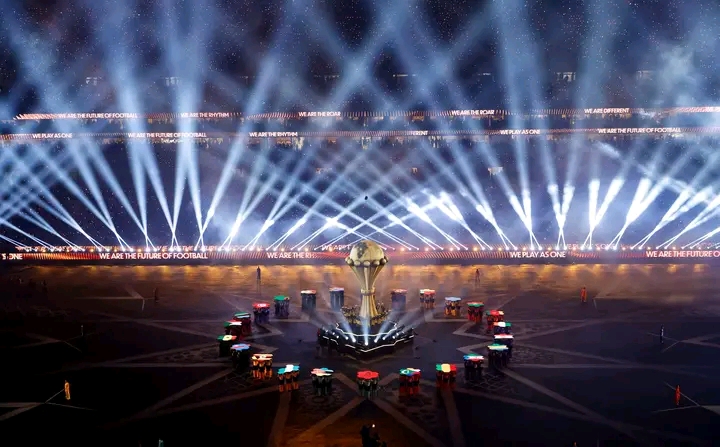
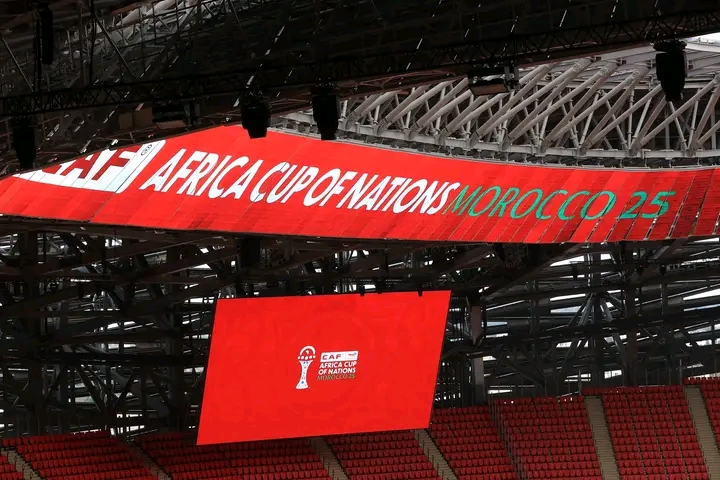
This historic run comes at the best possible time, with Morocco set to host the 2025 Africa Cup of Nations (AFCON) from December 21, 2025, to January 18, 2026.
Carrying this momentum into the continental tournament, the Atlas Lions will enter as the undisputed favorites and a symbol of African excellence on the world stage.
Morocco Advance to U20 World Cup semi-finals after dominant Win over USA
Morocco’s U20 national team delivered a stunning performance to beat the United States 3-1 on Sunday in Rancagua, Chile. Led by standout players Yassir Zabiri and Othmane Maamma, the Atlas Cubs have booked their place in the semi-finals of the FIFA U20 World Cup — their first in 20 years.

The Moroccans will now face France in a much-anticipated clash on Wednesday. The French side advanced after a 2-1 victory over Norway. Morocco’s youth program continues to shine, with fans now dreaming of a historic final.

AFCON 2025 : Official Ticket Prices Revealed
The Confederation of African Football (CAF) and the Local Organizing Committee have officially unveiled the ticket prices for the 2025 Africa Cup of Nations (AFCON), set to take place in Morocco.
The pricing strategy reflects a strong will to make Africa’s biggest football event accessible to all fans while maintaining high international standards.
Affordable Prices for Every Fan
Tickets are divided into three categories (Cat 1, Cat 2, and Cat 3), with prices ranging from 100 MAD to 900 MAD, depending on the stage of the competition:
- Opening Match: 150 – 500 MAD
- Group Stage Matches: from 100 MAD
- Quarter-finals: 200 – 600 MAD
- Semi-finals: 300 – 800 MAD
- Final Match: 400 – 900 MAD
This progressive pricing model allows families, youth, and local supporters to experience the AFCON 2025 atmosphere, while still reflecting the prestige of the top fixtures.


Blockbuster Fixtures in the Group Stage
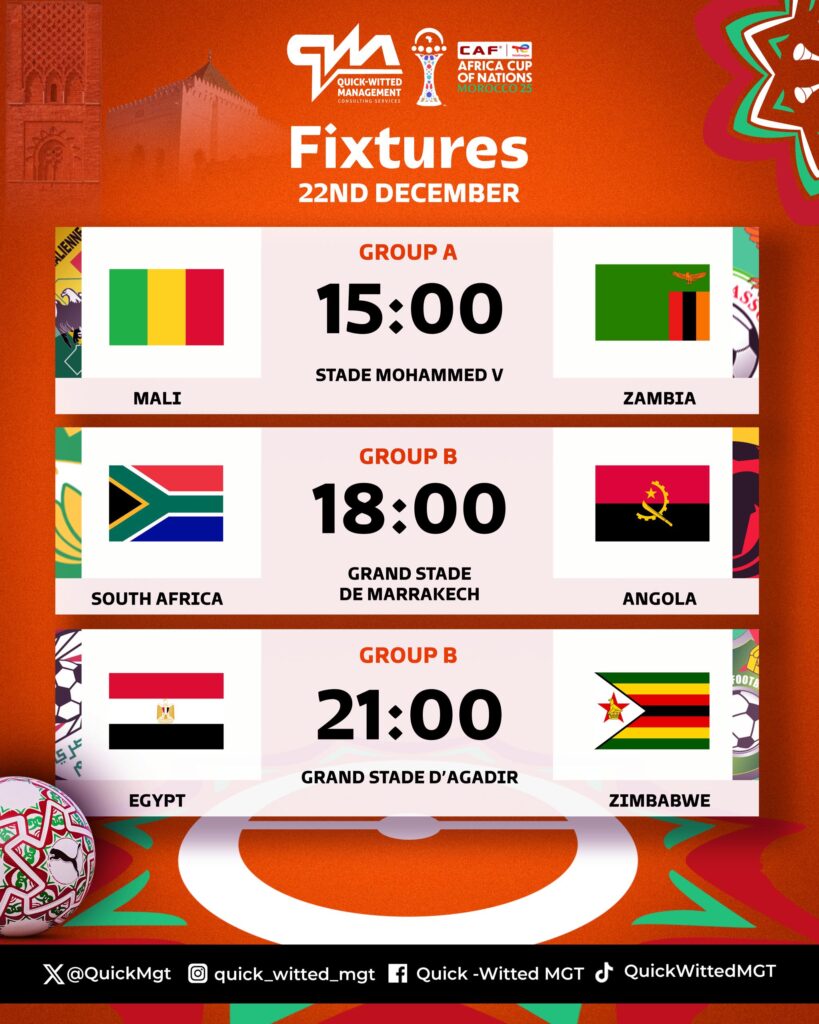
The group stage schedule already promises fireworks, with some of the continent’s biggest rivalries on display:
🇲🇦 Morocco vs Mali
🇪🇬 Egypt vs South Africa
🇳🇬 Nigeria vs Tunisia
🇩🇿 Algeria vs Burkina Faso
🇨🇮 Côte d’Ivoire vs Cameroon
🇸🇳 Senegal vs DR Congo
🇿🇲 Zambia vs Morocco
These headline clashes will be played across Morocco’s state-of-the-art stadiums, ensuring world-class football and electric atmospheres.
Digital Revolution: Ticketing and FAN ID
Ticket sales open on October 13, 2025, starting with a 48-hour exclusive pre-sale for Visa cardholders, followed by a general public release.
Fans must download the YALLA app — required for obtaining the FAN ID and e-visa to enter Morocco.
This is a first in AFCON history and aims to enhance security, simplify ticketing, and provide a seamless fan experience.
Global Excitement Building Up
With the tournament set to run from December 21, 2025, to January 18, 2026, global excitement is already at fever pitch.
The Moroccan organization and CAF are anticipating record-breaking attendance figures for what could become one of the most successful editions in the competition’s history.