
An international study shows a recovery rate of nearly 87 per cent from the Khouribga ore.
The scientific exploitation of national mineral resources is opening up new technological prospects for the Kingdom. Published on Wednesday 11 November 2026 in the international scientific journal *Scientific Reports*, a study conducted by Moroccan and international researchers demonstrates the feasibility of extracting rare earth elements directly from phosphate rock sourced from the Khouribga basin. Using an optimised chemical process involving a hydrochloric acid solution at a precise concentration of twenty point thirty-five per cent, maintained at a temperature of seventy-five degrees Celsius for twenty-five minutes, the scientific team achieved a remarkable average yield of eighty-six point eighty-six per cent. Analyses carried out on the samples revealed an overall concentration of 633 milligrams of rare earth elements per kilogram of ore, with a high proportion of yttrium, a critical component essential for the manufacture of electronic materials, technical ceramics and state-of-the-art lighting devices.
Academic collaboration in the service of a strategic deposit
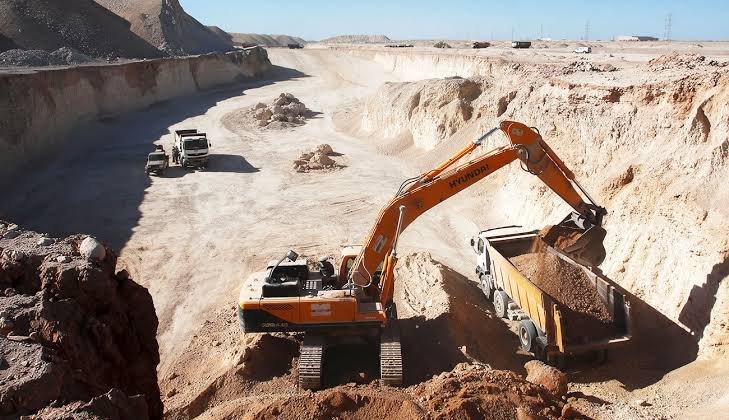
This experimental result differs from previous work on the recovery of these elements from phosphogypsum – a by-product of fertiliser production – in that it focuses directly on the parent rock, of which seven million two hundred thousand tonnes are extracted each year at the Khouribga site. Driven by close collaboration between researchers from Sultan Moulay Slimane University, Sidi Mohamed Ben Abdellah University and Cadi Ayyad University, this breakthrough paves the way for a new industrial processing sector. The next phases of research will now focus on assessing the technical and economic feasibility of scaling up this process to an industrial level, as well as on developing methods for the selective separation of the various dissolved metallic elements.
Implications for technological sovereignty and national research
The gradual mastery of extraction processes for critical minerals strengthens the country’s strategic position within the global value chains of the energy and digital transitions. By transforming a traditional mineral resource into a key supply source for high-tech industries, this innovation showcases the excellence of national university laboratories and stimulates applied research. In the medium term, the development of local expertise in rare-earth refining will help Moroccan engineers develop their skills, attract specialised industrial partnerships and strengthen the economic resilience of the Kingdom’s mining regions.