The draft budget allocates a colossal envelope to modernize access roads in Benslimane and Marrakech.
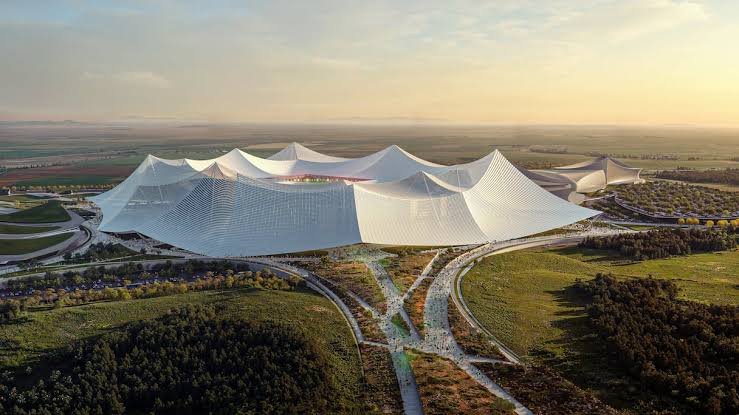
The strategic anticipation of major global sporting events acts as a powerful accelerator for the modernization of the Kingdom’s infrastructure. According to the draft budget of the Ministry of Equipment and Water presented in early November 2026 to the House of Representatives, an overall envelope of 7.5 billion dirhams has been officially mobilized to modernize the road network serving Benslimane and Marrakech. Two-thirds of this amount—five billion dirhams jointly funded by the State, Autoroutes du Maroc, the Road Financing Fund, and the national railway company—are directly allocated to opening up access to the future Grand Stade Hassan II. In line with this objective, the priority project for the 59-kilometer continental motorway connecting Rabat to Casablanca is accelerating to connect Benslimane Airport to the stadium complex before the end of 2028, alongside widening works to three lanes on secondary axes such as the national road leading to Oued Cherrat.
Development of the outer ring road and traffic flow in Marrakech
The preparation of host infrastructure also extends to the country’s tourism capital, with a 2.5 billion dirham allocation approved under a partnership agreement. This substantial budget will allow construction to begin in 2027 on an outer ring road stretching over 77 kilometers around the Marrakech urban area. This major road project will be accompanied by the modernization of cross-town routes and access roads to hotel zones to relieve urban traffic congestion and facilitate the movement of regional and international visitors. By strengthening the connectivity of the Ochre City, public authorities intend to guarantee smooth mobility throughout the continental and global competitions while raising urban planning standards to international requirements.
Impact on sustainable mobility and the economic fabric
These massive investments made less than four years before the World Cup kickoff extend far beyond the sporting tournament alone. The creation of motorways and the widening of national roads generate thousands of direct and indirect jobs in the construction and public works sector across the Casablanca-Rabat axis and the Marrakech-Safi region. In the long term, these lasting infrastructure developments will streamline freight transport, boost regional tourism appeal, and improve the daily quality of life for citizens. By strictly adhering to its delivery schedule, the country confirms its capacity to transform a major event project into a driver of sustainable economic and social development for all host regions.