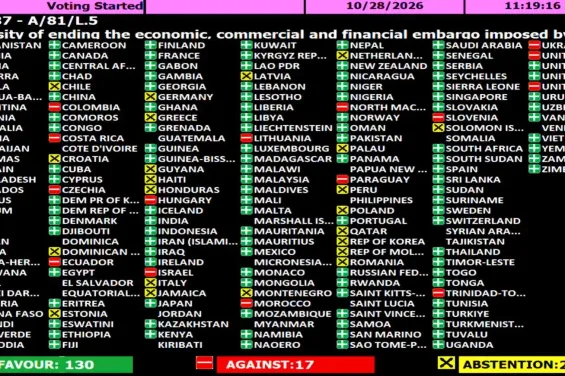
During the UN General Assembly vote demanding the lifting of the US embargo on Cuba, the Kingdom voted against the resolution. This position confirms the strategic alignment of Moroccan diplomacy with Washington.
Moroccan diplomacy reaffirms its strategic alliances on the international stage during major multilateral debates. On Wednesday, 28 October 2026, the United Nations General Assembly adopted a new non-binding resolution calling for an end to the economic, commercial, and financial blockade imposed on Cuba by the United States since 1962. During the vote, the text received 130 votes in favour, marking a significant drop in international support for the Havana government compared to the 165 votes recorded during the September 2025 session. By voting against this resolution alongside 17 other nations such as Israel, Argentina, the United Arab Emirates, and Ukraine, Morocco clearly reaffirms its geopolitical choice to support the US line.
A diplomatic evolution in the wake of relations with Washington
This negative vote follows the positions consistently taken by national diplomacy over recent months. The Kingdom had already expressed its opposition last July regarding the opening of a general debate on US financial sanctions targeting Cuba. This policy shift accelerated following executive developments in Washington in January 2025, reflecting a progressive hardening compared to the abstention observed by the country during the September 2025 UN vote. This strategic consistency was also on display on 30 June, when the country opposed allocating budget envelopes to the World Food Programme for humanitarian aid to the island.
Complex bilateral relations with the Havana regime
This firm stance on the Cuban file comes in a specific bilateral context between the two nations. Although the Kingdom restored official diplomatic relations with Havana on 21 April 2017 after nearly four decades of rupture, Cuban diplomacy maintains constant political support for the Polisario separatist movement. The Cuban regime’s continued recognition of the self-proclaimed republic constitutes a major friction point weighing on the complete normalisation of exchanges, explaining the strict choices made by Morocco during strategic votes at UN headquarters in New York.