
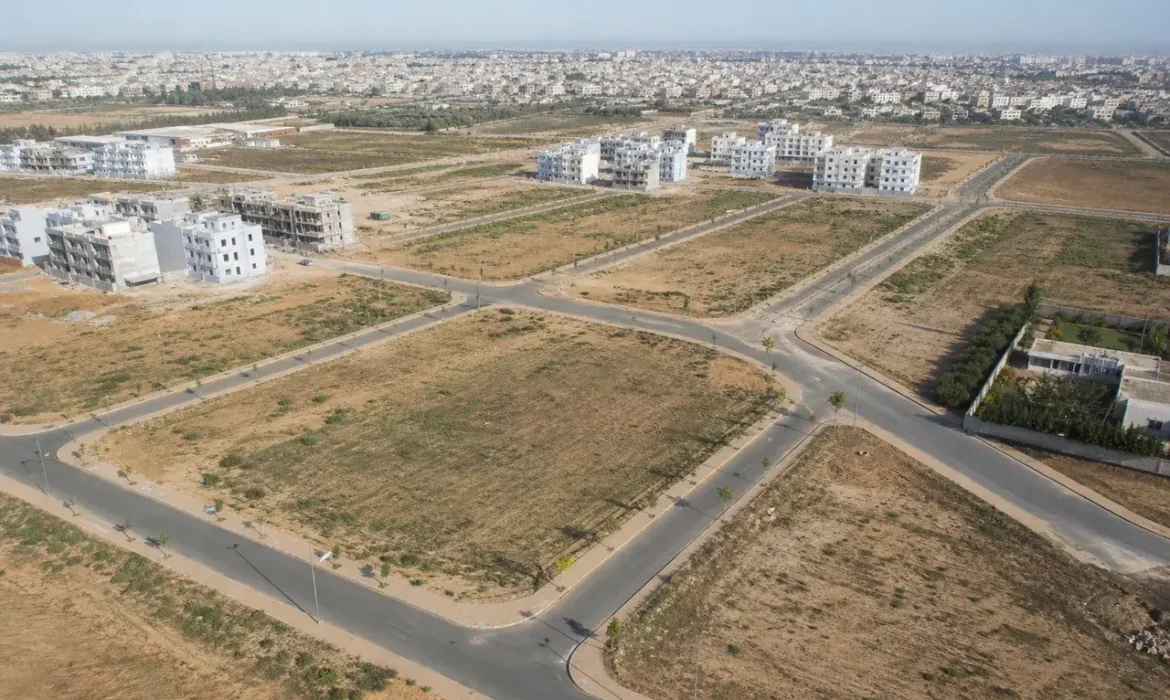
The State Property Directorate (Direction des Domaines de l’État) has recovered more than 5,862 hectares from investors who failed to meet their contractual commitments in 2025. This public land will be reallocated to new economic projects with a high social impact.
The Moroccan State is tightening rigor in the management and monitoring of its private domain to support economic development. According to the report on public land accompanying the 2027 Finance Bill, published on 23 October 2026, over 58.6 million square metres of land were recovered by the authorities in a single year. This extensive recovery operation is due to several project promoters failing to comply with the obligations set out in the specifications and allocation agreements. The close monitoring exercised by the State Property Directorate aims to penalize the freezing of public land and ensure that every allocated parcel effectively contributes to value creation and job generation. The areas returned to State ownership will be swiftly reallocated to new investment initiatives of high strategic interest.
An allocation drive focused on energy projects
Alongside these recovery measures, the Kingdom continues to mobilize its land base to support economic recovery and major industrial projects. During 2025, the authorities approved 308 projects requiring the provision of nearly 32,000 hectares of public land, representing more than 70 billion dirhams in projected investment and the expected creation of 16,333 jobs. This momentum accelerated in the first half of 2026 with the approval of an additional 114 projects covering more than 23,000 hectares. The renewable energy and energy transition sector accounts for the largest share of these land allocations, illustrating the strategic priorities of the Moroccan economy.
The State now favors long-term leasing of land
This public asset management policy is accompanied by a major shift in approach regarding how land is made available. The State is gradually moving away from outright sales in favor of long-term leasing to retain sovereign control over its land resources. The leasing option thus accounted for over 86% of the land area mobilized in 2025, before reaching an almost exclusive level of over 99% during the first half of 2026. This stricter contractual framework allows administrative bodies to regularly monitor compliance with project completion timelines and facilitates cancellation procedures in the event of investor default.