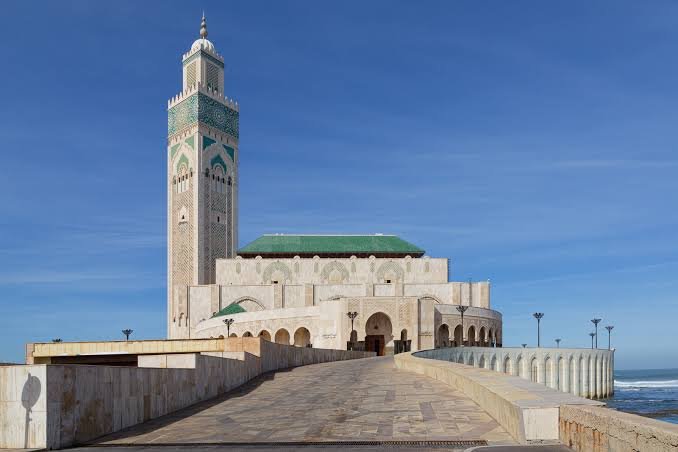
The Ministry of Endowments and Islamic Affairs has established a new architectural standard requiring that at least 30% of the surface area of new mosques be reserved for women. This legislation also includes accessibility facilities for people with disabilities.
The Kingdom is updating the architectural design of its religious buildings to offer more space and comfort to female worshippers. According to the report on the gender-responsive budget published on 23 October alongside the 2027 Finance Bill, the Ministry of Endowments and Islamic Affairs is thoroughly revising its construction criteria. Until now, women had on average one-fifth of the total surface area of Moroccan mosques. The new regulations now mandate that a minimum of 30% of the area dedicated to prayer be allocated to women’s spaces for all new architectural projects. For example, for a prayer area of 1,000 square metres, 300 square metres will henceforth be reserved for female worshippers, compared to 200 square metres previously.
Specific adaptations in favour of universal accessibility
This comprehensive reform also incorporates strict requirements regarding inclusivity and accessibility for people with reduced mobility. Where the prayer hall intended for women is situated on a mezzanine or upper floor, construction plans must obligatorily include a dedicated space on the ground floor to accommodate worshippers with disabilities who experience difficulty using stairs. Furthermore, new mosques will be required to integrate ablution rooms and sanitary facilities reserved for women, equipped with at least one adapted facility as well as equipment enabling autonomous movement to all areas of the place of worship.
A roadmap focused on inclusion by 2032
These new architectural directives respond to a need measured on the ground, where the satisfaction rate for women’s prayer space requirements stood at only 27.6% in 2025. Forming part of the Ministry’s strategy looking ahead to 2032, these measures aim to enhance access to places of worship and religious guidance. This choice of architectural modernisation accompanies a female presence that is already predominant in the Ministry’s educational programmes, with women representing more than 90% of beneficiaries in literacy classes held in mosques and over 83% of their teaching staff during the 2025–2026 period.