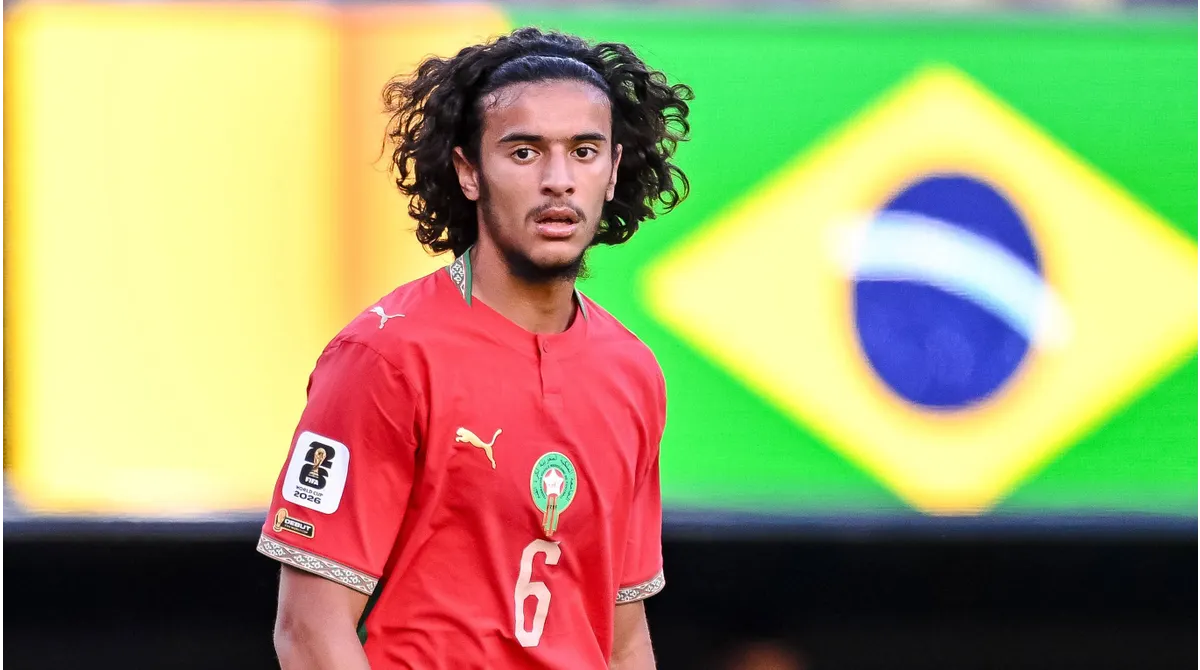
At just 19 years old, the Manchester City midfielder has become the highest-valued national player on the global market.
The rise of promising young players from national football teams within the world’s biggest clubs is reaching unprecedented economic heights. According to the November 2026 update of the rankings compiled by the specialist model FootballTransfers, Moroccan international Ayyoub Bouaddi is now valued at one hundred and twenty-eight million and three hundred thousand euros. This spectacular rise of over eighty-two per cent in the space of a month has catapulted the young Manchester City midfielder to sixth place in the global rankings of the most expensive players, ahead of French striker Kylian Mbappé. This exceptional rise also sees the 19-year-old become the highest-valued Moroccan footballer in history, ahead of Atlas Lions captain Achraf Hakimi by nearly fifty million euros.
A record transfer and a successful integration into English football
This surge in the player’s market value reflects the leap in his status that took place during the last transfer window. Signed at the end of August by English club Manchester City for ninety-five million euros plus bonuses, the former Lille player has committed to a long-term deal running until 2031. His consistent performances in the Premier League and the Champions League under the Manchester City management have quickly cemented his technical and athletic potential at the highest continental level. This upward trajectory is at the heart of a broader trend favouring dual nationals and young talent from the country, as also illustrated by the strong performances of Ismaël Saibari at Bayern Munich and Bilal El Khannouss at VfB Stuttgart.
Benefits for sports diplomacy and the training model
The presence of a national player amongst the financial elite of world football boosts the international profile of Moroccan sport and the reputation of the country’s centres of excellence. This individual influence enhances the national team’s appeal to young talents from the diaspora playing in major European leagues and adds value to the nation’s human capital. The repeated successes of international players abroad stimulate the development of sports tourism, inspire the next generation and boost investor enthusiasm for local infrastructure. By showcasing the competitiveness and discipline of its sporting ambassadors, the Kingdom is consolidating its image as a modern and dynamic country within the global sporting ecosystem.