

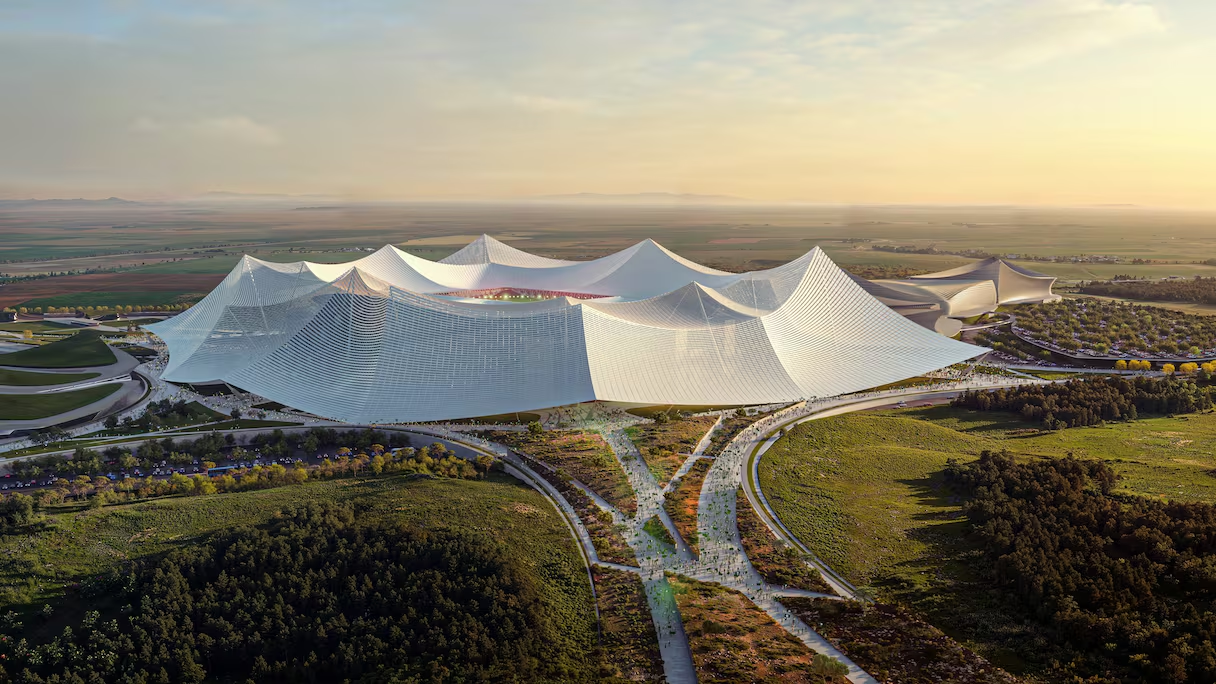
The international technical delegation will assess the six national stadiums at the end of November.
Preparations for the 2030 World Cup are entering a decisive phase of on-site technical assessment. Having begun its tour in Portugal and continued its visits to several Spanish cities – including Madrid on Thursday 12 November 2026 to inspect the Santiago Bernabéu Stadium – the FIFA delegation of experts is due to arrive in Morocco at the end of November to inspect the six venues proposed by the national bid committee. This official visit will enable the delegation to assess the progress of the works and the compliance of the facilities located in Casablanca, Rabat, Tangier, Fez, Agadir and Marrakesh. Central to this mission is an in-depth examination of the future Hassan II Grand Stadium in Benslimane, currently under construction near Casablanca and positioned as a leading contender to host the opening match or the final, competing with the major Spanish stadiums.
A comprehensive audit of infrastructure and urban mobility
Beyond the strictly sporting criteria relating to the pitches, stands and technological facilities in the stadiums, the visit by the world governing body’s technical experts covers the entire logistical ecosystem of the host cities. The delegation will hold working meetings with local, regional and national authorities, as well as with stadium managers, transport operators and representatives of the tourist accommodation sector. The aim of these discussions is to assess the efficiency of urban transport networks, hotel accommodation capacity and the quality of security arrangements around the Prince Moulay Abdellah Sports Complex in Rabat, the Grand Stade in Tangier and the refurbished stadiums in Fez, Agadir and Marrakesh.
Benefits for regional development and the national economy
This stage of international validation highlights the scale of the modernisation projects underway across the country in the run-up to the 2030 global event. Bringing six major urban centres up to global standards is boosting the construction and civil engineering sector, fostering the transfer of expertise in sports engineering and generating thousands of direct and indirect jobs. By demonstrating the rigour of its planning and the quality of its hosting infrastructure to international observers, the Kingdom is sustainably enhancing its appeal to tourists, strengthening connectivity between its regions and showcasing the expertise of its national companies on the world stage.