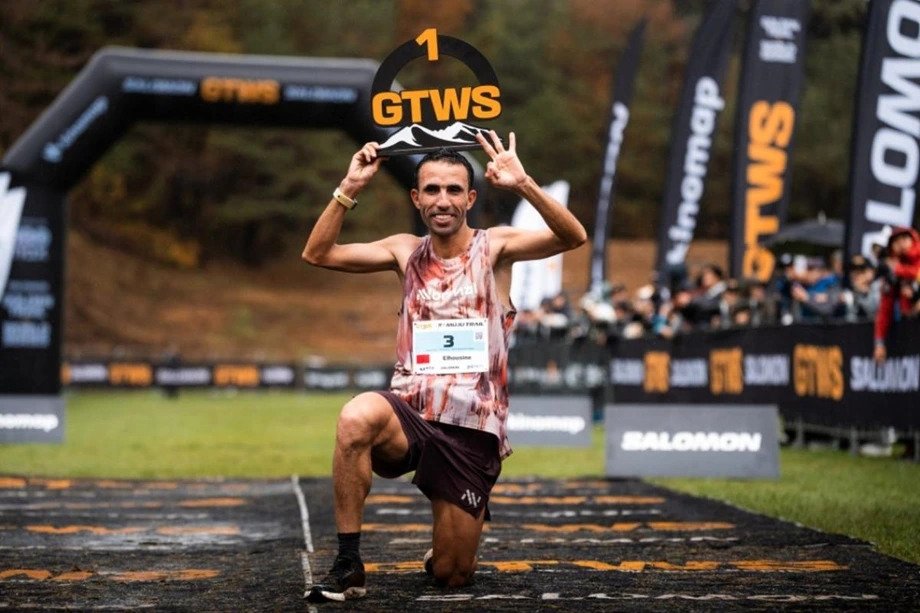
Hailing from the Zagora desert, the athlete secures his third consecutive world title in South Korea.
The potential and determination of national athletes continue to illuminate the international sports scene with top-tier achievements. Coming from an Amazigh nomadic family in the Zagora region, Moroccan runner Elhousine Elazzaoui has definitively entered mountain racing folklore. On Saturday, 25 October 2026, the Kingdom’s athlete won the Golden Trail World Series final held in Muju, South Korea, over a demanding 29-kilometer course featuring more than 2,300 meters of positive elevation gain. By prevailing after an intense effort completed in two hours and 49 minutes, he clinched his third consecutive world title by just two points following his 2024 and 2025 victories. This remarkable performance on the international circuit caps the exceptional journey of a boy from the South who used to walk 20 kilometers daily to reach school before launching a high-level athletic career.
From the Zagora desert to international podiums
The champion’s rise is rooted in the toughness of vast Saharan spaces and the values of perseverance inherent to Amazigh culture. Following a standout European debut in 2017 during a first mountain race in Switzerland, the trail specialist progressively built elite technical mastery to compete against the world’s best. To counter fierce competition from Kenya’s Patrick Kipngeno in this South Korean final, the Moroccan runner displayed a bold offensive strategy from the opening kilometers to maintain his lead and confirm his status as world leader. Buoyed by this tactical maturity, the athlete is now preparing a transition to longer distances, targeting the Mont-Blanc OCC event scheduled for the 2027 season.
Promoting sports tourism and highlighting Southern regions
The success of a Zagora native on the world’s highest peaks shines an international spotlight on the landscape diversity and athletic potential of the Southern provinces. Repeated triumphs by national sports figures abroad enhance the Kingdom’s global profile and boost the development of adventure and trail tourism across the Atlas and desert regions. The growing enthusiasm for outdoor disciplines encourages the creation of regional sporting events, drawing practitioners from around the globe and delivering positive spillover effects for local lodging, guiding, and dining sectors. By embodying resilience and excellence, this exceptional journey inspires rural youth, celebrates nomadic cultural heritage, and supports economic diversification across the country’s rural territories.