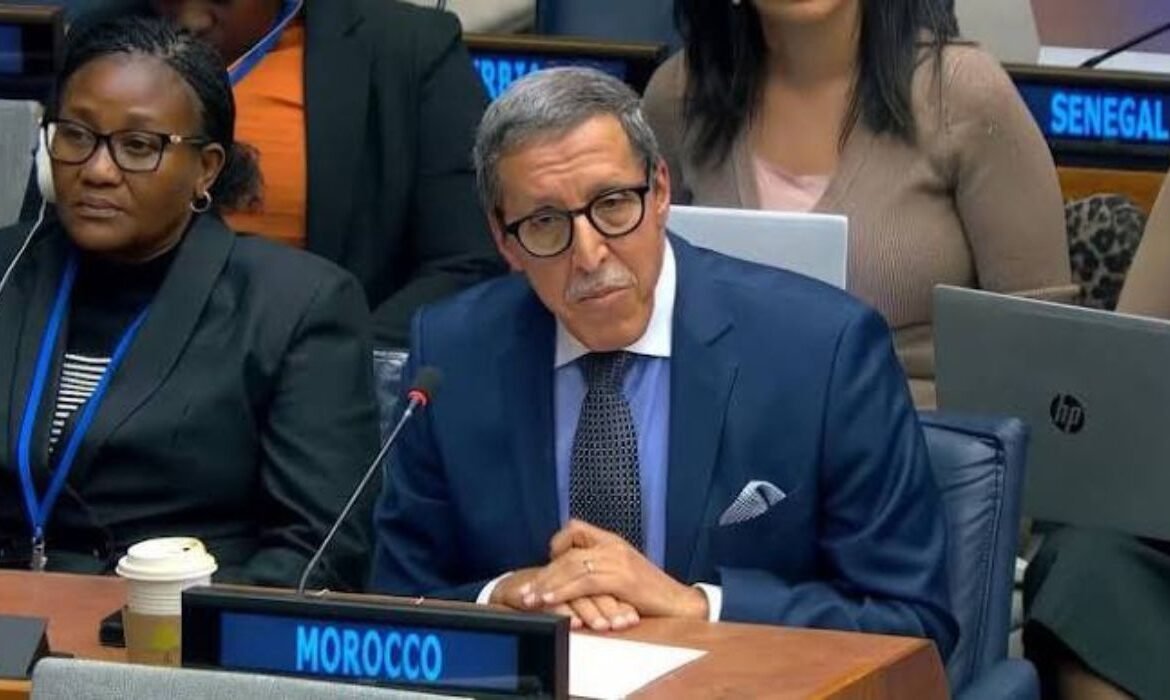
In New York, Morocco’s Permanent Representative to the United Nations, Omar Hilale, co-chaired the ninth annual consultative meeting between the UN Peacebuilding Commission and the African Union Peace and Security Council.
Morocco is consolidating its position as a key facilitator in the diplomatic dialogue between the United Nations and the African Union. On Wednesday 21 October 2026 in New York, Omar Hilale, the Kingdom’s Permanent Representative to the UN and Chair of the UN Peacebuilding Commission, co-chaired the ninth annual consultative meeting with the AU Peace and Security Council. This strategic meeting brings together the two main bodies responsible for supporting vulnerable countries in emerging from crises and preventing the emergence of conflicts on the continent.
Morocco: a bridge between the UN and Africa
Elected Chair of the Peacebuilding Commission in January 2026, Omar Hilale chaired this high-level meeting alongside the current Chair of the Peace and Security Council of the African Union. By spearheading this major initiative, the Moroccan diplomat reaffirms the Kingdom’s central role in promoting pragmatic and solidarity-based multilateralism, in perfect alignment with the strategic vision set out by His Majesty King Mohammed VI for Africa’s stability and shared development. The outcome of the discussions was marked by the unanimous adoption of a joint communiqué setting out the framework for a work programme extending until 2027.
Strategic follow-up commitments until 2027
This founding text provides for the establishment of regular monitoring mechanisms and the strengthening of regional cooperation, by aligning international interventions with the peace priorities defined sovereignly by the African states themselves. The fundamental objective of this strengthened partnership is to improve the coordination of actions carried out on the ground by the UN and the African Union, in order to avoid a fragmentation of efforts and maximise the impact of stabilisation policies. For the Moroccan Chair of the Commission, the commitment made in New York entails rigorous follow-up work to translate diplomatic guidelines into concrete and measurable results, with a view to building lasting peace on the continent.