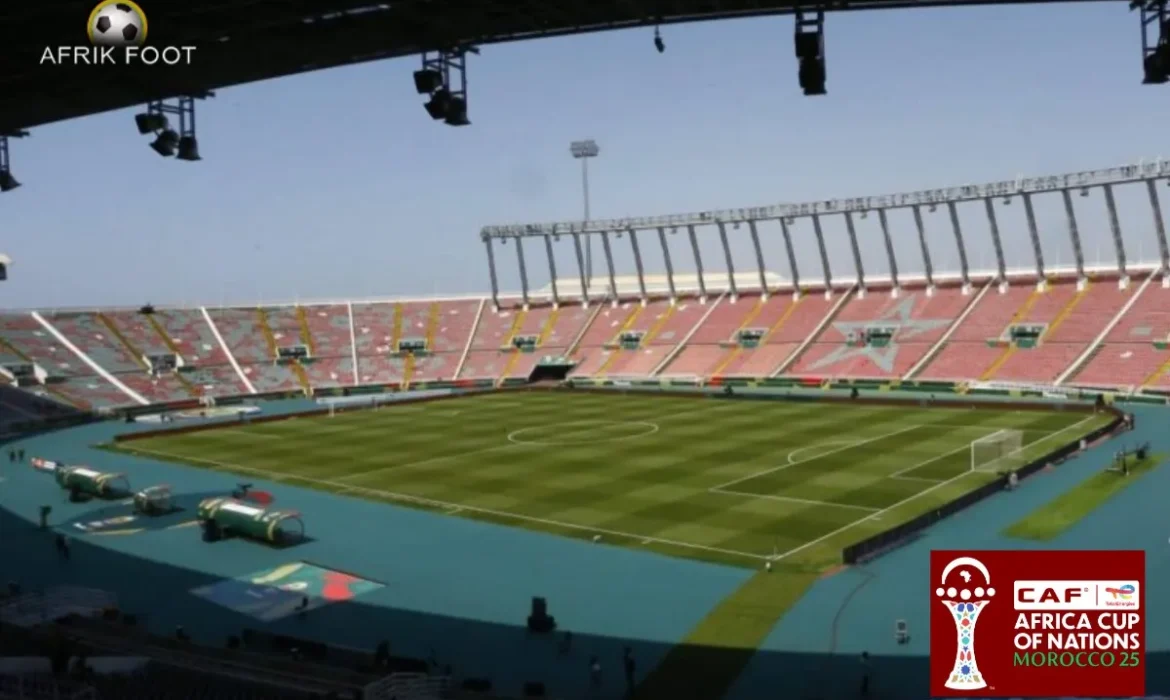
With the 2030 World Cup approaching, Morocco, as co-host alongside Spain and Portugal, has launched its infrastructure revolution with the aim of building the best stadiums. The first full-scale test will be the 2025 Africa Cup of Nations, just a few months away, with nine stadiums in six cities now ready for competition. This is the first time such a complex will be set up for an Africa Cup of Nations tournament.
Prince Moulay Abdellah Stadium (Rabat)
The pride of the kingdom’s political capital, the Prince Moulay Abdellah Stadium, built in 1983, has undergone numerous renovations to remain on par with the largest African venues. For the 2025 Africa Cup of Nations, work has focused on installing a latest-generation hybrid turf, completely updating the stands, modernizing the VIP boxes, and renovating the media areas.
Already accustomed to hosting major events, it hosted the final of the 2022 Women’s Africa Cup of Nations and matches of the 2023 Club World Cup. FAR Rabat plays there regularly, and the stadium is also one of the venues for the 2030 World Cup. It will be the venue for the opening match, guaranteeing an exceptional atmosphere.
In the meantime, the match between Morocco and Niger on the seventh day of qualifying for the 2026 World Cup will be the stadium’s first event since its reopening on September 5.
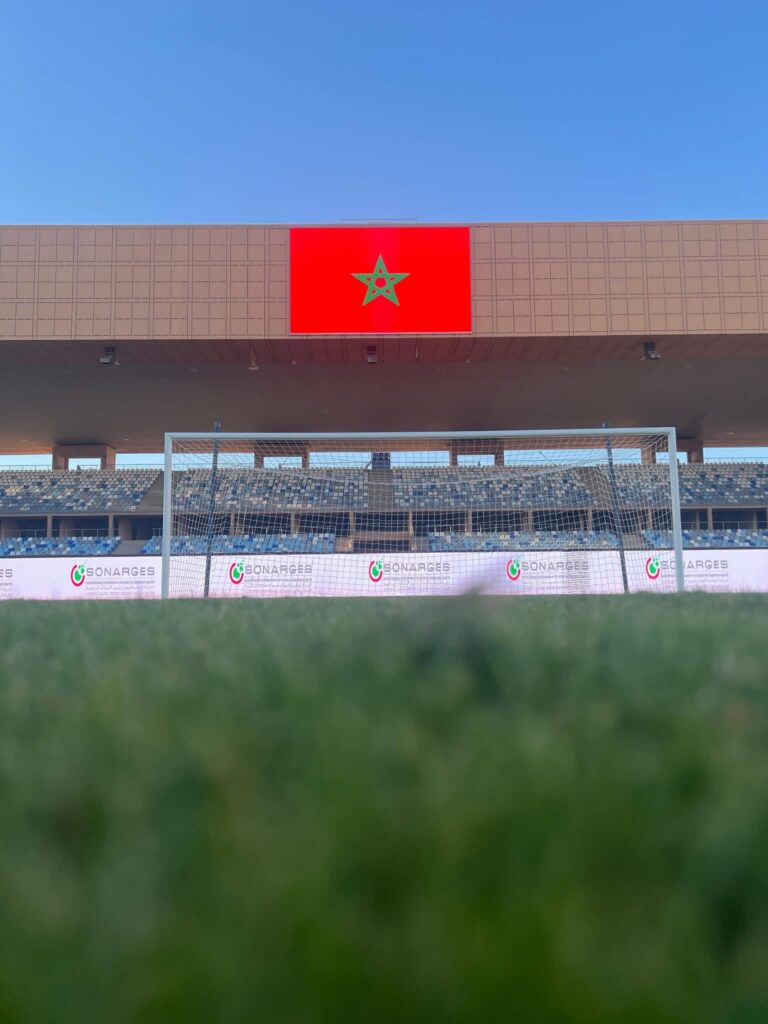
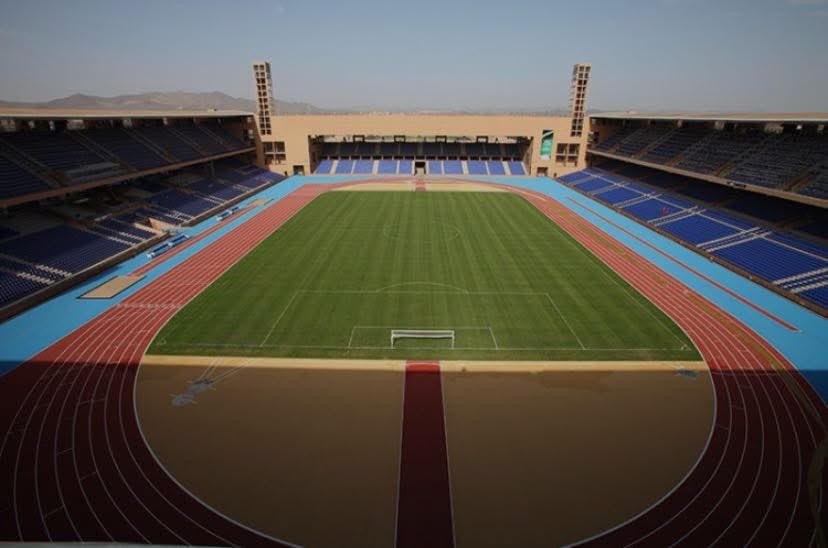
Grand Stade de Marrakech
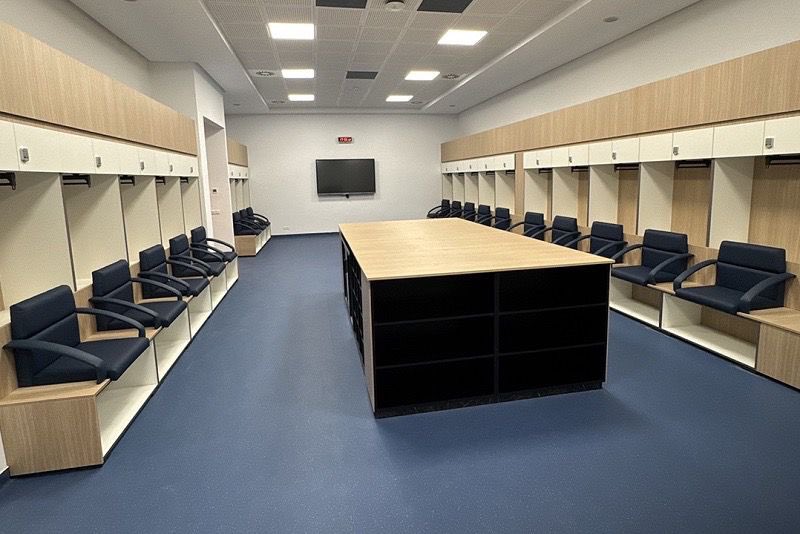
Opened in 2011, the Grand Stade de Marrakech is one of the most beautiful complexes in the Maghreb, nestled at the foot of the Atlas Mountains. For the 2025 Africa Cup of Nations, the “Ochre City” has strengthened its infrastructure by improving security, modernizing the changing rooms, and optimizing the VIP areas. This stadium has already hosted African Champions League matches and Botola Pro fixtures as the home ground of Kawkab Marrakech. It will welcome several major nations throughout the group stage, ensuring record attendance in a city renowned for its fervor and hospitality.
Capacity: 45,000 seats
Completion date: June 10, 2025
Teams: Angola (2 matches), Zimbabwe (2 matches), South Africa (2 matches), Ivory Coast (3 matches), Gabon, Cameroon, Mozambique, one eighth-final, one quarter-final.
Mohammed V Stadium (Casablanca)
The legendary Mohammed V Stadium, nicknamed “Donor” by the people of Casablanca, is the soul of Moroccan soccer. Built in 1955, it has been modernized several times, most recently for the 2025 Africa Cup of Nations, with a complete facelift of the stands, LED lighting upgrades, and media areas worthy of major international competitions. Home to Raja and Wydad, this stadium is a volcano on match nights. It has hosted many major events, including the Club World Cup.
Capacity: 67,000 seats
Completion date: operational before 2025
Teams: Mali, Zambia, Comoros (2 matches each), Burkina Faso, Equatorial Guinea, Sudan (2 matches each), one eighth-final, third-place play-off
Moulay El Hassan Stadium (Rabat)
Located in the capital, the Moulay El Hassan Stadium is named after the crown prince and has been completely modernized for the 2025 Africa Cup of Nations. Now able to accommodate nearly 22,000 spectators after its renovation, it has been fitted with a brand new roof, a high-end turf, and a state-of-the-art LED lighting system. It is also scheduled to host the 2030 World Cup. Its versatility will enable it to host major athletics competitions in the future. Initially, it only hosted Botola and Moroccan Cup matches as the home ground of FUS Rabat.
Capacity: 22,000 seats
Completion date: end of August 2025
Teams: Algeria (3 matches), Mozambique, Sudan, Burkina Faso, one round of 16 match
Al Barid Stadium (Rabat)
The capital’s new stadium, Al Barid Stadium stands out for its more modest size but optimal comfort. Built specifically to strengthen Rabat’s stadium offering, it is primarily intended for group matches. Its compact architecture guarantees a warm atmosphere close to the pitch.
Capacity: 18,000 seats
Completion date: end of August 2025
Teams: DR Congo (2 matches), Benin, Botswana, Uganda, Tanzania, one round of 16 match
Adrar Stadium (Agadir)
Opened in 2013, Adrar Stadium is the jewel of southern Morocco. Known for hosting the U17 Africa Cup of Nations and the Club World Cup, it is home to Jeunesse Sportive d’Agadir. For the 2025 Africa Cup of Nations, work has focused on modernizing access, enhancing security, and upgrading media facilities. It will also feature on the list of stadiums for the 2030 World Cup.
Capacity: 45,000 seats
Completion date: June 10, 2025
Teams: Gabon (2 matches), Cameroon (2 matches), Mozambique (2 matches), Egypt (3 matches), Angola, Zimbabwe, South Africa, one eighth-final, one quarter-final
Fez Sports Complex Stadium
The Fez Stadium, inaugurated in 2007, is a benchmark for soccer in the center of the country. Home to MAS Fez, it has already hosted Throne Cup finals and major Botola matches. For the 2025 Africa Cup of Nations, it has benefited from an optimized pitch and a redesign of the stands for greater comfort. It has also been selected for the 2030 World Cup.
Capacity: 45,000 seats
Completion date: June 10, 2025
Teams: Nigeria (3 matches), Uganda, Tanzania, Tunisia, one round of 16 match
Ibn Batouta Stadium (Tangier)
With a capacity of 75,600, the Grand Stadium of Tangier, named after the legendary Moroccan explorer Ibn Batouta, is one of the largest venues in Africa. Built in 2011, it was recently transformed to remove the athletics track and bring the stands closer to the pitch. Home to Ittihad Tangier, it has hosted prestigious matches such as the Spanish Super Cup and the former Club World Cup. It will be a key venue for the 2025 Africa Cup of Nations and the 2030 World Cup. For the World Cup, it is set to be expanded further, with a capacity of around 100,000.
Capacity: 75,600 seats
Completion date: September 2025
Teams: Senegal (3 matches), Botswana, DR Congo, Benin, one eighth-final, one quarter-final, one semi-final
Rabat Olympic Stadium (Moulay Abdellah Annex)
An annex of the large Moulay Abdellah complex, the Olympic Stadium is a more intimate venue that has been completely renovated for the Africa Cup of Nations. With a capacity of 21,000, it will provide the ideal setting for group matches, where the proximity to the pitch will thrill spectators.
Capacity: 21,000 seats
Completion date: August 2025
Teams: Tunisia (2 matches), Uganda, Tanzania, Benin, Botswana
Some photos