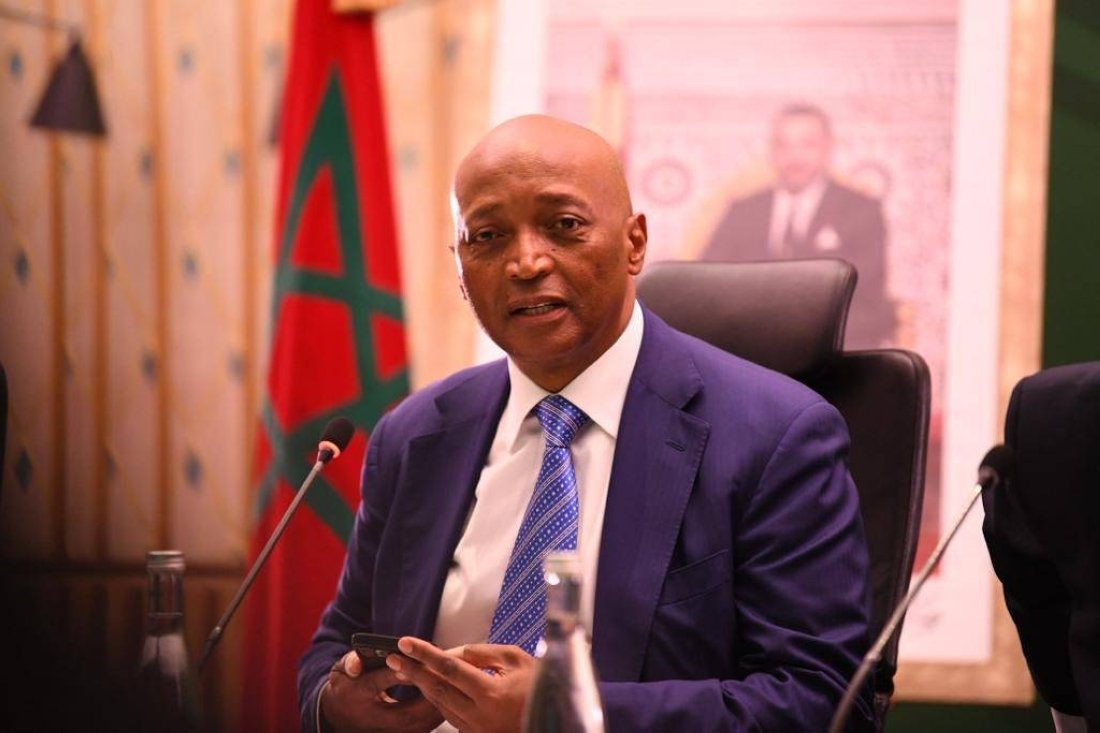
During a press conference held in Cairo on March 29, 2026, Patrice Motsepe emphasized Morocco’s crucial contribution to the organization and sustainability of African football competitions, particularly those considered less profitable.
The Executive Committee of the Confédération africaine de football addressed several major issues, including refereeing reforms, the controversy surrounding the AFCON 2025 final between Morocco and Senegal, and the decision by the Senegalese Football Federation (FSF) to appeal to the Court of Arbitration for Sport (CAS).
Amid these discussions, Patrice Motsepe took the opportunity to underline the importance of certain nations in sustaining African competitions.
Morocco, a cornerstone in hosting competitions
The CAF president highlighted the consistent commitment of Morocco, which often steps forward to host tournaments—even those with limited financial returns: “We launch calls for bids, and any member association can apply. But for some of the most challenging and least profitable competitions, such as futsal or the Women’s AFCON, we lose money. In many cases, Morocco is the only country that submits a bid.”
According to Motsepe, tournaments like futsal competitions and the Women’s Africa Cup of Nations are vital for the development of football across the continent, yet they struggle to attract hosts due to their low profitability. This creates a structural challenge for CAF in maintaining a balanced and sustainable competition calendar.
Balancing fairness and economic reality
Motsepe also stressed the importance of giving all African regions the opportunity to host tournaments. However, he acknowledged the practical necessity of relying on countries willing and able to organize these events: “We must give every zone the opportunity to host competitions, but I also have to ensure that these competitions continue to exist.”
This statement highlights a broader challenge facing CAF: balancing development, financial sustainability, and equitable distribution of competitions across the continent. In this context, Morocco’s role appears increasingly strategic in ensuring the continuity of key African football events.