
Morocco’s Atlas Lionesses have reached the semi-finals of the 2026 Women’s Africa Cup of Nations on home soil, securing their place at the 2027 FIFA Women’s World Cup in Brazil. With the tournament now entering its decisive stage, Morocco remains at the centre of a historic edition of African women’s football.
Morocco book their place in Brazil
Morocco’s run at the 2026 Women’s AFCON has delivered another major milestone for the national team.
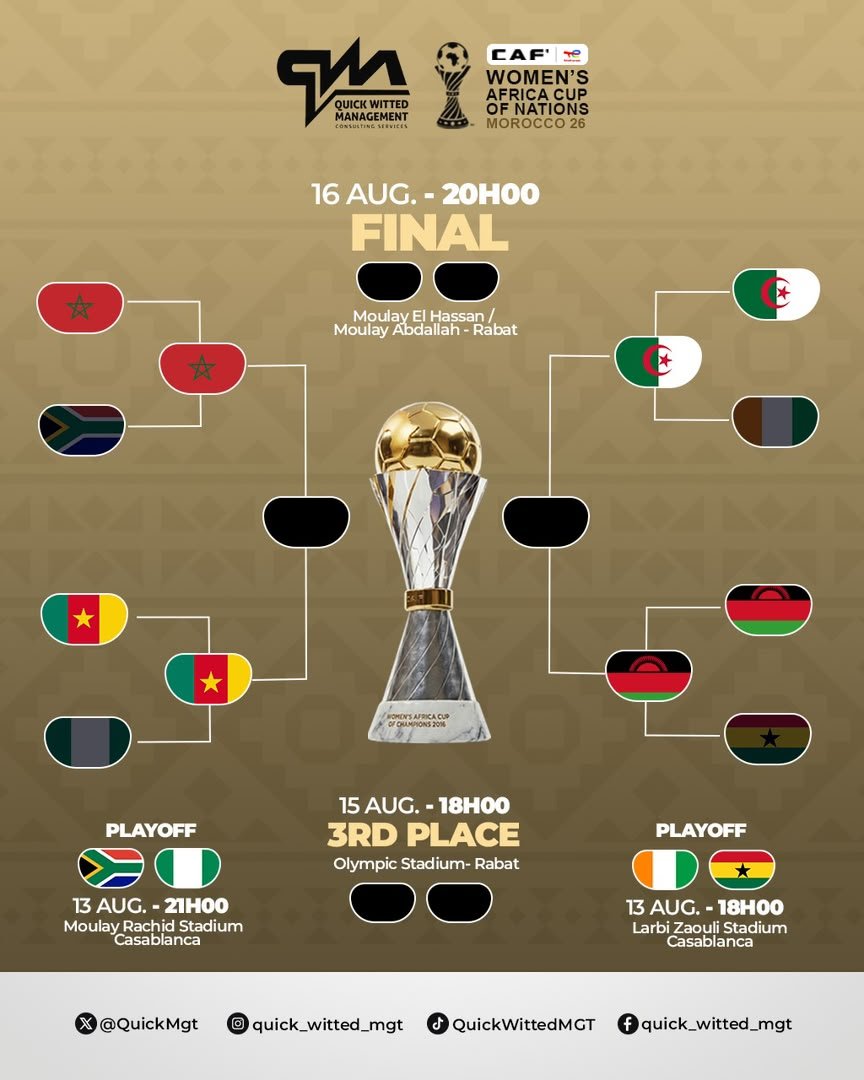
The Atlas Lionesses secured their place in the semi-finals after defeating South Africa 2-1 in the quarter-finals. The result also guaranteed Morocco one of Africa’s four direct tickets to the 2027 FIFA Women’s World Cup.
The achievement comes three years after Morocco made history at the 2023 Women’s World Cup, reaching the round of 16 on their debut.
The 2027 edition in Brazil will therefore mark the second consecutive appearance at the global tournament for the Atlas Lionesses.
A major football event hosted by Morocco
As hosts, Morocco have been at the heart of the 2026 Women’s AFCON.
The tournament has provided an opportunity to showcase the country’s football infrastructure while bringing some of Africa’s leading women’s teams together.
For visitors following the competition, the tournament also offers a chance to discover Morocco beyond the football pitch, from the atmosphere of Rabat to the country’s historic cities, cultural heritage and diverse landscapes.
The capital has been one of the key locations during the competition, hosting major matches as the tournament moves towards its decisive stages.
Four teams qualify for the 2027 World Cup
Morocco are not the only African team heading to Brazil.
The other three semi-finalists — Algeria, Cameroon and Malawi — have also secured direct qualification for the 2027 FIFA Women’s World Cup.
Algeria made history by reaching the global tournament for the first time after defeating Côte d’Ivoire 2-1 in the quarter-finals.
Cameroon booked their ticket by eliminating defending champions Nigeria with a 1-0 victory.
Malawi completed the semi-final line-up after producing one of the tournament’s biggest surprises, beating Ghana 2-1. The result also gave the Scorchers their first-ever qualification for the Women’s World Cup.

Morocco face Cameroon for a place in the final
The semi-final stage promises another major occasion for Moroccan football fans.
The Atlas Lionesses will face Cameroon for a place in the final. Playing in front of a home crowd will add another dimension to Morocco’s challenge as the team looks to turn home advantage into continental success.
The other semi-final will see Algeria take on Malawi, with both sides already celebrating historic World Cup qualification.
The two matches will determine the finalists of an edition that has already produced several landmark moments.

Africa could send six teams to Brazil
Although the four semi-finalists have secured Africa’s direct World Cup places, the continent could ultimately have up to six representatives at the 2027 tournament.
The four teams eliminated in the quarter-finals still have a route to the World Cup through CAF play-offs.
Côte d’Ivoire will meet Ghana, while Nigeria will face South Africa. The two winners will advance to FIFA’s intercontinental play-offs, where they will compete for one of the final World Cup places.
This means the 2026 Women’s AFCON is not only determining the continental champion. It is also playing a crucial role in shaping Africa’s representation at the next Women’s World Cup.
Another milestone for Moroccan women’s football
For Morocco, the tournament represents another step in the rapid development of women’s football.
The Atlas Lionesses’ historic run at the 2023 World Cup transformed expectations around the team. Their continued progress on home soil in 2026 now offers another opportunity to strengthen Morocco’s position among Africa’s leading women’s football nations.
With the semi-finals approaching, attention is turning to Rabat and the decisive matches that will determine who reaches the final.
For fans travelling to Morocco, the final stages of the Women’s AFCON provide an opportunity to combine top-level African football with the country’s rich cultural, historical and tourism attractions.